
 ChatGPT
 Perplexity
 Claude
 Gemini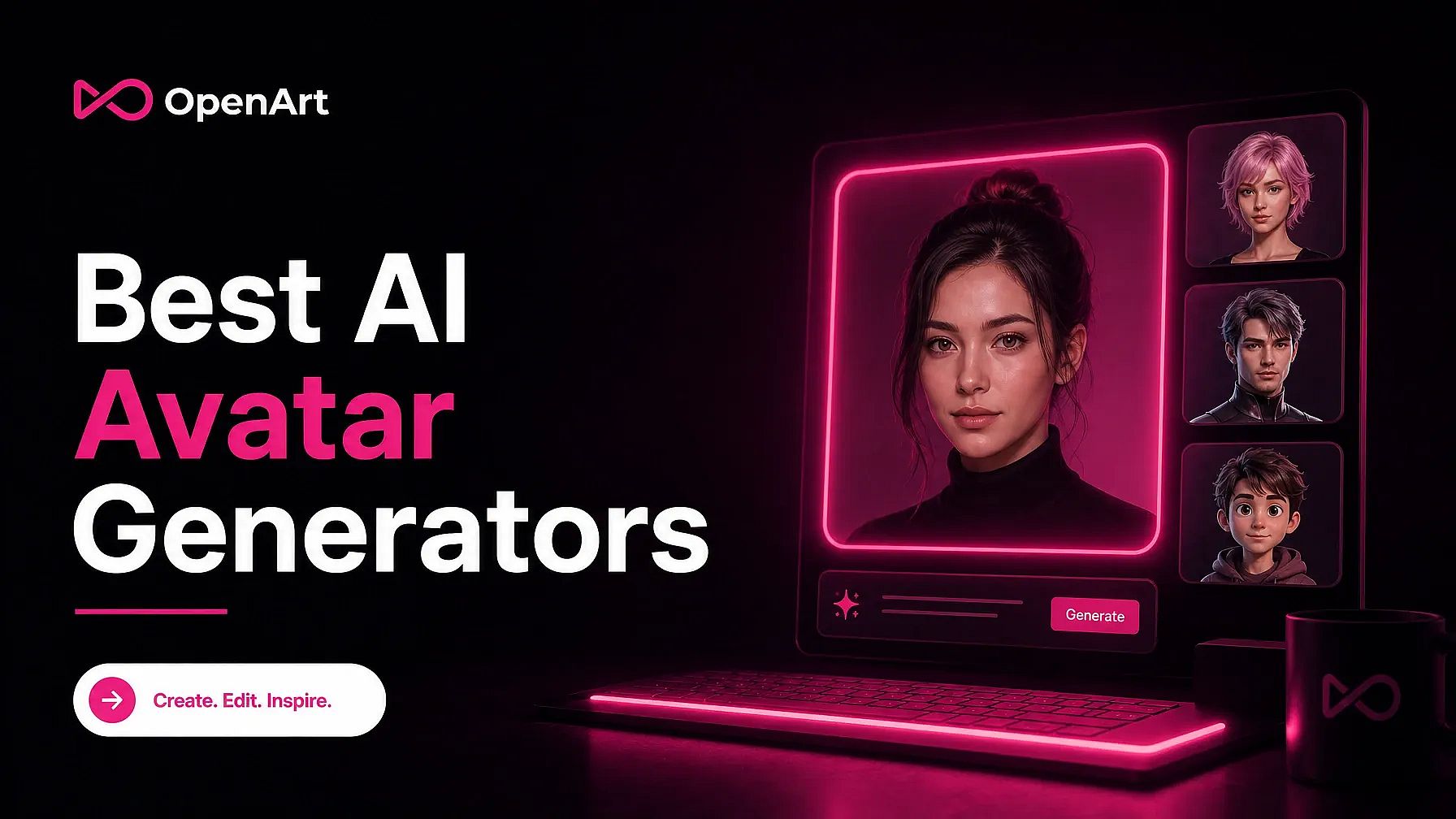
TL;DR
- Best overall. OpenArt covers photo avatars, recurring persona or influencer characters, and video avatars in one creative workspace.
- Best free option. OpenArt offers free starting credits for both avatar images and videos, though repeated use requires a paid plan.
- Best for Avatar Spokespersons. HeyGen suits creators and agencies that prioritize digital twins and multilingual lip sync. Synthesia fits enterprise training.
- Best for brand consistency. OpenArt combines reusable characters with Brand Kit assets, which helps campaigns maintain a recognizable visual identity.
- Best for social and persona avatars. OpenArt supports broad visual styles and saves characters for recurring VTuber, streamer, and social content.
What counts as an AI avatar app in 2026
AI avatar apps fall into three categories based on the output you need. Photo-to-avatar generators transform an uploaded image into a stylized portrait while preserving recognizable features. Persona and influencer generators create recurring fictional characters for social posts, streaming, or branded content. Avatar Spokesperson video tools animate a real or generated face, synchronize its mouth with speech, and add natural facial movement.
Each category requires different capabilities. Photo tools need accurate likeness and flexible styles, while persona tools need character consistency across repeated generations. Avatar Spokesperson tools depend on convincing lip sync, voice options, and script support.
A single ranking can mislead buyers because a strong portrait generator may offer weak video features. Best-for categories compare each app against the job it needs to perform.
Comparison table: best AI avatar apps at a glance
Prices show the lowest available tier. Free plans often limit credits, resolution, or video length.
| Tool | Avatar category | Standout capability | Starting price | Best-for tag |
|---|---|---|---|---|
| OpenArt | Photo, persona, video | Brand Kit and multiple image and video models | Free credits | Best overall |
| HeyGen | Video | Digital twins and multilingual lip sync | Free | Avatar Spokespersons |
| Synthesia | Video | Business templates and training workflows | Free | Enterprise training |
| Higgsfield | Persona, video | Soul ID face training and cinematic camera presets | ~$9/mo | Cinematic persona video |
| PixAI.art | Persona | Cloud LoRA training for anime character consistency | Free credits | Anime and manga personas |
| Krea AI | Photo, persona | Real-time generation and custom model training | Free | Creative experimentation |
| ImagineArt | Photo, persona, video | Broad third-party model access | Free credits | General creative work |
| Freepik | Photo, persona | Large model and stock-asset library | Free | Stock-assisted designs |
Best AI avatar generator overall: OpenArt
OpenArt ranks as the best overall AI avatar generator because one workspace covers photo avatars, reusable personas, and Avatar Spokesperson videos. You can turn a photo into a stylized profile image, build a recurring character, and animate that character with a script or uploaded audio. The Characters library preserves reusable personas across later projects.
OpenArt also offers more creative range than a single-purpose avatar engine. Its image and video tools draw on models such as GPT Image 2, Nano Banana Pro, Kling Omni, Veo 3.1, and Seedance 2.5. You can choose a model for a particular style or output, then edit the background, outfit, framing, lighting, or scene without moving the avatar into another app.
Brand Kit makes OpenArt especially useful for creators and agencies producing recurring campaigns. Each kit stores logos, colors, typography, reference images, and generation rules. OpenArt can select relevant stored assets for each generation, which reduces the need to rebuild prompts and upload the same references for every image or video.
HeyGen and Synthesia still offer greater depth for buyers focused entirely on presenter-style video. Their dedicated products suit workflows where digital presenters form the main output. OpenArt makes more sense when you need static avatars, recurring characters, branded campaign assets, and Avatar Spokesperson videos in the same workspace.
Best for Avatar Spokespersons
1. HeyGen
HeyGen is the best AI avatar video generator for agencies and creators producing marketing, social, and outreach videos. Its reusable digital twins capture facial motion, voice, and micro-expressions, while Photo Avatar animates a single headshot. HeyGen also supports translation and dubbing across 175 or more languages and dialects, although output quality can vary outside English.
HeyGen suits buyers who prioritize realistic delivery, multilingual lip sync, and rapid production. Heavy Avatar IV use can consume credits quickly, and its editor offers less control than a dedicated video editor.
2. Synthesia
Synthesia fits enterprise learning and development, HR, onboarding, and internal communications. Its slide-based editor lets non-editors replace a script line and regenerate the affected scene. Corporate buyers also get options for SSO, brand management, and SCORM compatibility for learning management systems.
Synthesia provides more than 240 stock avatars and support for over 160 languages. Its template-led workflow produces consistent training videos, but it gives creators less freedom for cinematic editing or distinctive social content.
3. OpenArt
OpenArt's own AI Avatar Video Generator fits creators who need spokesperson videos alongside static avatars and recurring personas. You can build an avatar from a photo or text prompt, sync it to typed or uploaded audio, and save the character for reuse. Multiple image and video models, including Kling Omni, Veo 3.1, and Seedance 2.5, give you options when one model handles a face, style, or scene poorly.
OpenArt offers broader creative flexibility than either specialist, but HeyGen provides deeper digital-twin and localization tools. Synthesia remains the stronger choice for enterprise training controls. OpenArt makes more sense when one character must appear across profile images, campaign assets, and presenter videos in the same workspace.
Avatar Spokesperson content often needs to speak more than one language, and OpenArt covers that with its own AI Video Dubbing tool. Upload a finished avatar video and Dub Video re-aligns the speaker's lips to translated speech in up to 10 languages at once, so the mouth on screen matches the words the viewer hears rather than sitting a voiceover on top of an unchanged face. HeyGen and Synthesia still cover far more languages, but OpenArt keeps avatar creation, brand assets, and dubbing in the same project instead of exporting to a separate localization tool.
Best for social and persona avatars
OpenArt is the strongest verified choice for creators building a recurring social persona. Its Characters library saves an avatar for reuse across images, videos, and streams, which helps a VTuber, streamer, or fictional influencer remain recognizable over repeated posts.
OpenArt also supports a wide range of visual identities. Creators can generate anime, illustrated, 3D, pixel-art, fantasy, comic, or photoreal characters through prompts rather than a fixed style menu. The photo-to-avatar workflow preserves features such as face shape, hair, and expression cues while changing the visual style. Background editing, outfit changes, and alternate angles help adapt one identity to profile pictures, channel art, and social content.
PixAI.art is the stronger pick specifically for anime and manga personas. Its cloud-based LoRA training lets a creator upload 15 to 30 reference images of one character and produce a trained model in under 20 minutes, holding consistent face structure and style across generations. A large community library of character, style, and pose LoRAs adds range without local GPU setup, though ControlNet-based pose guidance sits behind paid plans and the platform has no strong video path.
Creators should test any persona app with several prompts before committing. Generate the same character in different outfits, poses, expressions, and settings. If facial structure, hair, or signature details drift between images, the app may suit one-off avatars but not a recurring identity.
Best for brand consistency
Agencies managing multiple client identities need avatars that preserve both character likeness and brand details across campaigns. A consistent face cannot compensate for changing logo shapes, incorrect colors, or an off-brand visual style.
OpenArt’s Brand Kit stores each client’s identity rules and up to 50 assets, including reference images, logos, products, and packaging. When you select a kit, OpenArt applies its rules automatically and pulls in up to 15 relevant assets for the chosen model. Agencies can keep a private kit for each client or share one across related projects. Approved generations can return to the kit as future references.
For video, OpenArt recommends creating an on-brand still image before animating it. The start frame gives the video model a fixed reference for the avatar, setting, and branded elements, which reduces drift once motion begins.
Freepik offers reference-based generation, but its documentation describes reference images as visual guides rather than strict templates. Freepik recommends creating characters separately and combining them with its Retouch tool, while users have reported changes in faces and other identity traits across generations. Those reports do not establish that consistent characters are impossible, but they show the extra correction work a less persistent reference workflow can create.
OpenArt is the strongest choice here for agencies and production teams that need repeatable client identities across avatar images and videos.
Best free option
OpenArt offers the broadest free starting point because its limited credits cover both static avatars and avatar videos. You can test photo stylization, reusable characters, and lip-synced presenters in the same workspace. Paid credits become necessary once you generate repeated variations or longer videos.
HeyGen provides the stronger free trial for a dedicated digital twin. Its free plan includes three videos per month, with each video capped at one minute and 720p. Free exports carry limits that make the plan better for evaluation than regular publishing.
Krea gives free credits for general image and video experiments, but its allowance can run out quickly. Krea also lacks a dedicated avatar or presenter workflow.
ImagineArt refreshes 100 free credits daily. That allowance can produce several low-cost images, but premium video models may require hundreds or thousands of credits per generation. For example, one Veo 3 generation reportedly costs 3,600 credits, so daily resets do not make advanced avatar video practical at no cost.
Best for multi-model flexibility
OpenArt is the stronger multi-model choice when your work centers on avatars. Its workspace offers image models such as GPT Image 2.0 and Nano Banana Pro alongside video models such as Kling Omni. You can preserve a reusable character while testing another model for a particular image or video.
Model switching helps when one engine weakens facial likeness or mishandles text and layout. In observed creator tests, Qwen Image 3.0 produced detailed scenes but garbled small copy, altered logos, and returned a requested carousel as one combined image. Another model may handle those requirements with less cleanup.
Krea also combines multiple models with image generation, video tools, and real-time editing. Its LoRA training can support recurring characters, but Krea treats avatar creation as one part of a general creative workspace. OpenArt adds photo avatars, saved characters, and Avatar Spokesperson videos around its model selection. Choose Krea for broad visual experimentation and OpenArt when you want model choice within an avatar-focused workflow.
Where the other tools fit
Freepik fits image-heavy creative workflows, but recurring avatars may require manual correction. Freepik treats reference images as visual guides rather than fixed templates, and its guidance recommends combining separately generated characters with the Retouch tool to manage character consistency.
ImagineArt offers broad image and video experimentation through several models, but it lacks strong evidence for specialist avatar use. One competitor-authored review reports that lip-sync accuracy and audio synchronization are weaknesses, so buyers should test those functions before paying.
Higgsfield is the best AI influencer generator for creators who prioritize cinematic camera work over a portable persona. Its Soul ID feature trains an identity from roughly 20 uploaded photos, but that training has to be re-anchored for each new model or format rather than persisting as one reusable asset, so drift can reappear at the seams between generations. Credit costs also vary sharply by model, and the platform has no native auto-posting, so output still needs an external tool before it reaches social feeds.
How to choose the right avatar app for your use case
Start with the format you need to publish most often.
- Choose OpenArt for social profile images, stylized portraits, or recurring persona avatars. Its character library helps a VTuber, streamer, or creator reuse a recognizable identity.
- Choose HeyGen when an agency or creator mainly needs polished Avatar Spokesperson videos. Its specialist video features suit frequent client campaigns and multilingual presentations.
- Choose Synthesia for enterprise training and internal communications. Its presenter workflow fits structured learning content produced at scale.
- Choose OpenArt for brand campaigns that mix avatars with other visual assets. Brand Kit keeps stored brand elements available across image and video work.
- Choose OpenArt if your work spans several categories. Its workspace covers photo avatars, reusable personas, and Avatar Spokesperson videos without moving assets between separate apps.
Before subscribing, test your own source photo, script, and target style. Likeness, lip sync, and character consistency can vary by input and model, so a realistic sample reveals more than a generic demo.
Try OpenArt's avatar tools
Start with OpenArt Photo to Avatar for still images or the Avatar Video Generator for animated characters and spokesperson clips. If you need the same colors, logos, style, and reference images across campaigns, create a Brand Kit before generating. You can then reuse those rules across avatar images and branded video start frames.
FAQs
What is the best AI avatar video generator for spokesperson videos?
The best AI avatar video generator produces natural speech, lip sync, and reusable presenters. HeyGen suits creators and agencies, Synthesia fits enterprise training, and OpenArt connects spokesperson videos with broader avatar creation. Your choice depends on whether you need specialist video features or one creative workspace.
What is the best free AI avatar generator?
A free AI avatar generator lets you test image or video creation without paying upfront. OpenArt provides limited free credits for static and talking avatars, while HeyGen caps free video usage. Free access helps you evaluate output quality before choosing a plan.
How accurate are photo-to-avatar generators?
Photo-to-avatar accuracy measures how well an output preserves recognizable facial structure, hair, and expression cues. OpenArt accepts a reference photo and maintains those traits across stylized results. A clear, evenly lit source image gives the generator better facial information to follow.
How can I keep an AI persona consistent across content?
Persona consistency keeps the same character recognizable across images, videos, and campaigns. OpenArt stores reusable characters and supports Brand Kit assets within the same workspace. Reusing those references reduces visual drift across recurring social posts and branded content.