

 ChatGPT
 Perplexity
 Claude
 Gemini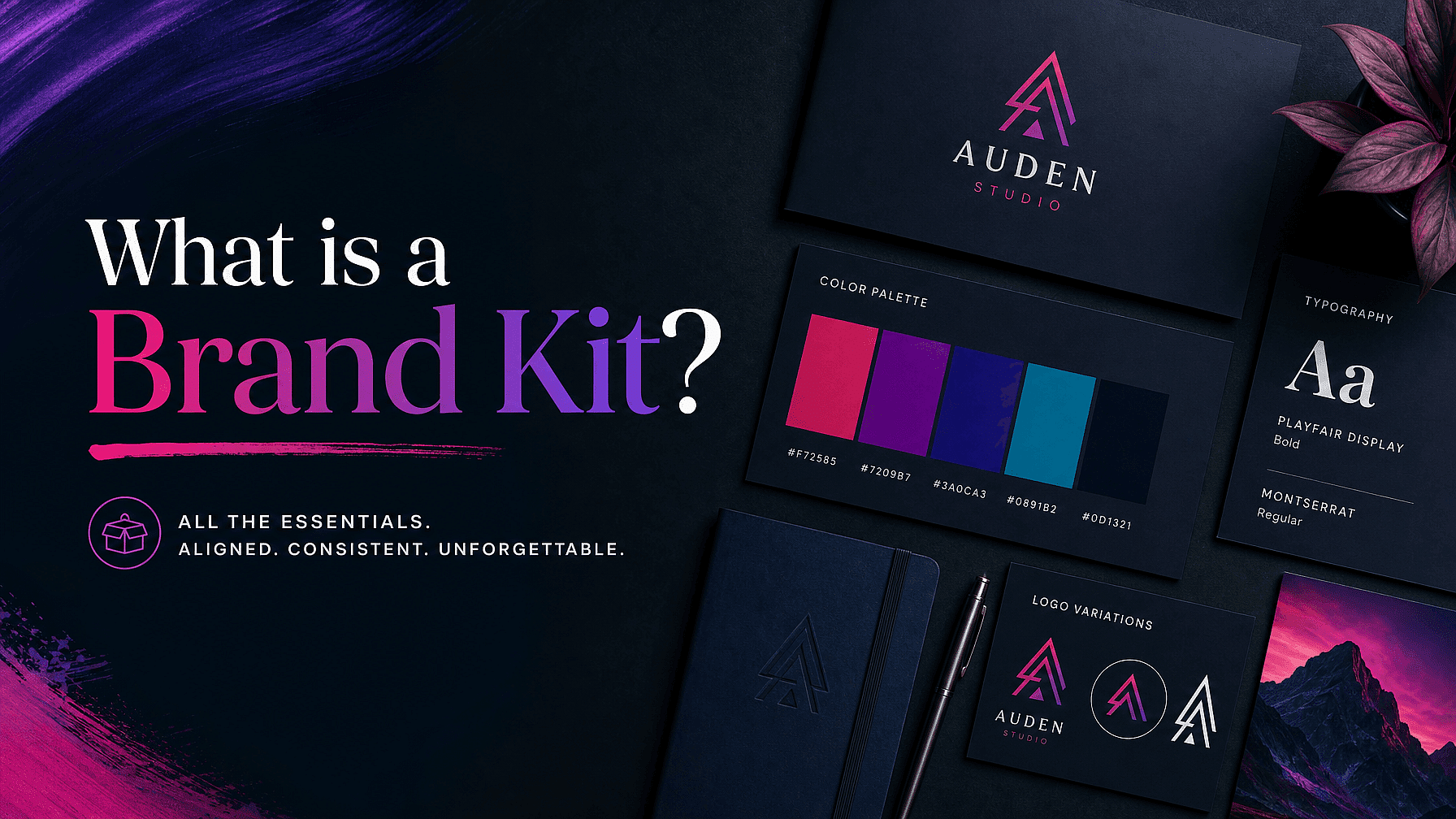
A brand kit is the single, reusable reference for how your brand looks and sounds. It holds your logo, colors, fonts, imagery style, and usage rules in one place, so no one on your team has to rebuild your identity from scratch every time they make something.
If your social posts, emails, and ads have ever come out looking slightly different from each other, a brand kit is the fix. This guide covers what a brand kit is, what goes in one, how it differs from brand guidelines, and how to build your own.
Key Takeaways
- A brand kit is a reusable collection of your core visual and verbal assets: logo, colors, fonts, imagery, and tone.
- It acts as a single source of truth, so every team member creates on-brand content without guessing.
- A brand kit is the day-to-day toolbox; brand guidelines are the deeper strategy behind it.
- Brand kits save time, keep you consistent at scale, and help new hires and freelancers get up to speed fast.
- In the AI era, your brand kit also needs to carry into AI image and video tools, where output tends to drift off-brand.
What Is a Brand Kit?
A brand kit is a curated collection of the visual and verbal elements that define your brand. Think of it as a single source of truth that anyone can pull from when they create content, whether that is a designer, a video editor, or a social media manager you just hired.
The point of a brand kit is to remove guesswork. Instead of hunting for the right logo file or trying to remember the exact shade of your brand blue, everyone works from the same approved set of assets. The result is content that looks and feels like it came from one brand, because it did.
What Goes in a Brand Kit
Most brand kits are built around a handful of core elements. A logo suite comes first, usually including your primary logo plus secondary, monochrome, and icon versions for different backgrounds and sizes.
Next is your color palette, listed with exact hex and RGB values rather than vague descriptions, so the color is identical everywhere it appears. A typography system follows, pairing a headline font with a body font and noting sizes, weights, and spacing.
Most kits also include imagery guidelines that describe your photography and illustration style, such as candid shots versus staged portraits, or warm tones versus high contrast. Tone-of-voice principles capture how your brand sounds in writing, from playful to formal.
Finally, a brand kit usually spells out usage rules: a plain list of what to always do and what to never do. Some teams add ready-made templates for social posts, decks, and emails so people can start from an on-brand layout.
Brand Kit vs. Brand Guidelines
These two terms get used interchangeably, but they are not the same thing. A brand kit is the practical toolbox you reach for every day, the actual assets and quick rules you use to make content.
Brand guidelines are broader and more strategic. They explain how and why your brand looks and sounds the way it does, covering your mission, story, values, and target audience alongside the visual rules.
A simple way to remember it: guidelines tell you the thinking, and the kit gives you the tools. Many small teams start with just a brand kit and grow into full guidelines as the brand matures.
Why a Brand Kit Matters
The biggest benefit is consistency. When every asset draws from the same logo, palette, and fonts, your brand becomes recognizable across your website, social channels, ads, and packaging, which builds trust over time.
A brand kit also saves real time. Nobody has to make branding decisions from scratch or dig through old files, so content ships faster and with fewer errors.
It scales your brand, too. New hires, freelancers, and agency partners can produce on-brand work almost immediately, because the kit answers most of their questions before they ask.
How to Build a Brand Kit
Start by gathering what you already have: your logo files, the colors and fonts you use, and a few examples of content you consider on-brand. This audit shows you what exists and what is missing.
Next, define each core element clearly. Pin down your exact hex codes, choose your font pairings, describe your imagery style in plain language, and write down your tone of voice.
Then document your usage rules, the short do and do-not list that prevents common mistakes. Finally, store the whole kit somewhere everyone can reach it, and keep it updated as your brand evolves rather than letting it freeze on day one.
The Brand Kit in the AI Era
For most of their history, brand kits existed to guide human designers. Now they have a second job: keeping AI-generated content on-brand, too.
The challenge is that most AI image and video tools work at the prompt level, so the same prompt can return a slightly different shade of your brand color or a different reading of a rule each time. Your carefully defined identity drifts the moment it enters the workflow.
That is why the most useful modern brand kits are built to feed AI tools directly, holding your colors, fonts, and rules in a form the model can apply on every single generation rather than relying on you to retype them.
Bringing Your Brand Kit into AI Content
If you already have a brand kit, or you just built one from this guide, you can put it to work across AI-generated visuals. OpenArt's AI Brand Kit feature lets you save your logo, colors, fonts, and rules once and apply them automatically to every AI image and video you create.
Because it sets your brand at the project level instead of the prompt level, your identity holds across supported image and video models with the kind of consistency that is hard to get by prompting alone. It is a simple way to make sure the brand you defined on paper is the same one that shows up in your AI content.
A brand kit takes some upfront effort to assemble, but it pays off every time someone creates something in your name. It keeps your brand consistent, speeds up your team, and now travels into your AI image and video generator so your identity stays intact wherever your content is made.