 ChatGPT
 Perplexity
 Claude
 Gemini
Desplázate por cualquier feed ahora mismo y verás los mismos formatos una y otra vez: personas convertidas en figuras de acción en su caja, personajes de fruta con carita dramática, mascotas reimaginadas como héroes de aventuras, fotos de producto que parecen hechas por todo un equipo de estudio y personajes de IA que, de algún modo, mantienen la misma cara a lo largo de veinte publicaciones.
La mayoría se remonta a una misma familia de modelos: Nano Banana.
Este post te da los prompts listos para cada uno de esos formatos. Todos los prompts se pueden copiar y pegar, están probados con lo que el modelo hace realmente bien y van acompañados de notas sobre cuándo usarlos. También tendrás una breve guía para ejecutarlos en El generador de imágenes con IA de OpenArt, así que puedes pasar de leer a generar en unos dos minutos.
¿Qué es Nano Banana?
Nano Banana es el apodo de los modelos de generación de imágenes Gemini de Google. El nombre en clave se filtró, a internet le gustó más que el oficial y se quedó. Ahora Google lo usa abiertamente para toda la familia.
Lo que diferencia a estos modelos de un generador de imágenes típico se reduce a tres cosas:
- Mantienen el sujeto estable. La misma cara, mascota, producto o personaje puede aparecer en muchas imágenes sin convertirse en alguien desconocido.
- Funcionan a partir de imágenes de referencia. Sube una foto y el modelo la trata como la identidad, no solo como una inspiración vaga.
- Siguen las instrucciones de edición de forma conversacional. Puedes decir qué debe permanecer igual y qué se puede cambiar, y el modelo respeta la diferencia.
En OpenArt puedes generar con Nano Banana 2 para imágenes cotidianas, Nano Banana Pro para el resultado más consistente y pulido, o Nano Banana 2 Lite cuando quieres borradores rápidos y en gran volumen. Los tres están junto a GPT Image 2, Seedream 5.0y Recraft en el mismo espacio de trabajo, para que puedas cambiar de modelo sin rehacer tu prompt.
Por qué los creadores lo eligen una y otra vez
Esta no es una herramienta de nicho con un fandom ruidoso. Pero la cifra con la que hay que empezar no es el bombo de la semana de lanzamiento de 2025. Es lo que está pasando ahora mismo, un año después de la familia Nano Banana.
Cuando Google lanzó el primer modelo Nano Banana en agosto de 2025, catapultó a Gemini a lo más alto de las listas de la tienda de apps en cuestión de días (IBTimes, sep. 2025). Ese modelo es ahora lo que Google llama su modelo de imagen "heredado". La familia ha avanzado tres generaciones desde entonces, y su uso no ha dejado de crecer en cada paso.
El vicepresidente de Labs de Gemini, Josh Woodward, dijo que los usuarios generaron más de mil millones de imágenes con Nano Banana Pro en 53 días (según las estadísticas de uso de Nano Banana). En diciembre, la app de Gemini había superado los 750 millones de usuarios activos mensuales. El 26 de febrero de 2026, Google convirtió a Nano Banana 2 en el nuevo modelo de imagen predeterminado en Gemini, Search y Flow, reemplazando a Pro desde el primer día (DD News). Eso no es un modelo apagándose en silencio. Es Google apostando su experiencia por defecto por él.
Los creadores de Reddit llegan a la misma conclusión que los analistas. En r/Bard, el hilo sobre Nano Banana 2 (Gemini 3.1 Flash Image) se centra en la referencia multisujeto, la transferencia de estilo y el uso de resultados como fotogramas iniciales consistentes para modelos de vídeo. Esas son exactamente las tareas para las que se ha creado esta publicación.
Ese detalle de la consistencia es clave para todo este artículo. Los formatos virales rara vez son una sola imagen. Son conjuntos: un antes y un después, una campaña de seis imágenes, una hoja de personaje, un par de fotogramas de vídeo a juego. Los prompts de abajo funcionan porque el modelo mantiene al sujeto estable en todos ellos.
Comparación rápida: Nano Banana 2 Lite vs. Nano Banana 2 vs. Nano Banana Pro
| Modelo | Ideal para | Úsalo cuando |
|---|---|---|
| Nano Banana 2 Lite | Borradores rápidos y pruebas a gran volumen | Quieres probar diez ideas de prompt antes de elegir una dirección |
| Nano Banana 2 | Generación equilibrada para el día a día | Necesitas alta calidad, soporte de imagen de referencia y un detalle nítido para tomas de redes o de producto |
| Nano Banana Pro | Precisión y coherencia | Necesitas el mismo sujeto en toda una campaña, hoja de personaje, set de pósteres o serie de productos |
Cómo ejecutar estos prompts en OpenArt
No necesitas nada técnico. Todo el proceso consiste en elegir un modelo, pegar un prompt y generar.
Paso 1: abre el generador de imágenes
Ir a openart.ai/ai-image-generator, o abre Crear imagen dentro de tu espacio de trabajo de OpenArt. La casilla del prompt está en la parte superior de la página.
Paso 2: elige un modelo Nano Banana
Haz clic en el nombre del modelo dentro del cuadro del prompt. Muestra el modelo actual, por ejemplo GPT Image 2. Elige Nano Banana 2 para imágenes del día a día o Nano Banana Pro para los resultados más consistentes y pulidos.
Paso 3: pega tu prompt y añade una imagen de referencia si el prompt la necesita
Copia cualquier prompt de esta publicación en el cuadro. Si el prompt dice "usa la foto de referencia como la identidad exacta", sube primero tu foto con el botón de subida de imagen que hay junto al cuadro del prompt.
Paso 4: genera y luego refina
Haz clic en Generar y elige tu resultado favorito. Desde ahí puedes editar detalles, escalar a 4K o para impresión, o envía el fotograma a las herramientas de vídeo de OpenArt. Las cuentas nuevas empiezan gratis con créditos, así que puedes probar unos cuantos prompts antes de decidirte por un plan.
Ahora podemos usar los prompts para crear ideas.
1. El prompt viral de la figura de acción
Este es el formato que impulsó la primera ola de Nano Banana. Retratos estilo figurita inundó Instagram y X en septiembre de 2025, y la cobertura mediática atribuyó a la tendencia el haber impulsado a Gemini por encima de ChatGPT en las tiendas de aplicaciones (IBTimes). Funciona porque una figura enmarcada se lee al instante en un feed. Convierte a una persona en un producto y la imagen se lee como una revelación.
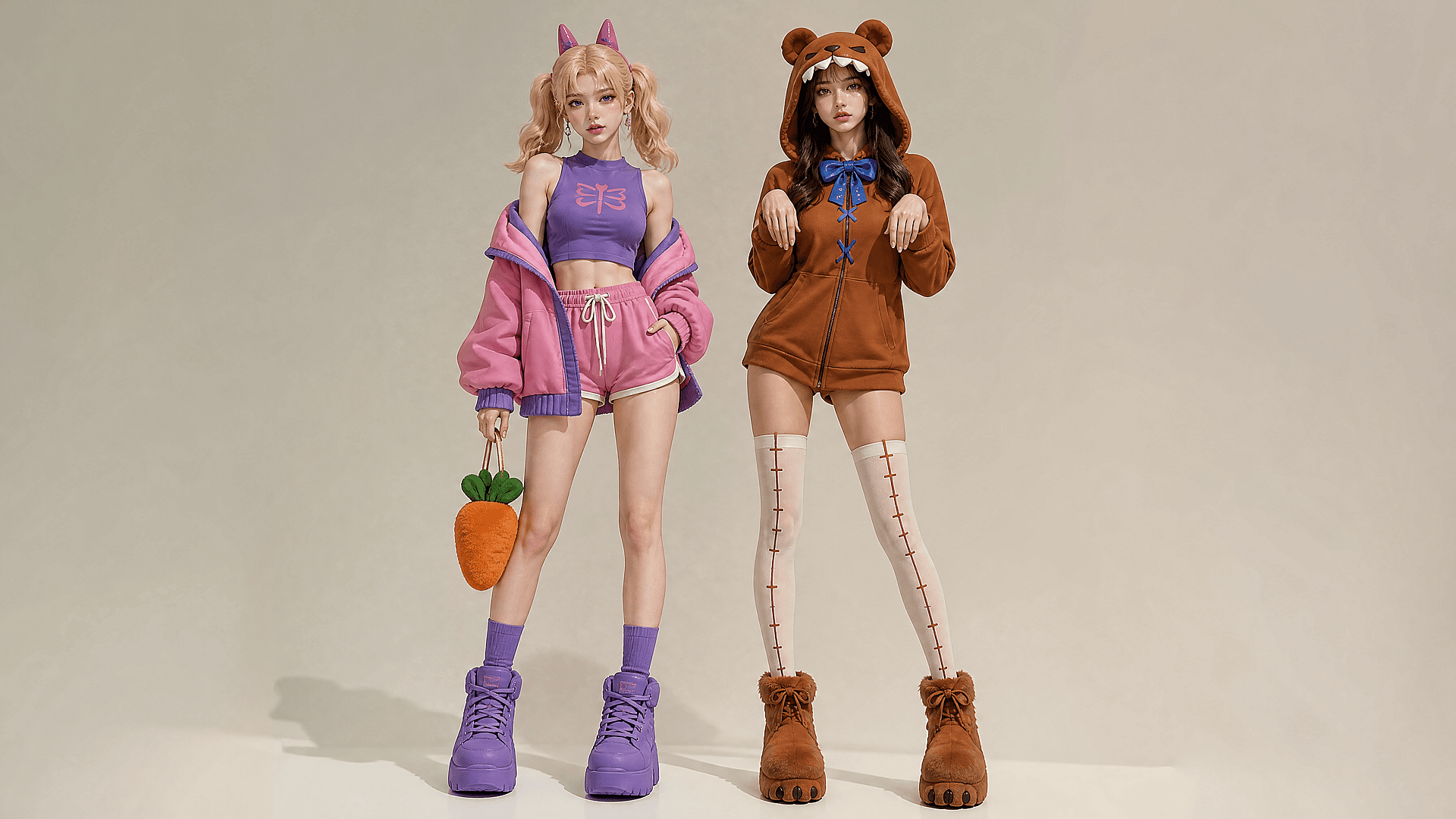
Fotografía de estudio de cuerpo entero de dos mujeres con trajes de cosplay estilizados sobre un fondo beige liso. La mujer de la izquierda lleva una chaqueta rosa, un top corto morado, pantalones cortos rosas, botas moradas gruesas y sostiene una zanahoria de peluche. La mujer de la derecha lleva un vestido con capucha de oso marrón, medias altas blancas con costuras y botas peludas con forma de patas de oso. Iluminación de estudio suave, fotorrealista, alta moda.
2. El prompt de la hoja de personaje para vídeos cortos con IA
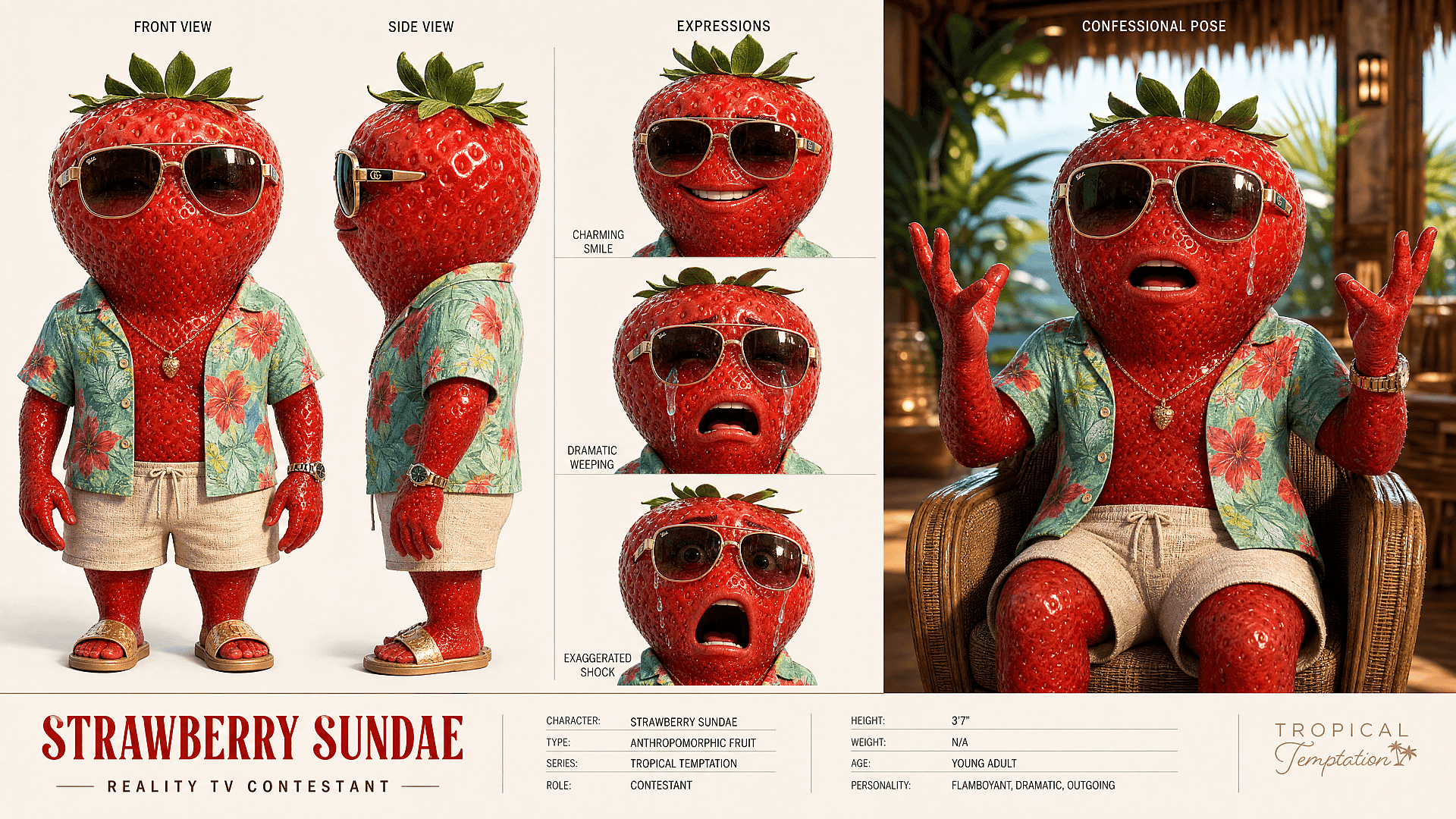
Si haces vídeos cortos con IA, este es el prompt al que volverás una y otra vez. Está pensado para trabajar en series de YouTube Shorts y TikTok, donde un personaje recurrente tiene que sobrevivir a docenas de episodios, y es el punto de partida natural para storyboards y Personajes de fruta con cara hechos con IA.
Aquí es donde Nano Banana conecta con el vídeo. Antes de animar un personaje, necesitas un aspecto estable: vista frontal, vista lateral, expresiones, vestuario, atrezo. Los creadores en r/Bard describen este mismo proceso: fija el personaje como una imagen fija con Nano Banana y luego pasa los fotogramas a los modelos de vídeo.
Cuando tu ficha de personaje tenga buen aspecto, lleva el fotograma a las herramientas de vídeo de OpenArt para darle movimiento. Si piensas reutilizar el personaje en una serie, el Personaje con IA mantiene la identidad bloqueada también en las generaciones futuras.
Una hoja de personaje 3D realista de una fresa antropomórfica con una camisa hawaiana floral, pantalones cortos beige, gafas de sol de aviador doradas y joyas doradas. El diseño muestra vistas frontal y lateral de pie, más tres expresiones en primer plano: sonriendo, llorando y sorprendida. El lado derecho muestra una escena cinematográfica de confesión de la fresa llorando en una silla de mimbre dentro de una cabaña tropical. El texto inferior incluye Strawberry Sundae y las estadísticas del personaje. Render 3D de alta gama con texturas detalladas.
3. El prompt de producto hero en 4K
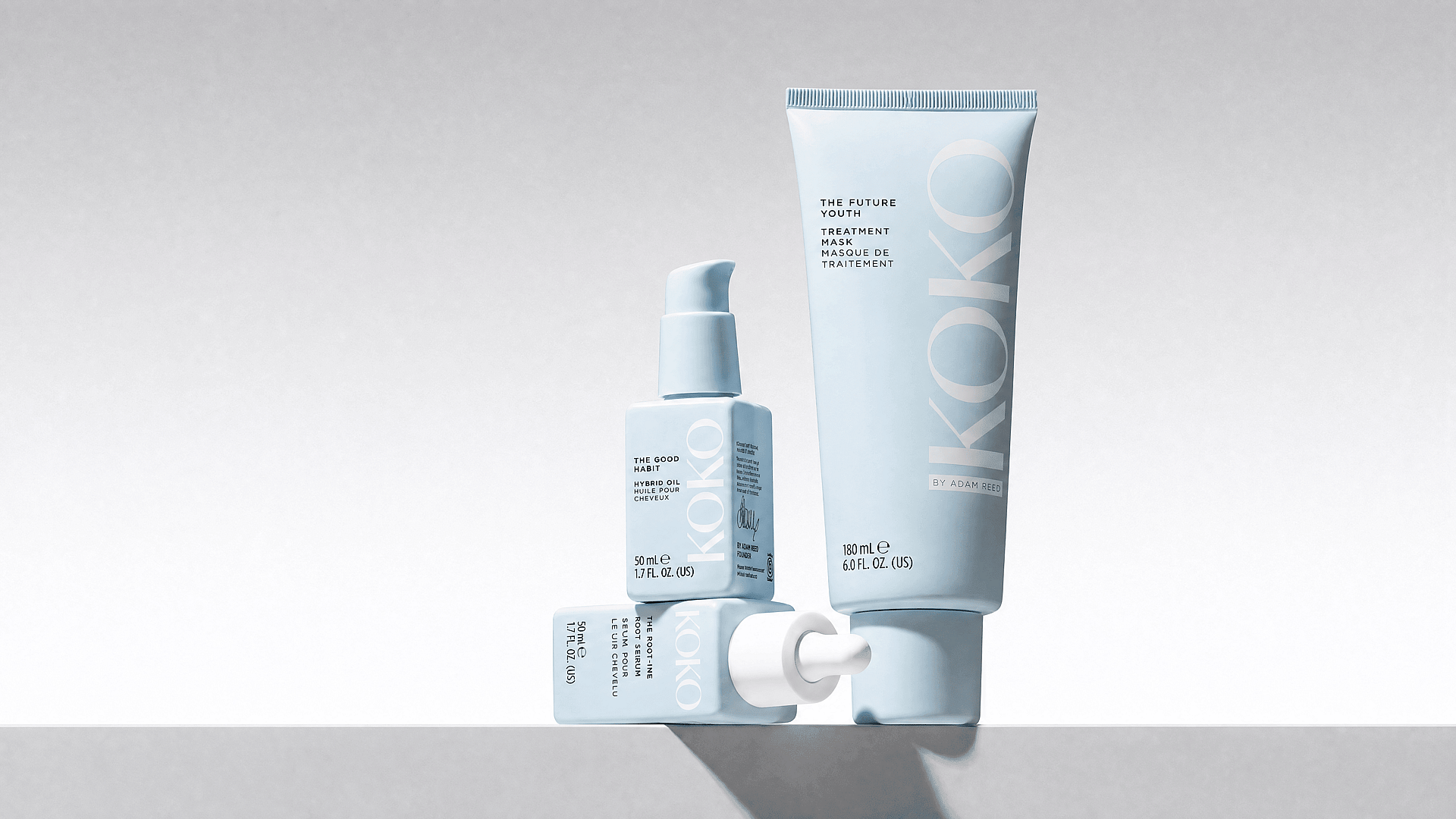
Este es el prompt caballo de batalla para cualquiera que venda algo físico. Los vendedores de Shopify y Etsy lo usan para sustituir fotos hechas con el móvil, los de Amazon lo usan para el material de sus fichas, y también hace un buen trabajo con imágenes principales en páginas de lanzamiento.
Fotografía comercial minimalista de tres productos cosméticos de la marca KOKO en azul claro sobre una superficie blanca y limpia con fondo gris claro. A la derecha hay un tubo grande de pie con la etiqueta THE FUTURE YOUTH TREATMENT MASK. A la izquierda, un bote cuadrado con dosificador etiquetado THE GOOD HABIT HYBRID OIL se apoya sobre un frasco cuadrado horizontal con cuentagotas etiquetado THE ROOT-INE SCALP SERUM. Iluminación de estudio suave y difusa, enfoque nítido, texturas mate, sombras sutiles, estética moderna.
4. El prompt de mascota a personaje
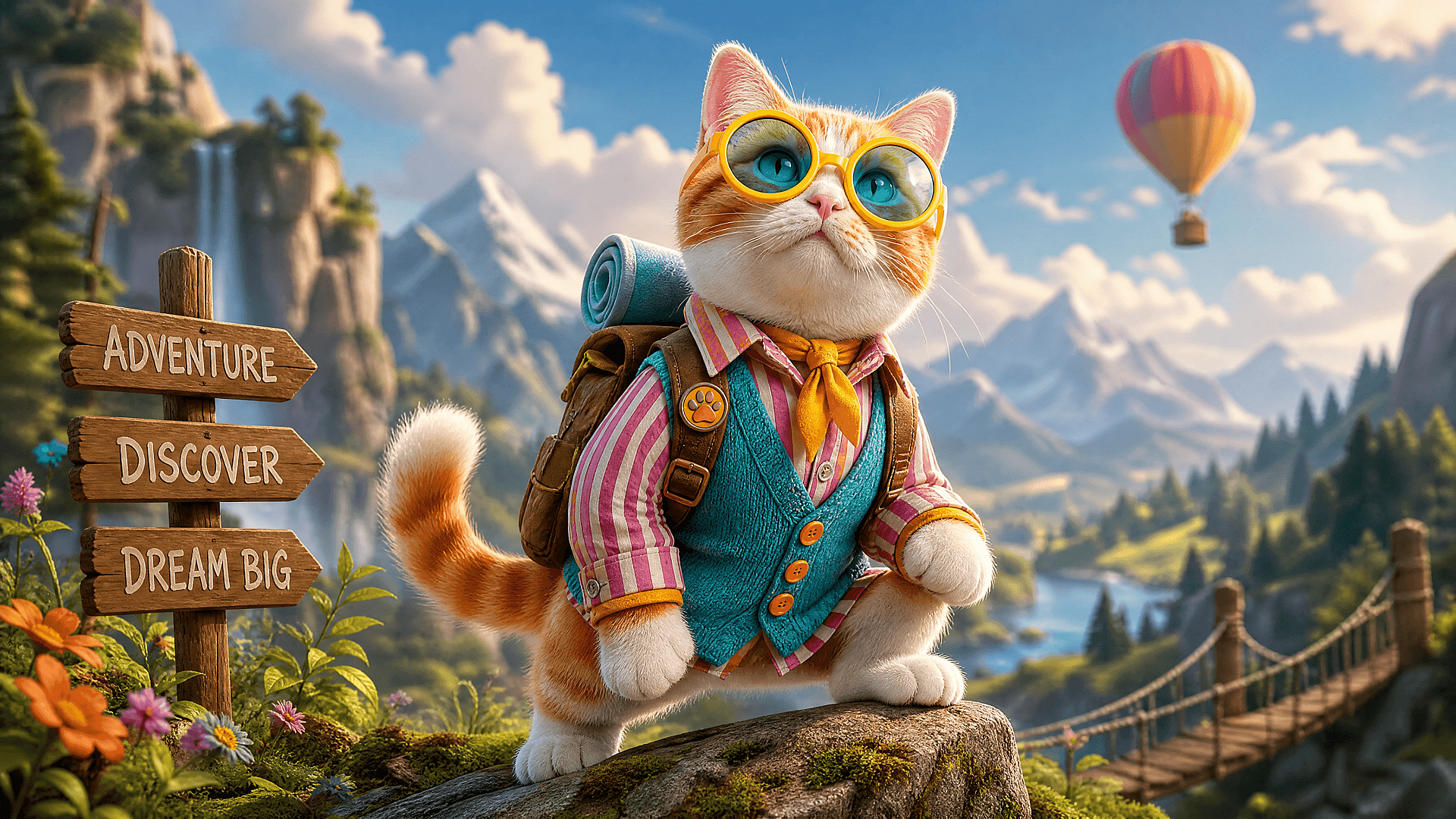
Las cuentas de mascotas son el público obvio aquí, pero este prompt también hace un trabajo discreto en otros ámbitos: regalos personalizados, páginas de memes y ese tipo de UGC ligero que las marcas publican entre campañas. Cualquier cosa que necesite calidez al instante.
El contenido de mascotas ya tiene tirón emocional. La coherencia es lo que convierte una imagen adorable en toda una serie: imagen principal, pack de stickers, minicómic, personaje de vídeo.
Usa la mascota de la imagen de referencia como identidad exacta. Convierte la mascota en un encantador personaje animado de aventuras, manteniendo el mismo patrón de pelaje, color de ojos, orejas y personalidad. Añade una pequeña chaqueta de explorador, una mochila pequeña, una cara expresiva, luz suave y cinematográfica, pelaje detallado, un estilo entrañable pero realista y una composición cuadrada para redes sociales.
5. El prompt del set de campaña de influencer con IA
Las marcas de moda y belleza son las que más partido le sacan, pero también resulta igual de útil para creadores que construyen una identidad visual coherente y para equipos que quieren probar conceptos de anuncios antes de pagar una sesión de fotos real.
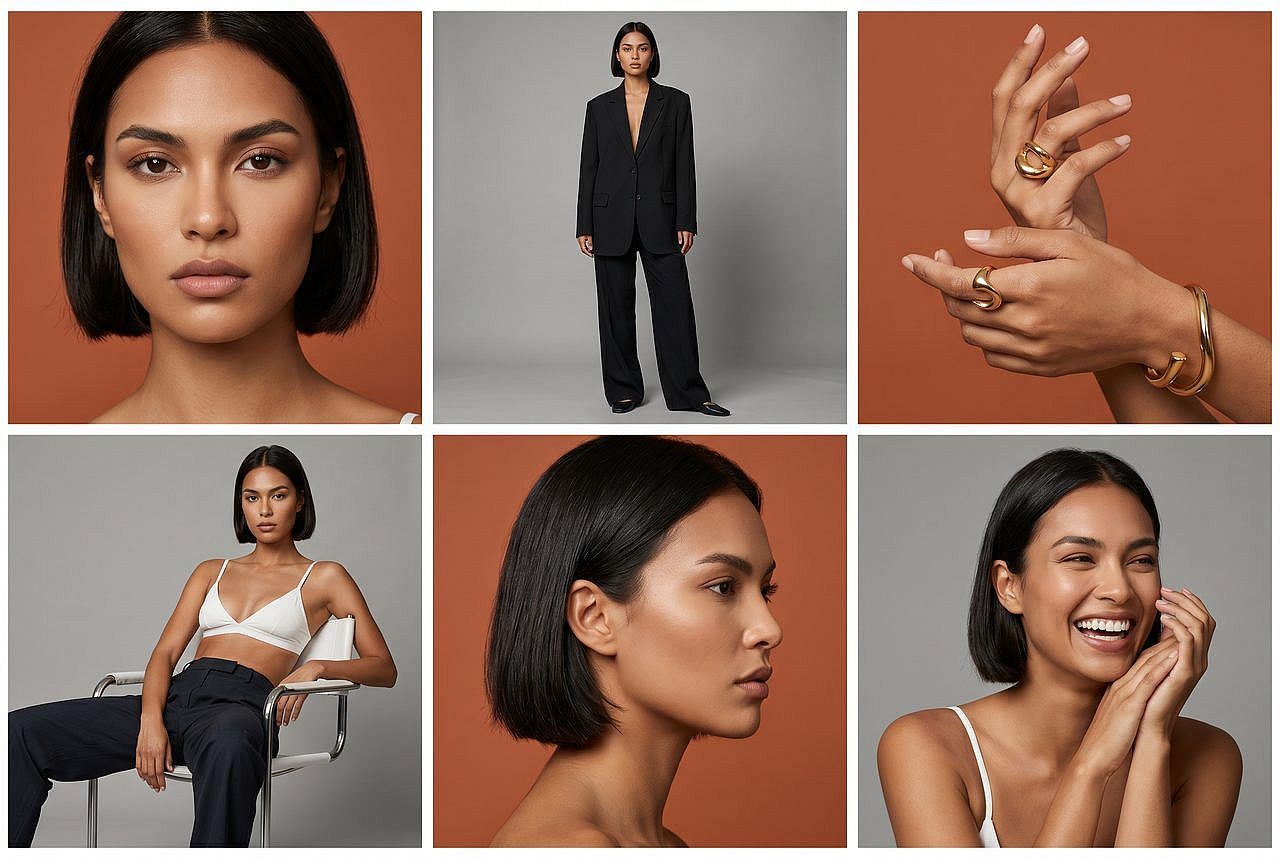
Seis fotogramas, una sola identidad. Este es el prompt donde Nano Banana Pro se gana su sueldo, porque un set de campaña con una cara que cambia no vale nada. Genera el set y luego elige los dos o tres fotogramas más potentes para publicar.
Usa a la persona de referencia como la identidad exacta. Crea un set de campaña de 6 imágenes para un influencer de IA: 1 retrato en primer plano, 1 foto de moda de cuerpo entero, 1 foto sosteniendo un producto, 1 foto espontánea de street style, 1 foto de belleza de estudio y 1 imagen de perfil social. Mantén la misma cara, peinado, tono de piel, tipo de cuerpo y ambiente de marca en cada imagen. Editorial de moda moderna, poses naturales, iluminación de alta gama, paleta de colores cohesiva.
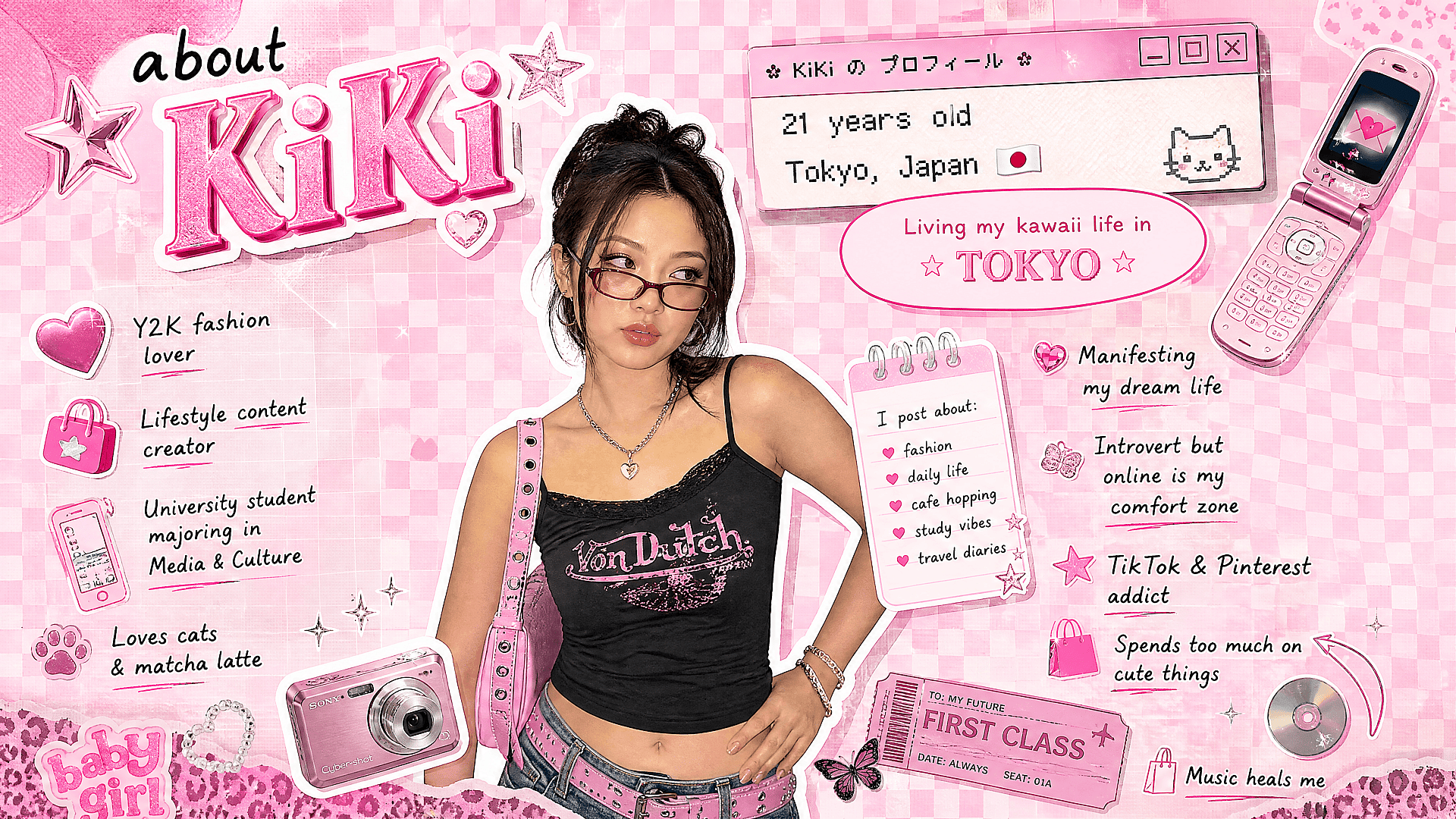
6. El póster con prompt de texto legible
Recurre a este cuando la imagen tenga que llevar texto: carteles de eventos, anuncios de lanzamientos de merch, gráficos con citas, Miniaturas de YouTube. Allí donde el titular es lo que vende. Texto sostenido en un solo intento. Los titulares cortos entre comillas funcionan mejor.
Collage con estética Y2K de una joven asiática con una camisola negra de Von Dutch, vaqueros de tiro bajo, cinturón rosa de tachuelas y gafas de cristales rojizos. Está centrada sobre un fondo de damero rosa lleno de elementos de scrapbook digital retro. El gráfico incluye texto 3D brillante 'about KiKi', un móvil rosa de tapa, una cámara digital rosa, una ventana de ordenador retro, una libreta rosa y fragmentos de texto dispersos sobre su estilo de vida. Iluminación brillante y plana, estilo cybercore hiperfemenino de principios de los 2000.
7. El prompt de primer fotograma para revelar la comida
Los restaurantes y los creadores de contenido gastronómico encajan de forma natural, pero la misma estructura de revelación funciona para cualquier lanzamiento de producto donde algo aparece de la nada. También es la base de imagen fija de Vídeos al estilo Food Jutsu.
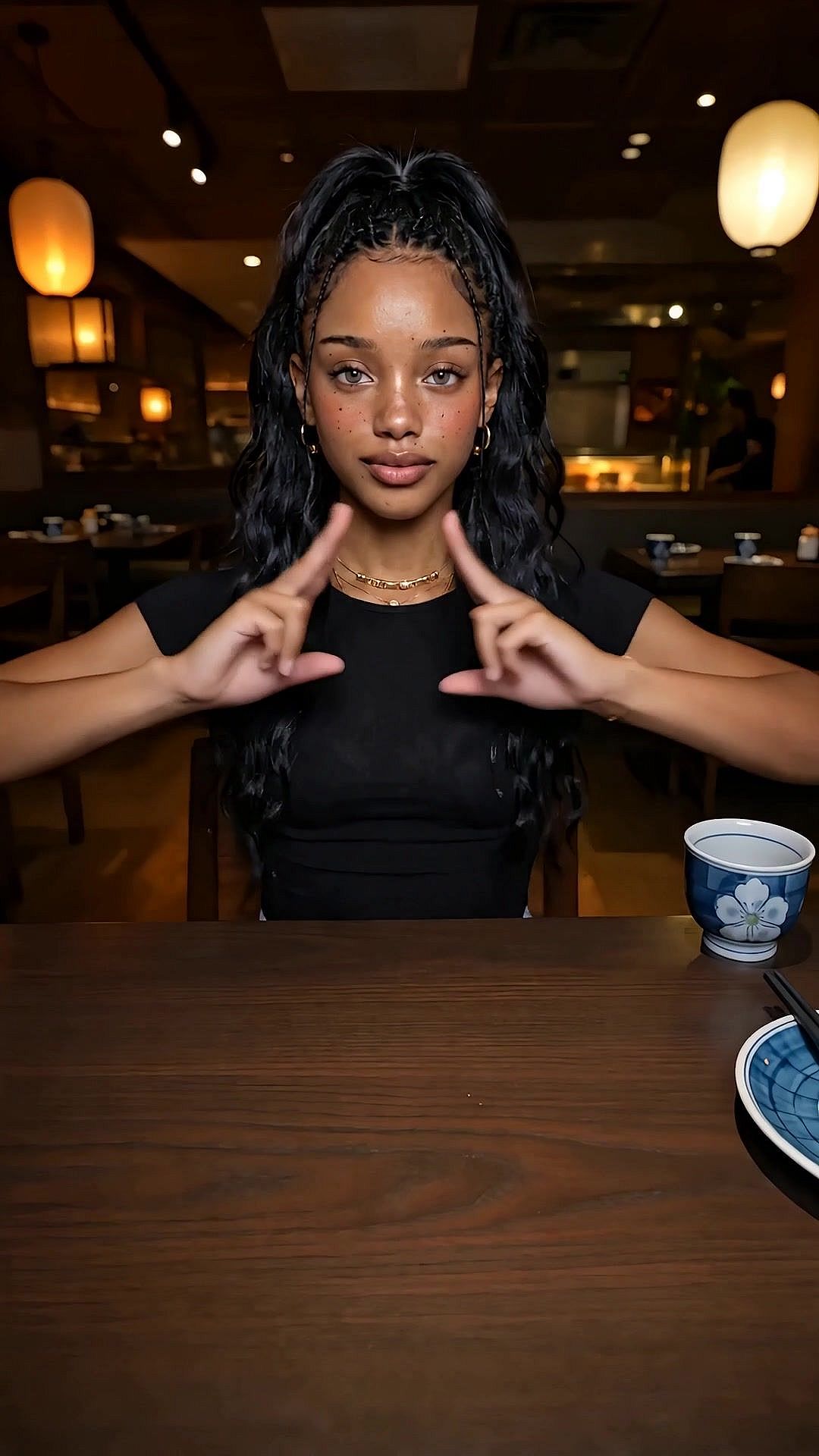
Food Jutsu es una tendencia de transición en vídeo, no de imágenes fijas. Pero el truco para una versión limpia con IA es un par de fotogramas que encajen: el fotograma «antes» y el «después», con la misma cámara y las mismas manos.
Retrato cinematográfico de una joven mujer negra con pecas y ojos claros en la mesa oscura de un restaurante, con una camiseta negra y joyas doradas. Mira directamente a la cámara, haciendo un gesto de encuadre simétrico con las manos. El fondo está desenfocado con cálidos farolillos brillantes. Sobre la mesa reposan una taza de té con flores azules y unos palillos. Iluminación cálida y evocadora, poca profundidad de campo, fotorrealista, muy detallado.
Retrato fotorrealista de una joven negra con pecas y pelo ondulado en un restaurante japonés de alto nivel. Sonríe detrás de una enorme bandeja negra de sashimi premium sobre hielo picado, con cortes gruesos de salmón, atún, gamba dulce y uni en cajas de madera, decorado con flores y una escalera de bambú en miniatura. Iluminación ambiental cálida, fondo difuminado con farolillos brillantes, poca profundidad de campo, colores vibrantes, fotografía gastronómica cinematográfica.
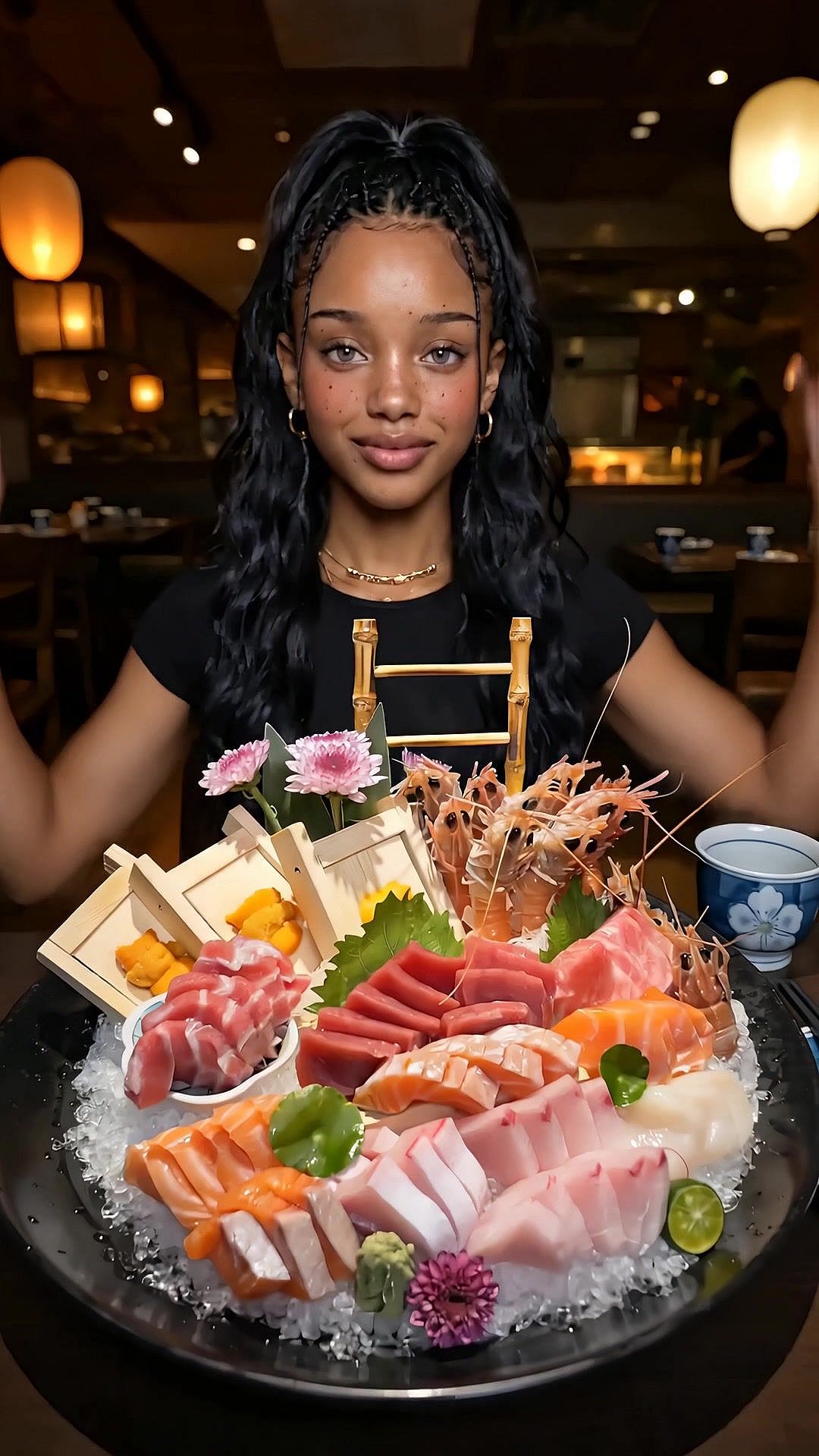
Genera estos dos fotogramas y luego usa una herramienta de imagen a vídeo para crear una animación que dé vida a la escena. Los efectos de sonido o los cortes secos en el montaje pueden mejorar la transición. Este es el vídeo final de «Food Ninjutsu».
Cómo escribir tu propio prompt de Nano Banana
Todos los prompts de arriba siguen la misma estructura probada. Úsala para crear tus propias ideas.
Usa la imagen de referencia como la identidad exacta de [sujeto]. Crea [tipo de resultado] en [estilo]. Mantén los mismos detalles de cara/cuerpo/mascota/producto. Cambia solo [cambios permitidos]. Añade [escena, iluminación, cámara, composición]. Haz que sea adecuado para [plataforma/caso de uso].
La frase «identidad exacta» le indica al modelo que no reinvente tu sujeto. «Cambia solo» protege las partes que te importan. Nombrar un tipo de resultado (un póster, una hoja de personaje, una imagen principal) hace que el resultado sea útil en lugar de solo bonito. Y nombrar la plataforma orienta la composición hacia tamaños reales de publicación.
Antes de pulsar generar, haz una comprobación de cinco segundos: imagen de referencia subida si la identidad importa, indicado qué se mantiene igual, indicado qué puede cambiar, elegido un tipo de salida, escrito para la relación de aspecto adecuada. Si quieres más patrones de prompts generales más allá de esta familia de modelos, nuestro mejores prompts para generadores de imágenes con IA la guía los cubre.
Preguntas y respuestas sobre las Nano Bananas
¿Qué es la tendencia de Nano Banana?
La tendencia Nano Banana es la ola de fotos virales creadas con IA usando los modelos de imagen Gemini de Google: figuras de acción en su caja, figuritas 3D, hojas de personaje, personajes de frutas con IA y sets coherentes de influencers con IA. Despegó cuando esos retratos con estilo de figuritas de juguete llevaron a Gemini a lo más alto de las tiendas de aplicaciones, y sigue evolucionando a medida que mejoran los modelos. Los prompts de esta publicación son las plantillas que hay detrás de los formatos que están de moda ahora mismo.
¿Cuál es el mejor prompt de Nano Banana?
Uno que le da al modelo un sujeto repetible y un tipo de resultado claro. «Usa esta foto de referencia como identidad exacta y crea la foto de producto de una figura de acción en caja» gana siempre a «hazlo viral».
¿Es bueno Nano Banana para fotos con IA virales?
Sí, sobre todo cuando la tendencia depende de la coherencia: figuras de acción, transformaciones de mascotas, hojas de personaje, sets de influencers con IA y primeros fotogramas para vídeos cortos.
¿Qué modelo de Nano Banana debería usar?
Nano Banana 2 Lite para borradores rápidos, Nano Banana 2 para imágenes equilibradas del día a día, Nano Banana Pro para los resultados más pulidos o consistentes.
¿Puede Nano Banana crear vídeos?
Es un modelo de imagen. Úsalo para imágenes fijas, hojas de personaje y primeros y últimos fotogramas, y luego lleva todo eso a las herramientas de vídeo de OpenArt para darle movimiento.
¿Puedo usar Nano Banana para fotos de producto?
Sí. Las imágenes principales de producto, los mockups de packaging, los visuales de campañas de temporada y los sets de ecommerce coherentes funcionan bien. Sube una imagen de referencia e indica claramente qué debe permanecer sin cambios.
¿Nano Banana maneja bien el texto en las imágenes?
Puede, sobre todo en los modelos más nuevos. Aun así, mantén el texto corto y grande, y compáralo con GPT Image 2 cuando la tipografía sea lo más importante de la imagen.
¿Son gratuitos estos prompts?
Los prompts son tuyos para copiar. Ejecutarlos en OpenArt es gratis al principio con créditos, así que puedes probar antes de elegir un plan.
Empieza con un solo prompt
No pruebes hoy los siete formatos. Elige el más parecido a lo que ya publicas, ejecútalo con tu propia foto de referencia y mira qué sale. El prompt de figura de acción es la victoria más rápida para una cuenta personal. El hero de producto es la victoria más rápida para una tienda.
Elige tu modelo en Crear imagen de OpenArt página, pega el prompt y suelta tu foto de referencia.