

 ChatGPT
 Perplexity
 Claude
 Gemini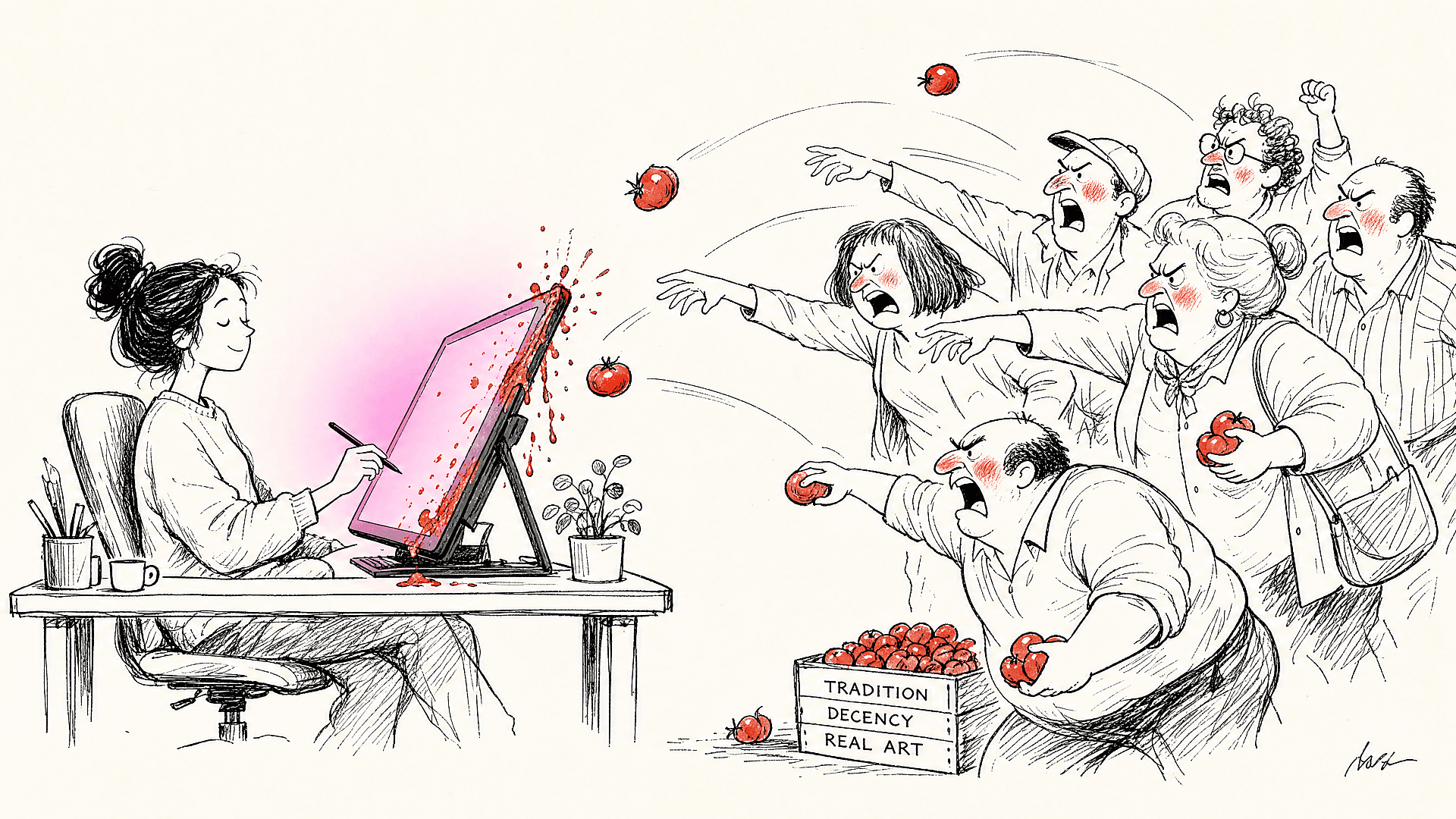
If you're even remotely online right now, you've seen the comments. They show up under any post that looks slightly AI-adjacent, in the quote-tweets, in the half-second verdict someone delivers out loud in their own video while reacting to someone else's: "ugh, this is AI." Sometimes it's "ew, AI, unfollowing," sometimes it's a single disgusted word, sometimes it's a long paragraph about everything wrong with the world. The wording barely matters because the sentiment is always the same, a mix of disgust and finality, the sound of a door closing. And it's become common enough that creators are now quietly engineering their work to avoid setting it off, adding disclaimers, obfuscating their process, over-explaining how much human effort went in, or backing away from the tools altogether.
その反応の中に実際に何があるのか、立ち止まって見てみる価値があります。なぜなら 一枚岩の拒絶に見えるものは、たいてい4つの別々の反論がひとつの反射に凝縮されたものですそしてそれらは、公平さも、あなたに向けられている度合いも、答えられる方法も同じではありません。それらを切り分けることこそ、クリエイターが自らの心の平穏のためにも、誰もがずっとできずにいる対話の質のためにも、できる最も有益なことだと分かります。
まずはスロップの話
リアクションに潜む最初の反論は「スロップ(粗製乱造)」についてのものです。というのも、その人の最近の記憶のどこかには、手抜きで大量生成されたコンテンツの終わりなきスクロールがあるからです——同じ5つの顔、同じプラスチックのような照明、何千と量産される同じエンゲージメント狙いのカルーセル。スロップは実在し、どこにでもあり、誰にとってもオンライン体験を確実に劣化させるので、その反応はまったく当然のことです。しかし、この反論が本当に問題にしているのは 努力と意図 というのはツールそのものよりも人の姿勢の問題であり、いい加減さはAIより数千年も前から存在します。こうしたツールで丁寧に作られた作品が、いわゆる「量産スロップ」と共有するのは根底にある技術だけです。そう考えると「うわAIか」という反応は、下手な本があるからといって読書そのものを拒むようなものです。
そして、盗難
The second objection has real teeth, and it's about theft. Many image models were trained on the work of living artists who never consented and were never paid, and a great deal of the legitimate anger about AI traces directly back to that fact, which deserves to be taken seriously rather than waved off. What's worth noticing is that this is a specific grievance about how certain models were built and how the industry has handled consent, not a blanket indictment of everyone who's ever opened one of the tools. It points toward genuine questions about training data, licensing, and which platforms a creator chooses to work with, but it doesn't actually resolve into the conclusion that あなた自身が は、何かを作り上げたことでさげすまれます。
コストの問題もあります
The third objection is about cost in the most literal sense, since the energy and water required to train and run large models at scale is a real environmental concern that's entirely fair to raise. Like the others, though, it operates at the level of infrastructure rather than the level of the individual, a question about how these systems are built and powered and at what scale, which sits with companies, energy grids, and the regulatory bodies meant to hold them accountable rather than with one person making one image on a random Tuesday.
私たちは他の環境不安でも同じ経験をしてきました。実際に状況を動かせる機関から、日常を生きる一般の人々へと、その負担がひそかに転嫁されてきたのです。個人の「カーボンフットプリント」という考え方そのものが 2000年代初頭に石油大手BPの広告キャンペーンで広まった, explicitly to shift responsibility for climate change away from fossil fuel companies and onto individual consumers, and the same move has been run on recycling and a dozen other problems. It works because guilt is easier to manufacture than systemic change. Pointing disgust at a single creator follows the same logic, and it belongs in the conversation about AI's real costs the same way your recycling bin belongs in the conversation about climate: it's not nothing, but it's not where the actual leverage is.
そしてそのすべての底にある、恐れ
4つ目の反論は、他のすべての根底に静かに横たわるもので、実際に嫌悪感を生み出しているのはこれです。AIによる創造が、人間であることの本質的な何かを脅かすのではないかという感覚です。これに関する研究は驚くほど直球です。ある 6つの実験にわたる研究 では、人はアートにAI制作というラベルが付いた瞬間にその価値を下げてしまうことが分かりました。たとえ人間の作品と見分けられないと認めても、人間が協力したと伝えられてもです。別の UBCの研究 このバイアスが最も強く出るのは、創造性が人間だけの特性だと信じている人たちで、彼らは人が作ったと思う作品により多くを払うことがわかった。それが示すのは主張というより アイデンティティの反射。それは理解できる不安から生まれています。機械が美しいものを作れるなら、私たちの特別さが問われてしまうのではないか、という恐れです。でもそれは、人間のあり方についての感情を、あなたの創作物に投影しているにすぎません。
それが暗い話に聞こえるかもしれませんが、そうではありません。私たちはこのまったく同じ不安が過去に繰り広げられるのを見てきたし、この物語がどう終わるかを知っているからです。1800年代、写真は魂のない機械的なものだと退けられていました。 本物の絵画への侮辱、それが私たちの持つ最も表現豊かな形式の一つになるまでは。1世紀後、シンセサイザーはミュージシャンを不要にすると言われていましたが、やがてあなたが愛するほぼすべての曲の屋台骨になったのです。 機械が関わった瞬間に人間らしさが失われるという不安は今に始まったものではなく、そのたびに例外なく打ち負かされてきました。 今回のラウンドがこれまでと違う結果になると信じる理由はどこにもない。
巧妙な手口と、なぜ反論できないと感じるのか
Something clarifying happens when you set these four objections side by side. Slop is a problem of effort, theft is a problem of consent and law, environmental cost is a problem of infrastructure, and the "it's not real" reaction is a problem of philosophy and identity, which means they have different causes, different solutions, and different people responsible for addressing them. Almost none of those people is the individual creator who made something with care and caught a stray "boooo AI 🍅" for the trouble.
こうしたコメントと議論しても、なかなか話がまとまらないのはこのためです。粗悪さの指摘に応えると相手は盗用の話にすり替え、盗用に触れると「魂がないだけ」と論点を変え、それに答えると今度はいつのまにかデータセンターの話になっています。異議が次々と場所を変えるのは、そもそも一貫した一つの主張ではなく、なんとなく整理されていない複数の感情が束になったものだからです。一つに答えても、残りはまだそこで拾われるのを待っているのです。
クリエイターにとっての意味
The goal, then, isn't to win the argument but to unravel it, because once the four objections come apart two things become clear at the same time. The legitimate concerns, theft and labor and environmental cost, genuinely deserve to be taken seriously, and the right response to them is engagement, not denial: choosing tools built responsibly, being honest about your process, pushing for better practices across the industry. The identity panic, meanwhile, the part doing most of the emotional work behind AI shaming, was never really about your work at all. It was about someone else's relationship to a changing world, and it's not a verdict you're obligated to accept on their behalf.
これで非難がなくなるわけではなく、落ち着くまでにおそらくもっと激しくなるでしょう。私たちは本物の文化的な調整の、騒がしい初期段階を生きているからで、そうした時期はいつもこんな風に聞こえるものです。しかしその嫌悪感は、いくら声が大きくても、その多くはスロップ(粗製乱造コンテンツ)や、搾取的な企業、エネルギーインフラ、そして人間に何が残されるのかと人々に問いかけてきた過去のあらゆる技術と同じくらい古い哲学的な不安に向けられていたのです。 そのほとんどは、あなたに向けられたものではありませんでした。 だからこそ、作品を作り、新しいツールを使って作り、本当に問われることには真剣に向き合い、質問が来たときにきちんと答えられるようにしておきましょう。この時代をうまく乗り越えるクリエイターは、制作プロセスを隠す人でも、懸念を偽物だと装う人でもなく、全体像を同時に捉えられる人です。そうした明晰さは、免責事項よりもずっと価値があり続けるでしょう。