

 ChatGPT
 Perplexity
 Claude
 Gemini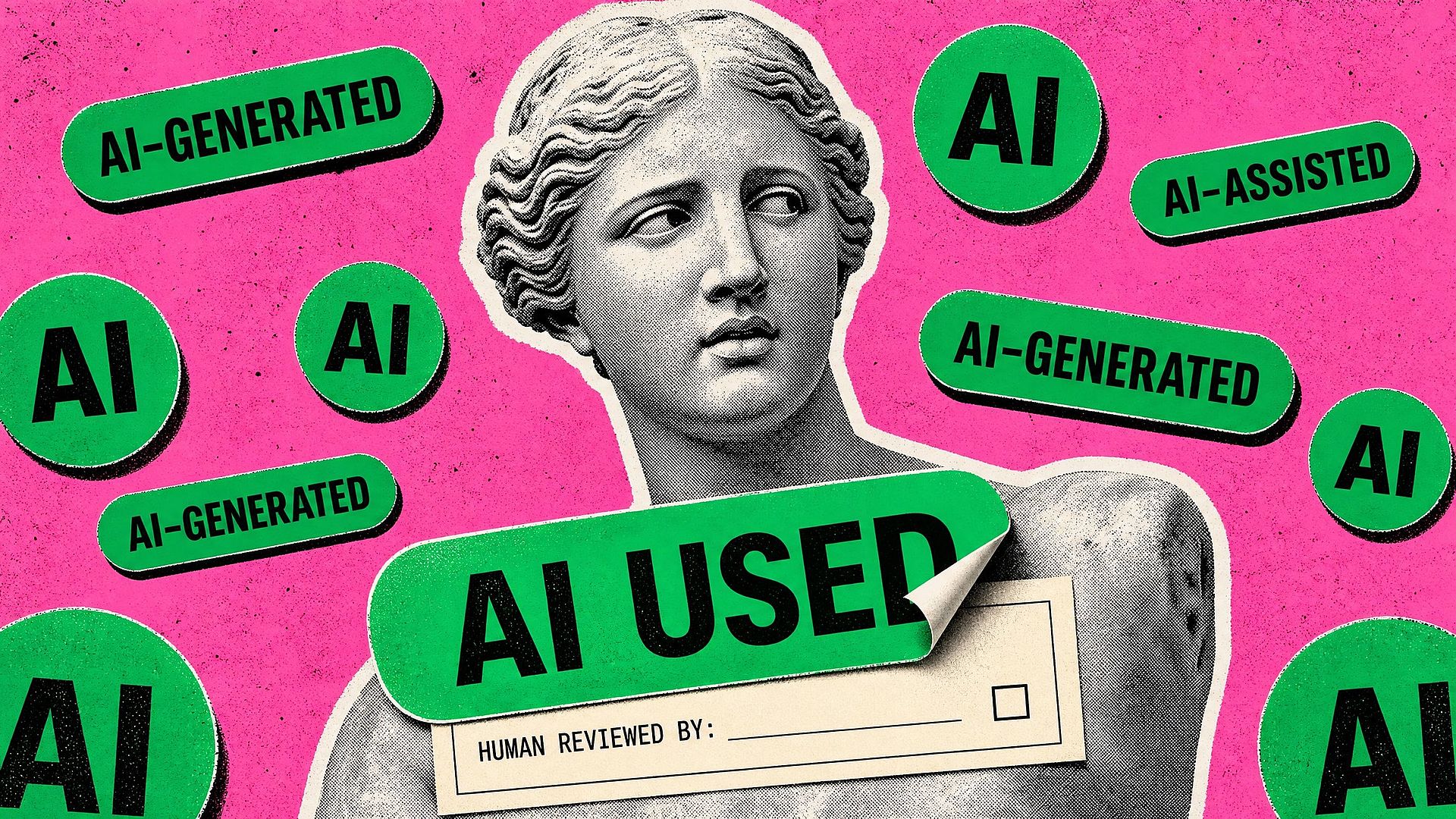
この議論の需要側は、まったく拮抗していない。 Fractlによる2026年の1,000人以上の消費者調査 found that 84 percent want written AI content labeled, 91 percent want it on video, 90 percent on images, 87 percent on audio, with strongly-agree responses alone clearing half in every category. The supply side isn't close either, just in the other direction: only 20 percent of organizations say they always disclose AI use to their audience, and 33 percent say they never do. Framed that way, this looks like a straightforward compliance gap. Get more companies labeling their content, close the gap, problem solved.
ただし、学術誌『Digital Journalism』に掲載された2026年の2つの研究は、信頼の問題は実はそのギャップにあるわけではないと示唆しています。 1つは、チリのメディア消費者を対象としたコンジョイント実験では、報道機関のAIポリシーを直接比較してもらったところ、情報開示だけでなく人間による監視こそが、読者がどの報道機関を信頼して読むかを決める最も影響力のある要素だと判明しました。報道機関がAIを雑務に使ったのか、フォーマットのパーソナライズに使ったのかは、ほとんど影響しませんでした。決め手となったのは、AIが生み出したものを人間がチェックしたかどうかです。ラベルは「AIが関わったか」という1つの問いに答えるだけ。しかし、それは読者が実際に知りたいこととは限らないのです。
2つ目の研究、 実験ではなくインタビューに基づいて構築、より鋭いものを見つけました: ラベルはかえって逆効果になることがあります。 One participant described their reaction to seeing an AI label as "I probably need to fact-check this and try and find another article," which is the opposite of what a disclosure label is supposed to accomplish. Others saw AI use itself as a kind of professional shortcut, with one interviewee putting it bluntly about a fully AI-written article: "You can do that as an 11-year-old. You don't need the training for that if you're going to use AI to generate your entire article." A vague, generic label doesn't resolve that instinct. It just confirms the suspicion without giving anyone a reason to set it aside.
What the same research found does help: specificity about degree, not just presence. Interview subjects drew a real line between an article labeled as fully AI-generated and one labeled as AI-assisted, treating those as different claims requiring different levels of scrutiny, and they wanted that distinction visible at the top of a piece rather than buried in a footer where it could look like it was trying not to be noticed. None of that is about whether to disclose. It's about whether the disclosure actually tells someone what happened and whether a person was accountable for it.
それこそがコンプライアンス視点では完全に見落とされる違いです。法律はラベルの存在を義務づけられますが、そのラベルが信頼を取り戻すという本来の仕事を果たすことまでは義務づけられません。信頼は、有能な人がまだ関与していたと視聴者が信じられるかどうかで決まるものであり、ページ上にラベルがあるかどうかで決まるものではないからです。 一度も開示しない33パーセントの人々に開示を始めてもらうこと、それ自体に意味があります。 しかしその根底にある、より難しく実用的な問いは、開示された内容が実際に誰かに何かを伝えているのか、それとも人々が本当に懸念していた点には触れずに単に体裁を整えているだけなのか、という点です。