

 ChatGPT
 Perplexity
 Claude
 Gemini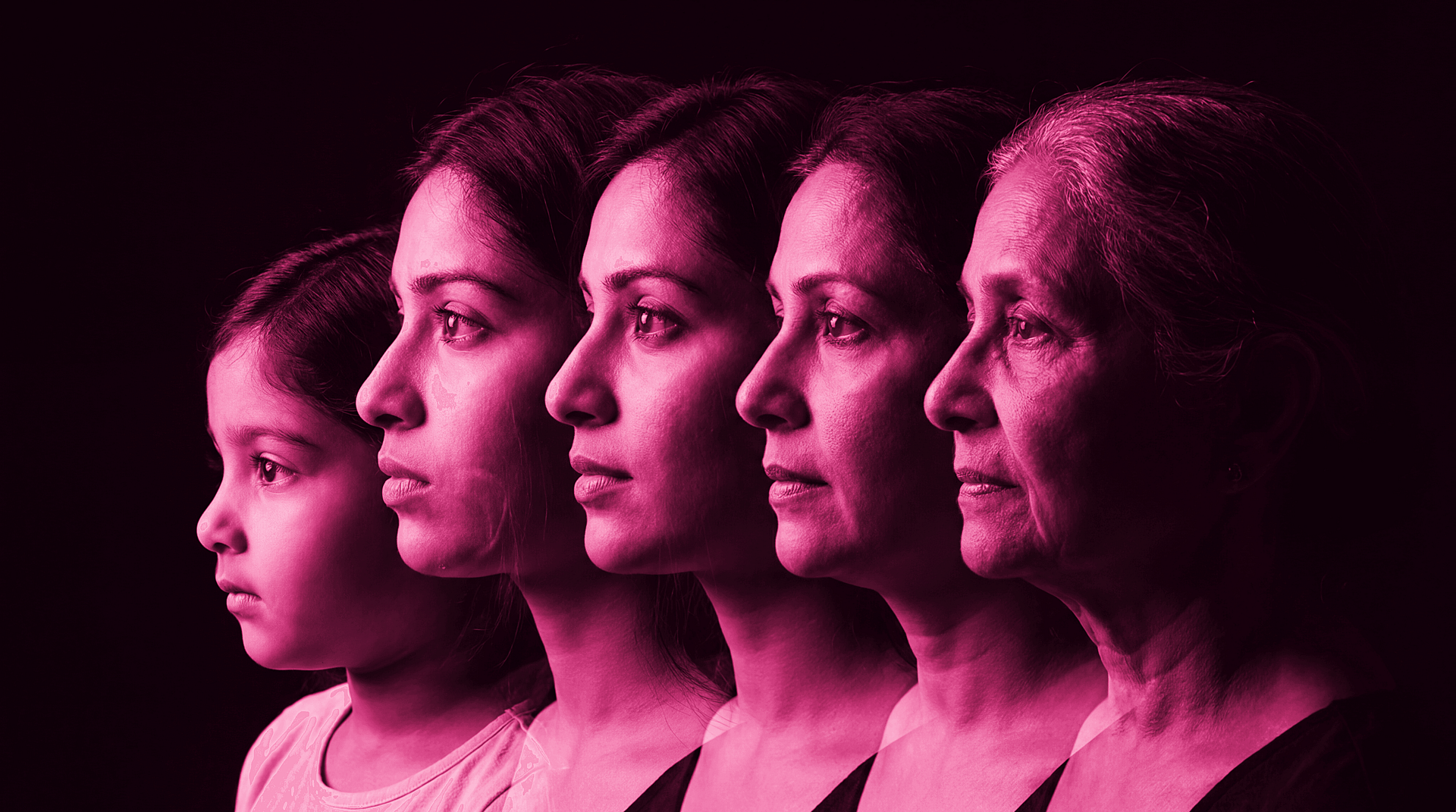
Your relationship to AI creativity didn't start the day you opened your first image generator. It started the moment you first understood that tools could make things, and who those tools were for. That understanding was shaped by the world you grew up in: the technology that was already there when you arrived, the gatekeepers you encountered or didn't, the creative acts you watched adults perform and the ones you were told weren't serious.
None of this is destiny. But it's context. And context is everything.
Boomers / born 1946–1964: You watched creativity become an industry. Now it's becoming something else.
The television was furniture. It was always on, always warm, always slightly too loud. The radio was how music reached you: not chosen, delivered, a voice from somewhere deciding what you'd hear next. Creativity in your childhood was a performance that happened somewhere else, by someone who'd already made it, and you watched. Then the counterculture arrived and told you that wasn't true anymore. That the song could come from a kid in a garage. That the poster could be made by hand. That art was a form of argument. You believed it, and you made things, and you still do.
What's complicated now isn't the technology. It's the question of authorship, a question your generation has thought about longer than any other, because you watched the culture industries consolidate, watched the independent get absorbed, watched "selling out" become a moral category and then a punchline. AI creativity lands differently when you have a forty-year relationship with the politics of who gets to make things and who gets paid for it. Your skepticism isn't technophobia, and it's entirely earned.
The question isn't whether AI can make something beautiful, it's whether beautiful is the point.
The Boomers who are using AI creatively, and there are more of them than the discourse suggests, tend to use it the way they used every tool that came before it: as an extension of an idea they already had. They're not prompting into the void. They know what they want to say, they just found a new way to say it.
Gen X / born 1965–1980: You were already doing this. You just didn't call it that.
If the basement had a four-track recorder, you were in it. Zines were photocopied at the library when the librarian wasn't watching. Mixtapes were a creative medium: the sequencing deliberate, the handwriting on the label considered. You made things before there was an infrastructure for making things. Before platforms. Before anyone without a label, a gallery, or a publisher could reach an audience worth reaching. You made them anyway, traded them with other people who were doing the same thing, and you called that a scene.
Gen X has seen this before, and they know how it ends: the tool gets absorbed, the craft survives, and the barrier to entry drops for everyone. It's not resistance, it's recognition. You've watched every wave of digital tools arrive: desktop publishing, digital audio workstations, Photoshop, Pro Tools, Final Cut. And each time, someone said it would kill the craft, and each time, the craft survived and the barrier to entry dropped and more people got to make things.
What Gen X is actually skeptical of isn't quite AI, but the hype. The breathless version of any new thing has always annoyed you. You'll use it when it's useful, and you probably already are, without making a big deal out of it, which is very on brand.
Gen X didn't wait for permission to make things in 1987, and they're certainly not waiting for it now.
Millennials / born 1981–1996: You built your identity around creative tools. Now the tools are changing faster than the identity can keep up.
You were the first generation to grow up with the internet as a given, but late enough that you remember the before. The dial-up screech. The moment Napster arrived and you understood, viscerally, that the rules were changing and nobody was going to stop it. You taught yourself things on forums and wikis and YouTube tutorials before YouTube was a career path. You made Tumblrs and DeviantArt pages and SoundCloud accounts not because you thought they'd go anywhere but because the making was the point, and suddenly there was somewhere to put what you made. Creative tools stopped being gatekept and started being everywhere, and you ran toward them.
Which is why AI is so disorienting for so many Millennials. Not because it's a threat, most of you are pragmatic enough to see past that framing, but because it moves the identity question. You spent years developing a relationship with your tools. Learning Lightroom, learning Ableton, learning Premiere. The competence was part of the creative self. AI doesn't erase that competence, but it does relocate it. The skill is now less about execution and more about vision, taste, direction. That's actually a promotion, even if it doesn't always feel like one.
The skill didn't disappear, it moved upstream, and AI just made something that was always true impossible to ignore: vision and taste matter more than execution.
The youngest Millennials, the ones on the cusp with Gen Z who remember MySpace but are fluent in TikTok now, tend to move fluidly between both worlds. They carry the Millennial instinct to protect the craft, and are more at ease with AI than most of their generation. They're often the most interesting AI creators in the room, because they have context and they have fluency. They know what they're doing and they're not apologizing for it.
Gen Z / born 1997–2012: The most conflicted generation. Also the one that will figure this out first.
The phone was always there. Not as a luxury or a novelty but as an organ, practically. The content was infinite, and the content was also made by people roughly your age, which meant that making things was not an abstract aspiration but an observable behavior that people in your peer group just did. Filters were creative decisions. Edits were an art form. The line between consumer and creator dissolved before you were old enough to notice it had ever existed. You grew up assuming that if you had something to say, there was a way to say it and someone who might hear it.
And yet Gen Z is statistically the most ambivalent about AI creativity: the heaviest users and the most likely to feel shame about it. It may seem like a contradiction, but it makes complete sense. You're the generation that built your creative identity on authenticity as a value. Real opinions, real faces, raw takes. AI creativity can feel like it violates that, like it's the opposite of the voice you spent years cultivating. The shaming hits harder when the accusation is that you're being fake, and you've staked part of your identity on not being fake.
Gen Z is also the generation that grew up with climate anxiety as a background hum, and the energy footprint of running large AI models at scale is a real and legitimate concern, not a talking point. For some Gen Z creators, the hesitation around AI isn't about authenticity at all. It's about whether the output is worth the cost.
Gen Alpha / born 2013–present: They will not understand what we were arguing about.
They are ten, eleven, twelve years old. AI is already in their schools, in their tablets, already in the thing they use to make the thing they're making for fun on a Tuesday afternoon. They didn't watch it arrive, it was just there. Like electricity, or color photography, or the fact that you can listen to any song ever recorded by asking out loud in a room.
Gen Alpha will not have a complicated relationship with AI creativity because they will not remember a creativity that didn't include it. The question of whether it's "real" will read to them the way the question of whether digital photography was "real" reads to us: technically interesting as history, emotionally inert as a concern. They will make things, and some of those things will be extraordinary. But they won't pause to justify the method.
They're the generation that will look back at this debate the way we look back at any moral panic built around a tool that turned out to just be a tool. With some affection. With some bewilderment. With the easy confidence of people who never had to fight for permission they didn't know they needed.
Every generation has a creative inheritance: a set of assumptions about what making things costs, who gets to do it, and what it means when you do. Those assumptions were formed by the world you arrived in, the tools that were already there, the gatekeepers you had to reckon with.
AI doesn't erase any of that, it lands on top of it. Which is why your reaction to it makes sense, whatever it is, and why the person next to you, born ten years earlier or later, might feel something completely different looking at the exact same image.
We were all born to generate. The generation part is just which version of that story you inherited.