

 ChatGPT
 Perplexity
 Claude
 Gemini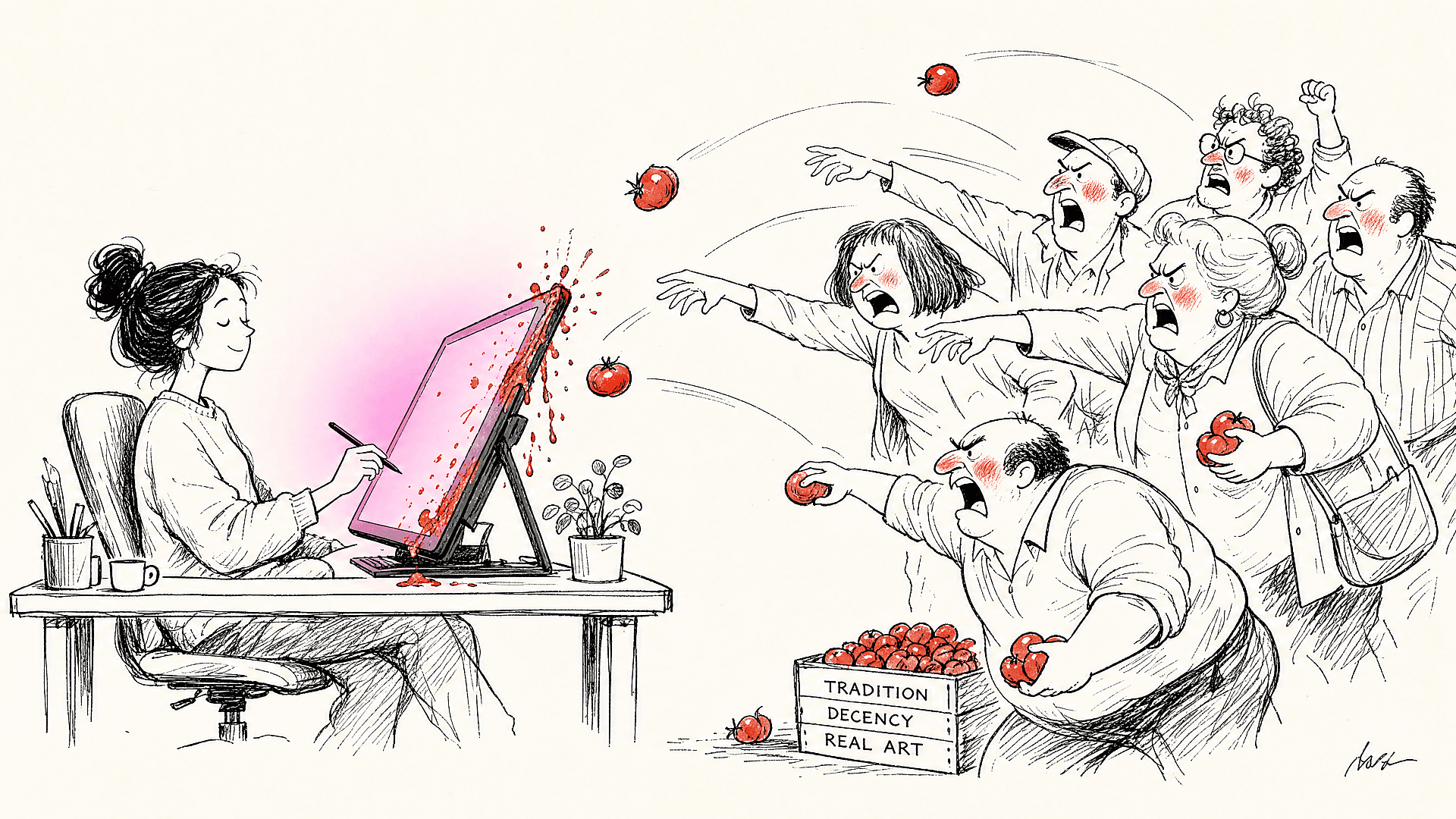
If you're even remotely online right now, you've seen the comments. They show up under any post that looks slightly AI-adjacent, in the quote-tweets, in the half-second verdict someone delivers out loud in their own video while reacting to someone else's: "ugh, this is AI." Sometimes it's "ew, AI, unfollowing," sometimes it's a single disgusted word, sometimes it's a long paragraph about everything wrong with the world. The wording barely matters because the sentiment is always the same, a mix of disgust and finality, the sound of a door closing. And it's become common enough that creators are now quietly engineering their work to avoid setting it off, adding disclaimers, obfuscating their process, over-explaining how much human effort went in, or backing away from the tools altogether.
Vale la pena parar un momento a fijarse en lo que hay realmente detrás de esa reacción, porque lo que parece un muro único de rechazo suele ser en realidad cuatro objeciones distintas comprimidas en un solo acto reflejo, y no son igual de justos, ni apuntan igual hacia ti, ni se pueden pedir cuentas de la misma manera. Distinguirlos resulta ser lo más útil que puede hacer un creador, tanto por su propia tranquilidad como por la calidad de la conversación que todos siguen sin lograr tener.
Primero, la morralla
La primera objeción escondida en la reacción tiene que ver con el contenido basura, porque en algún lugar de la memoria reciente de esa persona hay un scroll infinito de contenido de bajo esfuerzo generado en masa: las mismas cinco caras, la misma iluminación de plástico, los mismos carruseles cazaclics producidos por miles. Esa reacción es totalmente razonable, ya que el contenido basura es real, está por todas partes y degrada de verdad la experiencia de estar en internet para todos. Pero la objeción en realidad va sobre esfuerzo e intención en lugar de con la herramienta en sí, y la dejadez es anterior a la IA por unos cuantos miles de años. El trabajo hecho con cuidado usando estas herramientas no comparte nada con el slop salvo la tecnología subyacente, lo que hace que el "puaj, IA" suene un poco como negarse a leer del todo porque algunos libros están mal escritos.
Después, el robo
The second objection has real teeth, and it's about theft. Many image models were trained on the work of living artists who never consented and were never paid, and a great deal of the legitimate anger about AI traces directly back to that fact, which deserves to be taken seriously rather than waved off. What's worth noticing is that this is a specific grievance about how certain models were built and how the industry has handled consent, not a blanket indictment of everyone who's ever opened one of the tools. It points toward genuine questions about training data, licensing, and which platforms a creator chooses to work with, but it doesn't actually resolve into the conclusion that tú, en persona, son despreciables por haber creado algo.
También está el coste
The third objection is about cost in the most literal sense, since the energy and water required to train and run large models at scale is a real environmental concern that's entirely fair to raise. Like the others, though, it operates at the level of infrastructure rather than the level of the individual, a question about how these systems are built and powered and at what scale, which sits with companies, energy grids, and the regulatory bodies meant to hold them accountable rather than with one person making one image on a random Tuesday.
Ya hemos pasado por esto con otras inquietudes medioambientales, en las que la carga se traslada discretamente desde las instituciones que realmente podrían marcar la diferencia a la gente corriente que simplemente vive su vida. La propia idea de una "huella de carbono" personal fue popularizada a principios de los 2000 por una campaña publicitaria de la petrolera BP, explicitly to shift responsibility for climate change away from fossil fuel companies and onto individual consumers, and the same move has been run on recycling and a dozen other problems. It works because guilt is easier to manufacture than systemic change. Pointing disgust at a single creator follows the same logic, and it belongs in the conversation about AI's real costs the same way your recycling bin belongs in the conversation about climate: it's not nothing, but it's not where the actual leverage is.
Y bajo todo ello, el miedo
La cuarta objeción es la silenciosa que subyace a todas las demás, y es la que en realidad genera el rechazo: la sensación de que la creatividad de la IA amenaza algo esencial del ser humano. La investigación al respecto es sorprendentemente clara. Un estudio que abarca seis experimentos descubrió que la gente devalúa el arte en el momento en que se etiqueta como creado por IA, incluso cuando admite que no puede distinguirlo del trabajo humano, e incluso cuando se le dice que un humano colaboró en él. Un estudio aparte estudio de la UBC descubrió que el sesgo es más fuerte en personas que creen que la creatividad es un rasgo exclusivamente humano, y que pagarían más por un trabajo que creen hecho por una persona. Lo que eso indica no es tanto un argumento como una reflejo de identidad. Viene de un lugar comprensible, el miedo a que si una máquina puede crear algo hermoso, entonces nuestra singularidad se pone de pronto en duda, pero es un sentimiento sobre la condición humana proyectado sobre tus creaciones.
Y si eso suena desolador, no debería, porque ya hemos visto cómo se desarrollaba este mismo miedo y sabemos cómo acaba la historia. En el siglo XIX, la fotografía se descartaba por considerarse fría y mecánica, un insulto a la pintura de verdad, antes de convertirse en una de las formas más expresivas que tenemos. Un siglo después, los sintetizadores iban a dejar obsoletos a los músicos, hasta que se convirtieron en la columna vertebral de casi todas las canciones que amas. El pánico a que algo deje de ser humano en cuanto interviene una máquina no es nuevo, y ha perdido en todas y cada una de las ocasiones. No hay motivo para creer que esta ronda acabe de forma distinta.
El juego de manos y por qué parece imposible rebatirlo
Something clarifying happens when you set these four objections side by side. Slop is a problem of effort, theft is a problem of consent and law, environmental cost is a problem of infrastructure, and the "it's not real" reaction is a problem of philosophy and identity, which means they have different causes, different solutions, and different people responsible for addressing them. Almost none of those people is the individual creator who made something with care and caught a stray "boooo AI 🍅" for the trouble.
Por eso también discutir con comentarios como estos nunca lleva a ningún sitio. Respondes al argumento del contenido basura y la persona se desliza hacia el robo; abordas el robo y cambian a "es que no tiene alma"; contestas a eso y de repente estás hablando de centros de datos. La objeción no para de moverse porque nunca fue un argumento coherente desde el principio, solo varios sentimientos a medio ordenar amontonados, y cada vez que abordas uno, los demás siguen ahí esperando a que los recojas.
Qué significa esto para los creadores
The goal, then, isn't to win the argument but to unravel it, because once the four objections come apart two things become clear at the same time. The legitimate concerns, theft and labor and environmental cost, genuinely deserve to be taken seriously, and the right response to them is engagement, not denial: choosing tools built responsibly, being honest about your process, pushing for better practices across the industry. The identity panic, meanwhile, the part doing most of the emotional work behind AI shaming, was never really about your work at all. It was about someone else's relationship to a changing world, and it's not a verdict you're obligated to accept on their behalf.
Nada de esto hace que cesen las críticas, y probablemente se hagan más fuertes antes de calmarse, porque estamos viviendo la ruidosa etapa inicial de un verdadero reajuste cultural, y esas etapas siempre suenan así. Pero el rechazo, por muy ruidoso que sea, apuntaba sobre todo al contenido basura, a las empresas extractivas, a la infraestructura energética y a una angustia filosófica tan antigua como cada tecnología anterior que hizo que la gente se preguntara qué les quedaría por hacer a los humanos. Muy poco de eso estaba dirigido a ti. Así que crea tu obra, usa nuevas herramientas para hacerla y tómate las preguntas de verdad lo bastante en serio como para tener respuestas reales cuando surjan. Los creadores que superen bien esta era no serán quienes escondan su proceso ni quienes finjan que las preocupaciones son falsas, sino quienes sean capaces de abarcar el panorama completo de golpe, y ese tipo de claridad siempre valdrá más que un descargo de responsabilidad.