
 ChatGPT
 Perplexity
 Claude
 Gemini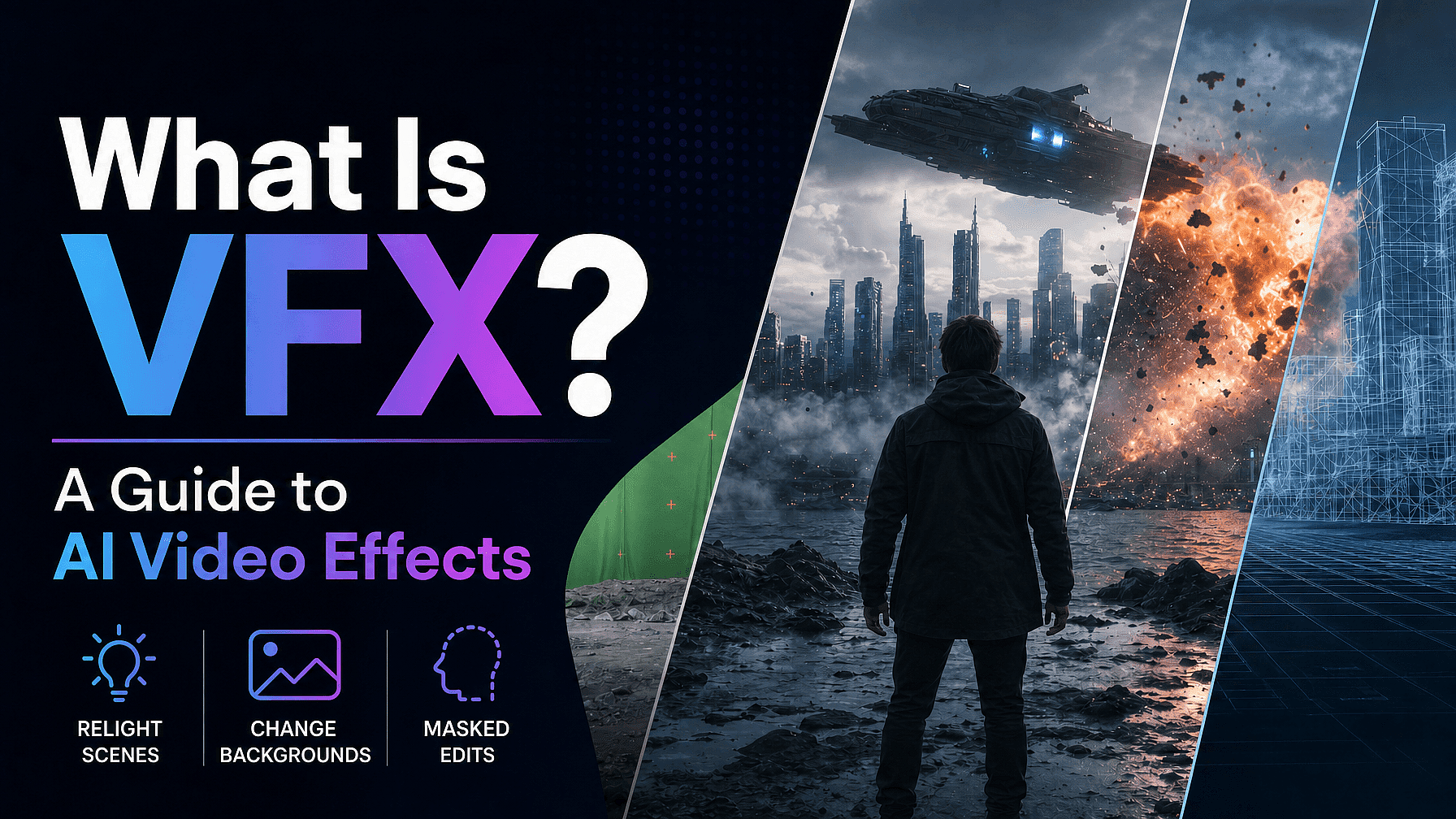
VFX significa efectos visuales, las imágenes que se crean o modifican después de rodar una escena. Abarca desde un cielo cambiado hasta una criatura totalmente digital, y aparece en casi todas las películas, series y anuncios que ves.
Durante casi toda su historia, los VFX significaban una pantalla verde, software caro y un equipo de especialistas. Eso está cambiando rápido, porque la IA ya puede hacer gran parte de ese trabajo a partir de un solo vídeo subido.
Esta guía explica qué es el VFX, en qué se diferencia del CGI y los SFX, los principales tipos que te encontrarás y cómo los efectos de vídeo con IA te permiten hacerlo sin un montaje de croma ni un estudio en condiciones.
Conclusiones clave
- Los VFX (efectos visuales) son imágenes creadas o modificadas en posproducción, después de haber grabado el metraje.
- La CGI es un subconjunto de los VFX (imágenes creadas totalmente por ordenador), y los SFX son efectos prácticos realizados en vivo en el set.
- Los tipos más comunes de VFX son la composición, el CGI, la captura de movimiento, el matte painting y el rotoscopiado.
- Los VFX tradicionales necesitan una pantalla verde, un compositor y software como Nuke o After Effects.
- Los efectos de vídeo con IA se encargan de cambios de fondo, reiluminación y ediciones con máscara a partir de una sola subida, sin necesidad de croma ni experiencia en edición.
¿Qué es VFX?
VFX significa efectos visuales. Es el proceso de crear o modificar imágenes fuera de una toma real y luego integrarlas en el metraje para que parezcan reales.
El VFX existe porque algunos planos son demasiado caros, demasiado peligrosos o simplemente imposibles de captar con cámara. Una ciudad destruida, un planeta lejano o un fondo limpio detrás de una habitación desordenada son mucho más fáciles de crear en posproducción que en el set.
El detalle clave es el momento: los VFX se hacen después del rodaje, no durante. Eso es lo que los distingue de los efectos prácticos, y también por eso la IA ha podido asumir gran parte del trabajo.
VFX vs CGI vs SFX
Estos tres términos se usan indistintamente, pero significan cosas distintas. Conocer la diferencia hace mucho más fácil entender qué hace realmente una herramienta de efectos de vídeo con IA.
VFX es el paraguas general. Cubre cualquier imagen creada o manipulada en posproducción, incluyendo composición, matte painting, seguimiento de movimiento y CGI.
CGI, o imágenes generadas por ordenador, es un subconjunto de los VFX. Se refiere a imágenes creadas íntegramente por un ordenador, como una criatura en 3D o un entorno totalmente digital. Todo el CGI es VFX, pero no todos los VFX son CGI.
SFX, o efectos especiales, son efectos prácticos logrados en directo en el set. Las explosiones controladas, la lluvia falsa, las prótesis y los animatronics son todos SFX, porque ocurren delante de la cámara en lugar de en posproducción.
Los principales tipos de VFX
La mayoría de los efectos visuales encaja en un puñado de categorías. Los efectos de vídeo por IA se corresponden con las mismas ideas, así que ayuda conocer primero las versiones tradicionales.
Componer capas combinan imágenes separadas en un solo fotograma. La forma más común es el trabajo con croma, donde se graba a un sujeto sobre un fondo verde y luego se incrusta un nuevo fondo detrás de él.
CGI crea elementos desde cero en un ordenador, desde personajes hasta mundos enteros. El matte painting amplía un set con un paisaje pintado o digital, y el seguimiento de movimiento fija los elementos CGI sobre el metraje en movimiento para que se mantengan en su sitio.
Captura de movimiento registra el movimiento de un actor y lo traslada a un personaje digital. El rotoscopio es el trabajo manual de trazar un sujeto fotograma a fotograma para separarlo de su fondo.
Cómo funcionan los VFX tradicionales y por qué son difíciles
El pipeline clásico de VFX es potente, pero es lento y caro. Ese es el hueco que los efectos de vídeo con IA vienen a cubrir.
Una toma típica necesita un estudio con pantalla verde, iluminación controlada y una placa limpia. Tras el rodaje, un compositor recorta el fondo, limpia los bordes a mano y ajusta la iluminación para que la nueva escena resulte creíble.
Ese trabajo se realiza con software como Nuke o Adobe After Effects, a menudo en una render farm, y unos pocos segundos de metraje pueden tardar días. Además, exige una formación de verdad, lo que deja los VFX tradicionales fuera del alcance de la mayoría de creadores en solitario y equipos pequeños.
Cómo la IA cambió los VFX
Los efectos de vídeo con IA se saltan la mayor parte de ese proceso. En lugar de hacer keying, rotoscopia y composición a mano, un modelo de IA lee tu metraje y hace la separación por ti.
Los modelos de vídeo modernos están entrenados para aislar un sujeto, reconstruir la iluminación de todo un fotograma y editar zonas concretas sin croma ni recortes manuales. Subes un clip normal, describes el resultado que quieres y el modelo lo genera en minutos.
Esto resulta aún más práctico si ya estás produciendo contenido de vídeo en un Generador de vídeo con IA en lugar de la grabación tradicional.
Activado OpenArt VFX, esto funciona con SwitchX de Beeble, un modelo de vídeo a vídeo pensado para un aislamiento limpio del sujeto, reiluminación de fotograma completo y ediciones de zonas enmascaradas. Usa tu material original como guía directa, así el movimiento y la identidad de tu sujeto se mantienen intactos en lugar de desviarse de un fotograma a otro.
Los tres modos de VFX con IA, equiparados a los VFX clásicos
OpenArt VFX te ofrece tres modos a partir de una sola subida. Cada uno es la versión con IA de una técnica tradicional de efectos visuales.
Cambia el fondo sin croma
Cambiador de fondo de vídeo es la versión con IA de la composición y el chroma key. Aísla tu sujeto y sustituye la escena de fondo, sin croma y sin recortes manuales. Eliges un preajuste, subes una imagen o generas un nuevo entorno con IA.
Reiluminar toda la escena
Reiluminación de vídeo con IA El modo hace a la vez el trabajo de un montaje de iluminación y un etalonaje de color. Reconstruye la iluminación, el color y el ambiente en todo el fotograma en lugar de añadir un filtro plano, así que las sombras y las luces se ven reales. Tu interpretación y el movimiento de cámara se mantienen exactamente como los grabaste.
Protege una zona con máscara y transforma el resto
Modo de inpainting es la versión con IA del rotoscopiado y el enmascarado. Pintas una máscara sobre la parte del fotograma que quieres conservar, como una cara o un producto, y esa región se mantiene tal cual se grabó mientras todo lo que queda fuera de la máscara se transforma. Solo enmascaras el primer fotograma, y el modelo rastrea la región protegida a lo largo de todos los fotogramas posteriores.
Este vídeo de YouTube te da una idea práctica de cómo lograrlo en OpenArt VFX:
Cómo añadir efectos de vídeo con IA a un clip
El flujo completo consta de tres pasos y unos minutos, sin nada que instalar.
Sube tu vídeo.
Sube cualquier clip MP4 o MOV. Los efectos de vídeo con IA funcionan con grabaciones de cualquier sala, sin croma ni montaje de estudio.
Elige tu modo.
Elige Fondo, Reiluminar o Inpainting. Dirígelo con un preset, una imagen de referencia o un prompt de texto.
Genera y compara.
SwitchX renderiza tu clip en unos minutos. Previsualiza el resultado en una vista comparativa, refínalo si lo necesitas y descarga un MP4.
Quién usa los efectos de vídeo con IA
El atractivo es amplio, porque la barrera de entrada ahora es muy baja. Los creadores de redes sociales cambian fondos o reiluminan metraje casero para crear un estilo propio sin un plató.
Cineastas y directores obtienen composición y reiluminación sin Nuke ni After Effects, convirtiendo las regrabaciones en una máscara y un prompt. Los equipos de marca y marketing graban una vez y luego aplican distintos fondos y ambientes por campaña, así una sola sesión se convierte en toda una biblioteca de contenido.
En resumen
El VFX es el arte de crear y modificar imágenes después de rodar una toma, y durante décadas requirió un estudio, un compositor y software especializado. Los efectos de vídeo con IA mantienen el mismo control eliminando el croma, el pipeline y la curva de aprendizaje.
Si quieres probarlo con metraje que ya tengas, OpenArt VFX cambia fondos, reilumina y aplica ediciones con máscara desde una sola imagen, gracias al modelo SwitchX de Beeble.
Preguntas frecuentes
¿Qué significa VFX?
VFX significa efectos visuales. Son las imágenes que se crean o modifican después de rodar una escena y luego se integran en el metraje para que parezcan parte de la toma original.
¿Son los VFX lo mismo que los CGI?
No. El CGI (imágenes generadas por ordenador) es un tipo de VFX, creado por completo por un ordenador. VFX es la categoría más amplia, que también incluye composición, matte painting y seguimiento de movimiento, así que todo el CGI es VFX, pero no todos los VFX son CGI.
¿Cuál es la diferencia entre VFX y SFX?
Los VFX se hacen en posproducción, después del rodaje. Los SFX (efectos especiales) son efectos prácticos creados en directo en el set, como explosiones, lluvia falsa o prótesis.
¿Se pueden hacer VFX sin croma?
Sí. Los efectos de vídeo con IA aíslan al sujeto y sustituyen o reiluminan la escena sin croma ni recortes manuales. OpenArt VFX hace cambios de fondo, reiluminación y ediciones con máscara a partir de una sola subida.
¿Necesitas experiencia para crear VFX?
Ya no. Los modos de fondo y reiluminación están pensados para usarse con un solo clic mediante un preset o una referencia. Las ediciones de regiones enmascaradas dan mejores resultados con un enmascarado cuidadoso, pero no se necesita software de composición ni formación en posproducción.
¿Qué software necesitas para los VFX?
Los VFX tradicionales funcionan con herramientas como Nuke o Adobe After Effects, a menudo con una granja de renderizado. Los efectos de vídeo con IA funcionan en el navegador, así que subes un clip, eliges un modo y descargas el resultado sin nada que instalar.