

 ChatGPT
 Perplexity
 Claude
 Gemini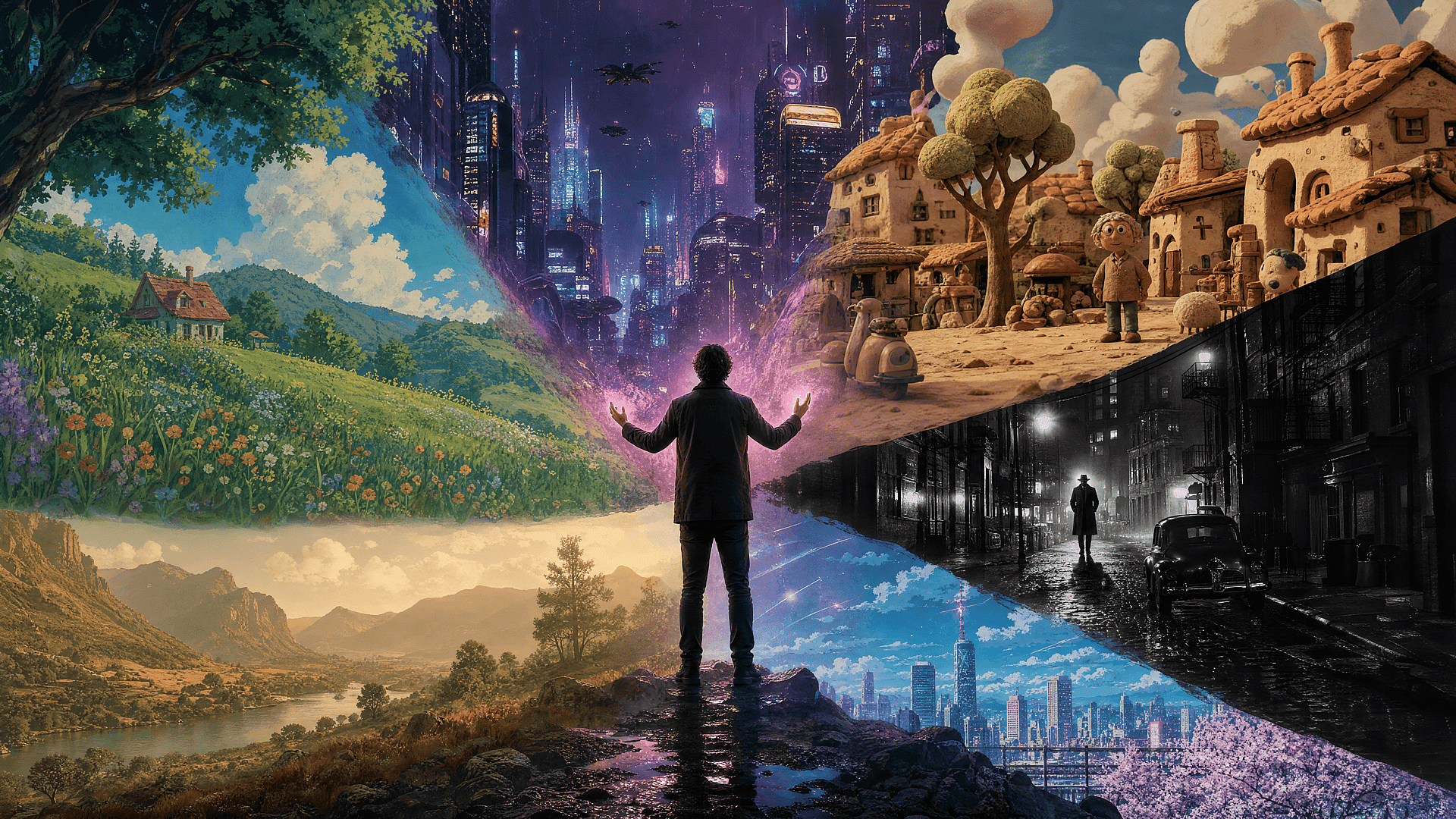
Casi todo creador y narrador tiene una lista de proyectos sin realizar, y rara vez es por falta de ideas. El cortometraje que nunca salió del papel, la campaña que veías fotograma a fotograma pero que no lograste sacar adelante, el videoclip que habrías hecho si el presupuesto hubiera sido tres veces mayor. Podías imaginártelo todo. What you couldn't do was get it out of your head and onto a screen, because the entire production system stood in the way: the crew, the gear, the budget, the schedule that never lined up, the years of craft training between an idea and the skill to execute it. Visual storytelling sat behind a kind of paywall, one measured not just in money but in time, access, and years of craft, and it asked whether you could afford all of that long before it ever asked whether you had something worth making. Somewhere along the way, most of us quietly accepted that directing was something other people did.
Ya hemos visto pasar exactamente esto una vez
Hace unos años, el software funcionaba de la misma manera. Crear algo real significaba saber programar, lo que implicaba años de formación y una fluidez que la mayoría de la gente nunca tuvo el tiempo ni el acceso para desarrollar. La idea vivía en la cabeza de alguien y ahí se quedaba, porque la distancia entre la idea y el producto funcional estaba llena de sintaxis, herramientas y conocimiento técnico acumulado.
Pero entonces, con herramientas como Claude Code, llegó el vibe coding. Al principio la reacción de los ingenieros de verdad fue restarle importancia: era un juguete, un atajo, una forma de que gente que no entendía realmente los sistemas montara algo endeble. Durante un tiempo ese escepticismo hasta pareció razonable, hasta que las herramientas mejoraron, más rápido de lo que casi nadie esperaba, y la historia cambió enseguida. A día de hoy, la gran mayoría de los desarrolladores profesionales usan herramientas de IA como parte habitual de su trabajo, y una parte importante y creciente del código de producción se genera en lugar de escribirse a mano. Los que se habían burlado ahora publican con ello, porque resultó no ser una muleta para principiantes, sino una herramienta de velocidad, lo que permite a un buen ingeniero avanzar diez veces más rápido.
El detalle que más importa en esa historia es el que la gente pasa por alto: nada de eso funcionaba sin un humano al mando. Las mediciones más rigurosas sitúan el código de producción creado por IA muy por debajo de los titulares grandilocuentes, y los desarrolladores que le sacaron más partido a estas herramientas fueron los que sabían exactamente qué pedir, qué conservar y qué descartar mientras la IA se encargaba de la ejecución. El criterio, el buen gusto, la intuición de lo que la cosa debía ser realmente, siguieron siendo humanos. Lo que de verdad cambió fue quién podía crear siquiera: gente que nunca había escrito una línea de código de repente lanzaba la app, la web, la pequeña herramienta que siempre había querido, y la categoría se amplió para incluirlos.
OpenArt Director trae ese mismo poder a la narración visual
The first wave of AI video looked, for a moment, like it had already solved this. It tore down the production barrier overnight: no crew, no gear, no budget, just a prompt and a few seconds of footage in return. But it quietly put a new barrier in the old one's place: you could generate a clip, but to make anything that resembled a real piece you were stitching dozens of them together, fighting to keep a character's face consistent from one shot to the next, regenerating until the seams more or less disappeared. Access had opened, but direction, the actual work of shaping a story into a finished piece, was still out of reach: you weren't directing so much as operating a slot machine and assembling the winnings by hand.
Este es el cambio que queríamos crear para el vídeo: no una forma más rápida de generar clips, sino la misma transformación que el vibe coding trajo al software, la posibilidad de crear una pieza terminada describiendo lo que quieres y moldeándola a medida que aparece, contigo al mando creativo en todo momento.
Lo llamamos dirección por ambiente
Describes lo que quieres ver y reaccionas a lo que aparece, dando el tipo de indicaciones que le darías a un equipo creativo: haz que se sienta más como un recuerdo, haz que el segundo acto tenga más impacto, este personaje debería ser más suave. Our AI video Director takes the note and the piece changes. You're not quite operating film equipment, but you're also not just firing off prompts and hoping the clip that comes back is close enough to your vision. It's an entirely new form of creating: you're co-directing a whole piece with AI, with its own story, pacing, voice, and sound, rather than a five-second fragment you'll have to stitch to forty others later. Every creative decision that matters, what the story is, how it should feel, where it should land, what stays and what gets cut, remains yours.
In practice it works across the whole arc of making something, not just the moment of generation. You start with whatever you have, a single sentence, a script, a song, a mood board, a product shot, a voice memo, and Director helps you develop it: proposing a story structure, building out characters and the worlds they move through, suggesting a visual style and tone. From there it produces the piece, with the visuals, dialogue, music, and sound generated together rather than assembled afterward. Then you refine by talking to it, the same way a director gives notes on set, until the thing on the screen matches the thing in your head. Bring more as you go, your own voice, a reference clip, a brand's guidelines, and it folds them in, holding everything consistent as the project grows.
Lo que obtienes es una pieza terminada, no material en bruto. Director genera hasta cinco minutos en una sola toma continua, con los visuales, los diálogos, la música y el sonido diseñados en conjunto en lugar de añadirse después, y mantiene tus personajes, productos y estilo estables desde el primer fotograma hasta el último. Cuando quieras cambiar algo, solo tienes que decirlo. Acorta la apertura. Dale una luz más cálida en la segunda escena. Haz la música más inquietante. Para la mayoría de las decisiones, esa conversación es la forma más rápida de dar forma al resultado. Y cuando quieres meterte a fondo, el control está ahí esperándote: una vista completa de línea de tiempo y storyboard donde puedes entrar en escenas concretas y afinar las cosas fotograma a fotograma. Dirige todo mediante la conversación, echa mano de los controles manuales o pasa de una cosa a otra con total libertad. La obra es tuya para darle la forma que quieras.
Dirigir una historia no es lo mismo que crear software
For all its usefulness, the vibe coding parallel breaks down in one important place, because compelling visual storytelling is the harder, stranger craft. Code either runs or it doesn't, while a story has to make someone feel something, which is a far slipperier target. Pacing, performance, the exact emotional temperature of a scene, the way a cut lands, the silence before a line: these are judgment calls with no correct answer, only a better or worse one, and they're the difference between a video that technically exists and one that actually moves you.
Por eso la persona al mando importa aquí aún más que en el software. Director puede mantener a un personaje coherente a lo largo de cinco minutos y sincronizar la música con el ritmo emocional de una escena, y esas son cosas genuinamente difíciles de conseguir. Pero la cuestión de si el segundo acto debería calen más hondo, y qué significa "más hondo" para esta historia en concreto, es algo que solo puede responder una persona con un punto de vista. La herramienta te da los medios, y lo que hagas con ella sigue dependiendo de lo que aportes, igual que siempre ha sido.
Menos barreras, más posibilidades
Lo que el vibe coding acabó demostrando es que bajar la barrera no bajó el techo. Los profesionales no empeoraron, se volvieron más rápidos, y toda una población de personas que nunca habrían podido construir nada empezó a sacar trabajo real. La categoría creció sin volverse superficial, porque lo que separaba el buen software del malo nunca fue teclear, sino saber qué construir y por qué.
La dirección con vibra llega en el momento justo: quienes ya dirigen para vivir consiguen una forma de vaciar la carpeta de proyectos que el presupuesto nunca permitió, y quienes siempre tuvieron el ojo pero nunca el acceso por fin pueden crear eso que llevan imaginando todo este tiempo. Bienvenido al futuro de la narración visual. Estamos deseando ver qué diriges con vibra.