 ChatGPT
 Perplexity
 Claude
 Gemini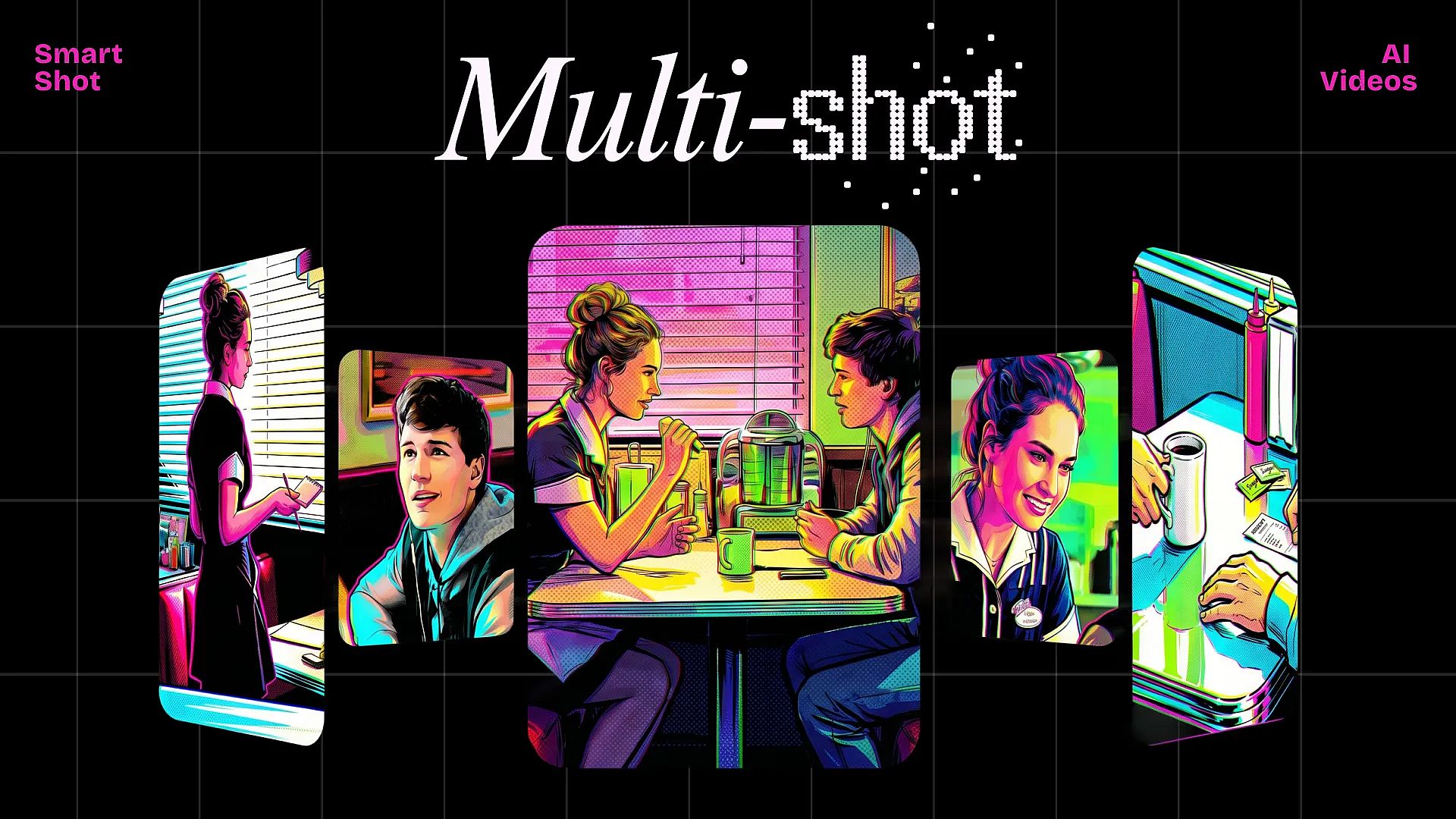
OpenArt's Smart Shot turns one prompt into a short video with 3 to 5 different shots. A wide view of a city street can switch to a close-up of a face, then follow someone around a corner.
Each switch from one camera angle to the next is called a cut. Smart Shot plans every shot and every cut before it makes the video, and you can change the plan first.
Conclusiones clave
- Smart Shot turns one prompt into a 10 to 20 second video with 3 to 5 different shots.
- Smart Shot writes a Shot Plan first, with storyboard frames, camera positions, and lighting notes.
- You can read the Shot Plan and change it by typing what you want before the video is made.
- Saved characters and OpenArt Worlds environments keep the same faces and places in every shot.
- Smart Shot is its own tool in OpenArt's video tools menu, next to Text to Video.
Why do videos with several shots feel more real?
Movies, ads, and YouTube videos switch camera angles all the time. They move between wide views, close-ups, and new points of view, and those switches set the pace and keep people watching.
A single AI video clip usually shows one view from start to finish. A video with several shots tells a small story. The wide view shows where you are, and the close-up shows what matters.
What does a planned AI video need?
Film crews plan every shot before they start filming. The director decides what each shot looks like, where the camera goes, and how the scene moves from one moment to the next.
Smart Shot does that planning step for you. Smart Shot writes the plan from your prompt, shows it to you, and only then makes the video.
What is a Shot Plan in Smart Shot?
A Shot Plan is the one-page plan Smart Shot writes for your video before it makes anything. Film crews call this kind of plan a storyboard. Smart Shot's Shot Plan includes:
- Storyboard frames that show what each shot looks like
- A camera position and camera move for every shot, such as a slow push toward the subject or a circle around it
- A top-down map that shows where the camera stands
- Shot types, such as a wide view, a close-up, or the camera following the subject
- Reference views of your characters, products, or props, so they look the same in every shot
- The set, so the place stays the same from shot to shot
- Lighting notes that set the mood, like warm sunset light or cool blue night
The Shot Plan lets you check the order of the shots, the camera moves, and the lighting before Smart Shot makes the video. Each shot is planned to lead into the next one, so the finished video plays like one scene.
How do you make a multi-shot AI video with Smart Shot?
Smart Shot takes five steps, from a written idea to a finished video.
1. Describe your scene
Open Smart Shot from the video tools menu in OpenArt's Generador de vídeo con IA, next to Text to Video. Describe who is in the scene, what they do, and where it happens, such as "a chef plates a dessert in a busy restaurant kitchen at night."
2. Add references (optional)
Add a saved character from OpenArt Characters or a product photo so the subject looks the same in every shot. Add an environment from OpenArt Worlds to keep the same place in every shot.
3. Revisa el plan de rodaje
Smart Shot writes the Shot Plan from your prompt. Read through the storyboard frames, camera moves, and lighting notes.
4. Change the plan by typing
Type the change you want, such as "make the second shot a close-up of her hands" or "circle the car in the last shot." Smart Shot updates the plan to match.
5. Generate the video
Generate the video once the plan looks right. You get a 10 to 20 second video with 3 to 5 shots, and you can download single frames from any shot to use as thumbnails or still images.
Who uses Smart Shot?
Content creators
Content creators use Smart Shot to post videos that change angles like edited footage. A cooking video can open on the full kitchen, switch to the pan, and end on a close-up of the finished plate.
Filmmakers planning a scene
Filmmakers use Smart Shot to see how a scene plays out before anyone films it. The Shot Plan lays out every camera position and move, so the whole crew can see the plan before the filming day.
Marketing and product videos
Marketers use Smart Shot to show one product from several angles in one video. A sneaker ad can show the full shoe, then the sole, then the laces up close, with no camera or studio.
Add the product photo as a reference in Smart Shot so the sneaker looks the same in every shot.
AI influencers and character videos
Influencer con IA creators use Smart Shot to keep a character's face the same across every shot. Add a saved character from OpenArt Characters, and Smart Shot keeps that character's look in each shot.
Make your first multi-shot video
Smart Shot turns one idea into a planned video with 3 to 5 shots, and it shows you the plan before it makes anything. Open Smart Shot en OpenArt, describe your scene, and check the Shot Plan before you generate.
Preguntas frecuentes
How long is a Smart Shot video?
A Smart Shot video runs 10 to 20 seconds and holds 3 to 5 different shots. For a longer story with many scenes, OpenArt builds the whole video in Modo Director, up to 5 minutes long.
Can I change the Shot Plan before Smart Shot makes the video?
Yes. Smart Shot shows you the Shot Plan first, and you change it by typing what you want. You can swap a wide view for a close-up, change a camera move, or reorder the shots.
How is Smart Shot different from Text to Video?
Text to Video makes one clip from a prompt. Smart Shot plans 3 to 5 shots first, shows you the plan, and then makes one video that moves between those shots.
Can I use Smart Shot inside ChatGPT or Claude?
Yes. Smart Shot runs through the Conector OpenArt MCP, which works inside ChatGPT, Claude, and Cursor. You can ask for the Shot Plan alone, or ask for the plan and the finished video.
¿Puedo probar OpenArt gratis?
Yes. OpenArt's free trial gives you 40 credits over 7 days, with no credit card needed and no watermark on what you make.