

 ChatGPT
 Perplexity
 Claude
 Gemini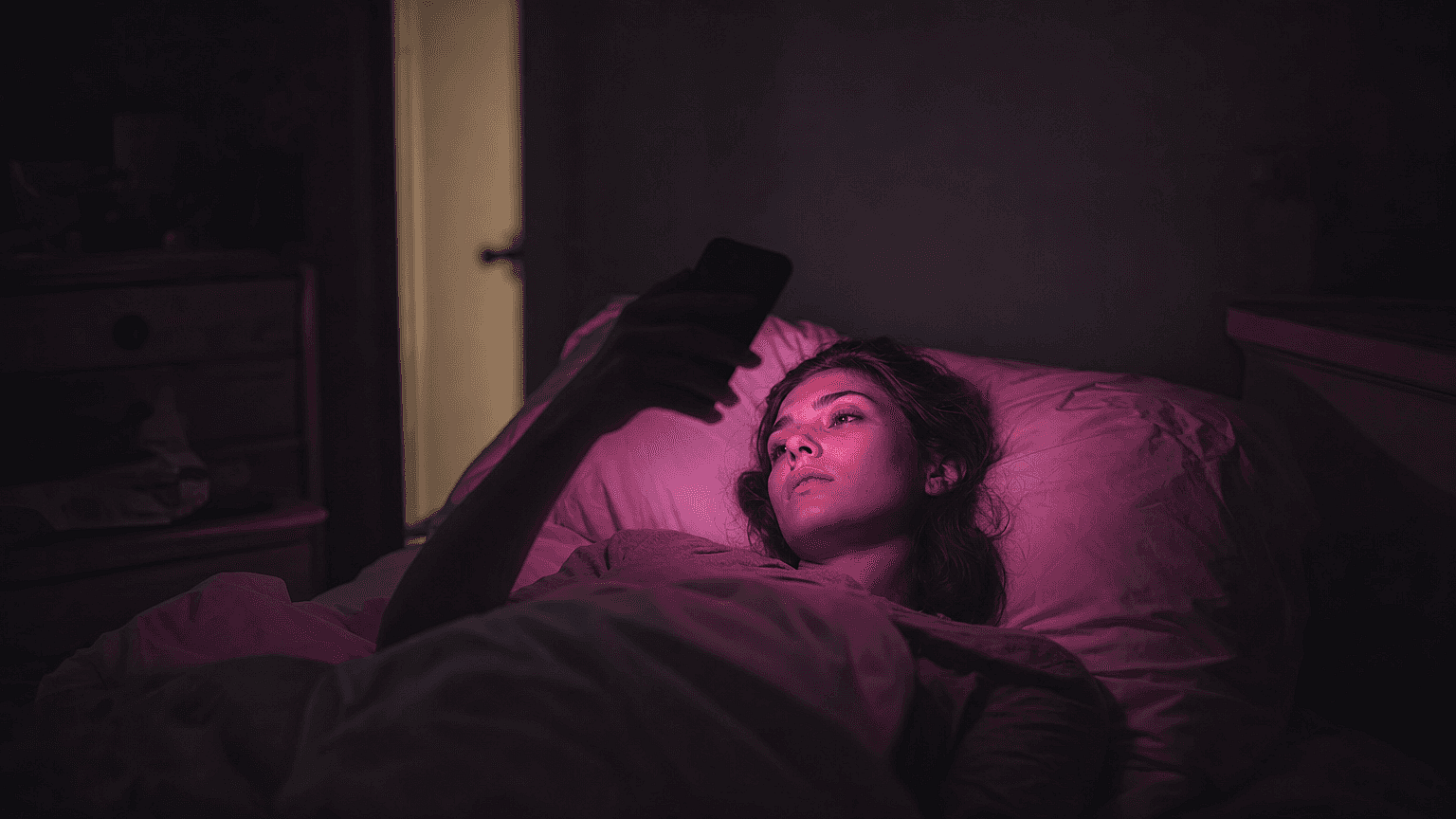
It's 10pm. You're horizontal, phone overhead, thumb on autopilot. You scroll past a child presenting an impossibly elaborate birthday cake captioned "this is my first cake." Swipe. Jesus fused with a crustacean rising from the sea. Swipe. An elderly stranger's AI-generated face asking you to wish them a happy birthday. Swipe. With every hollow flash of the screen, your memories of a quieter internet flicker faintly and fade. This feeling — of being duped into a dissociative doomscroll — is the result of enshittification, what happens when platforms built to share your stories and showcase your creativity quietly become machines for extracting your attention instead.
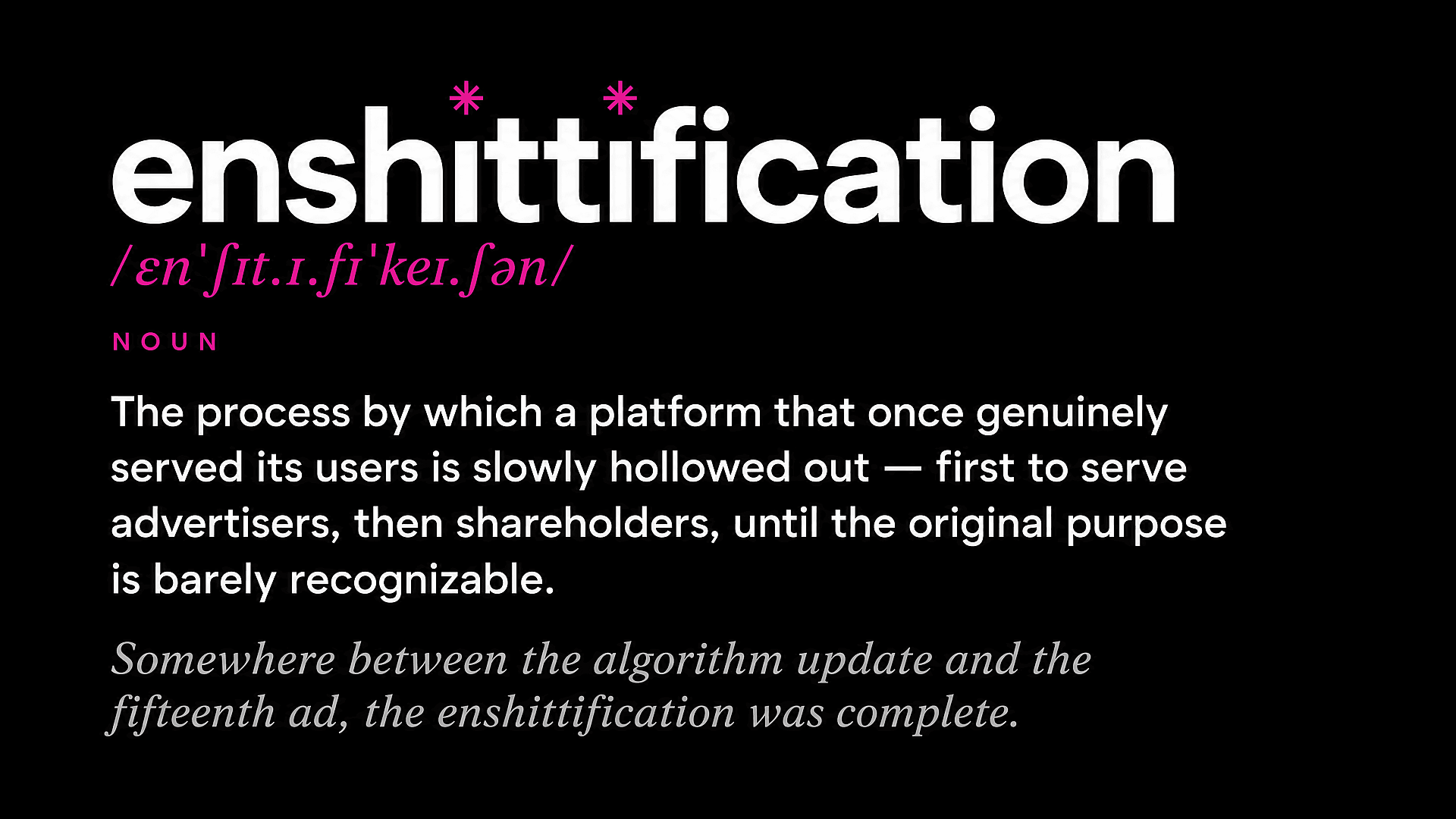
El escritor Cory Doctorow acuñó el término «enshittification» hace unos años para describir un patrón que veía una y otra vez en la tecnología: las plataformas empiezan siendo realmente buenas para los usuarios, luego los estrujan poco a poco para servir a los anunciantes, y después estrujan todos para maximizar los beneficios de los accionistas. Es el ciclo de vida de cada plataforma social que has adorado y luego has dejado de adorar poco a poco. Lo que le está pasando a tu feed ahora mismo es ese proceso llegando a la capa de contenido, y la IA generativa es lo que hizo que ocurriera a esta velocidad y escala.
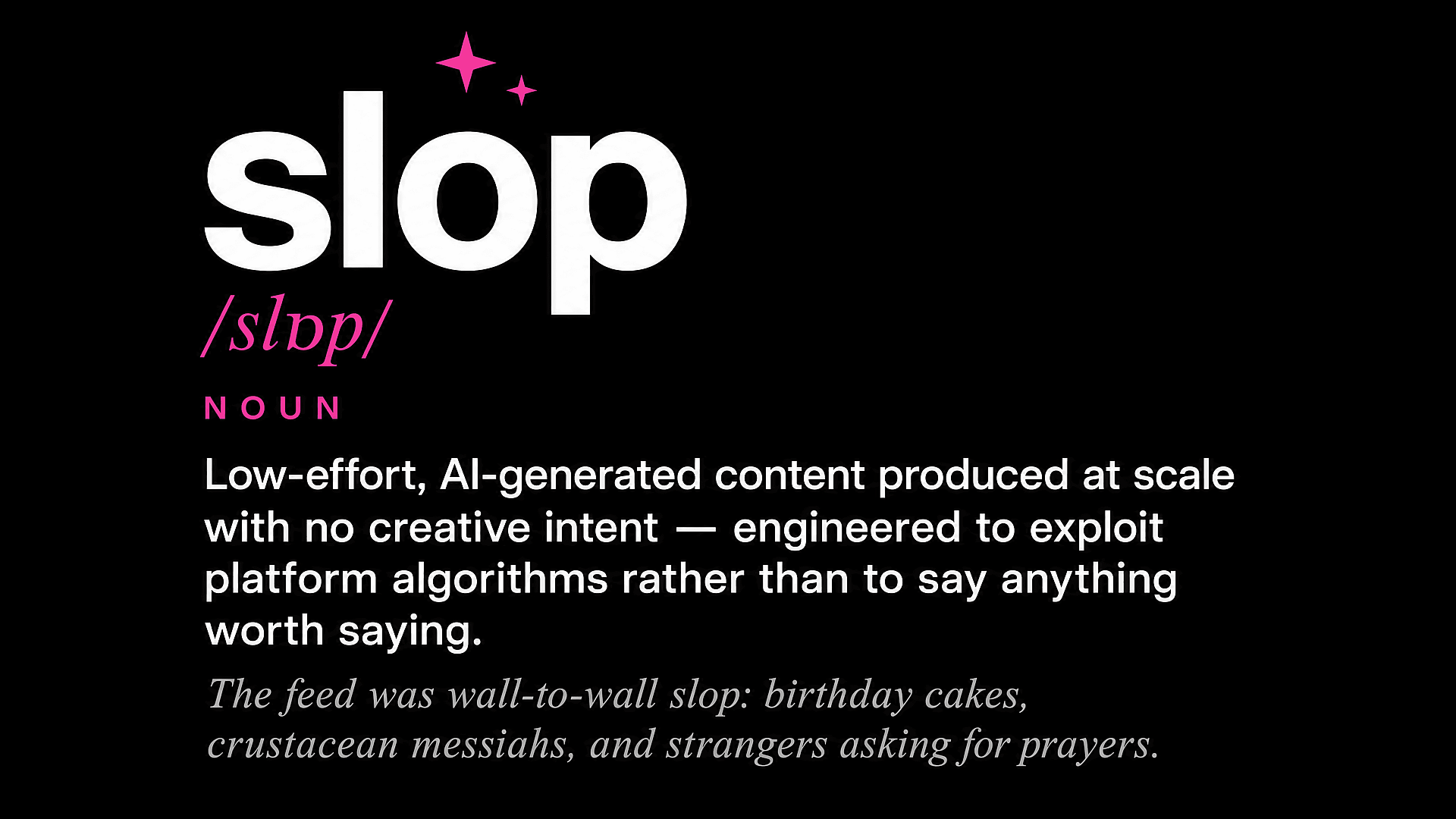
El incentivo ya no es mostrarte algo significativo, sino que sigas haciendo scroll. Porque cada segundo que te quedas es otra impresión de anuncio vendida. Y la forma más barata y rápida de hacerlo a gran escala es el slop: contenido producido en masa por individuos o pequeñas operaciones que apuntan deliberadamente a mercados publicitarios de alto valor, generando y publicando a un volumen inhumano únicamente para explotar la monetización de la plataforma. Un creador keniano en declaraciones a la revista New York describió cómo le pedía a ChatGPT que escribiera prompts que "generaran un alto engagement en Facebook", los introducía en un generador de imágenes y repetía el ciclo indefinidamente. Un estudiante de medicina de 22 años en la India declaró a WIRED ganaba unos miles de dólares al mes creando un personaje de influencer con IA, dedicándole no más de 30 a 50 minutos al día. Nada de ello hacía para tú. Todo ello hecho a las a ti. Y el feed se pudre un poco más.
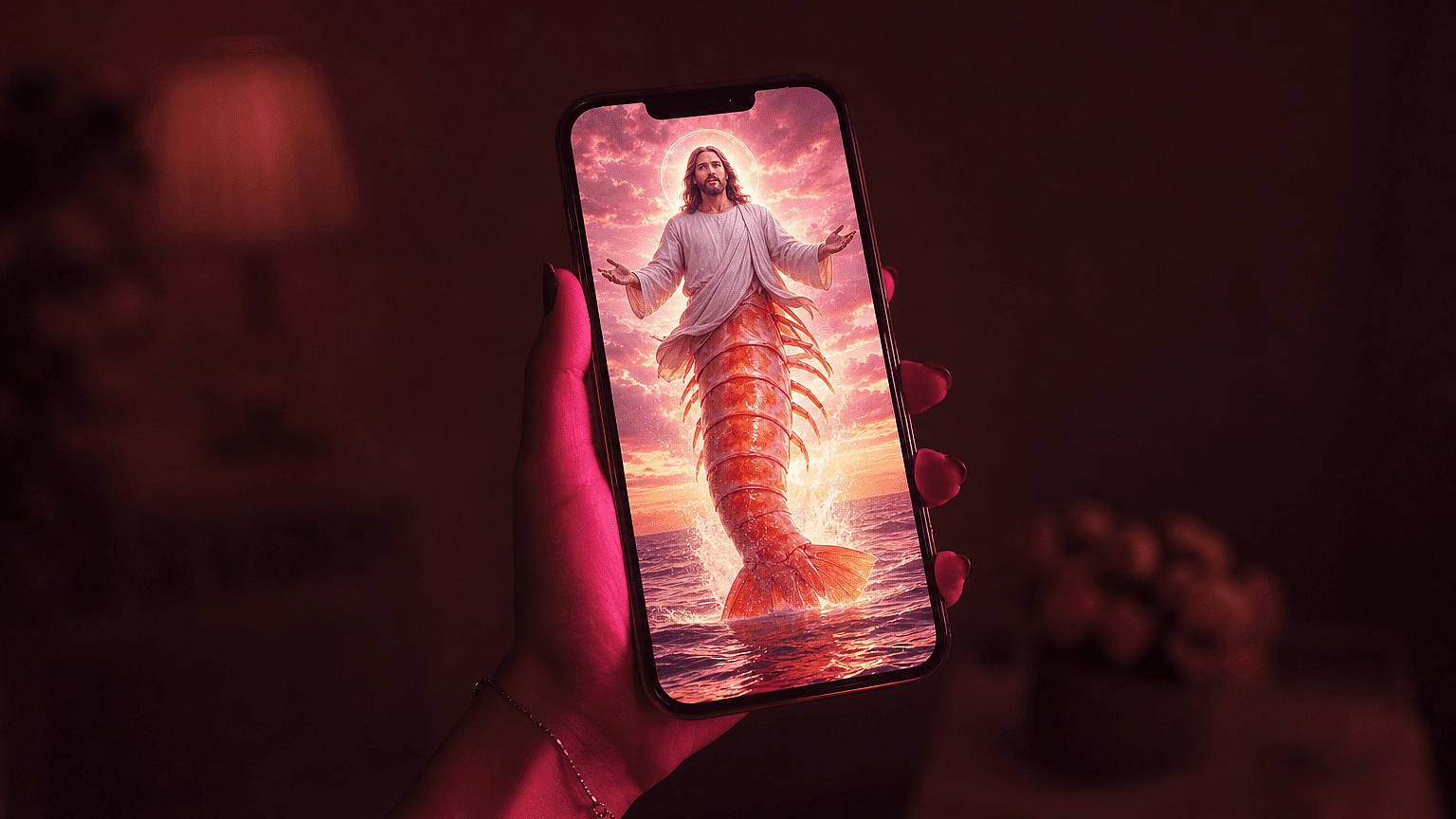
Slop works by stopping the scroll, not by earning it. Shrimp Jesus goes viral because it's so bizarre you can't look away, not because it's telling a compelling story. The quality is obviously low, the artificiality is plain to see — and everybody knows it. Shock is a one-time transaction. It arrests your attention for a second and deposits you back into the same hollow feeling you were scrolling to escape. No resonance, no point of view, nothing to return to. And the more of it there is, the more people can feel the difference between content that stops the scroll and content that actually means something.
Por eso la enshittification, con todo el daño que causa, no puede acabar con el buen gusto. La preferencia de los consumidores por el contenido generado con IA se ha desplomado del 60 % en 2023 al 26 % en 2025, según una investigación de Billion Dollar Boy. El público no solo es indiferente al contenido basura; cada vez lo detecta más rápido. El valle inquietante del contenido de IA —la piel demasiado lisa, el fondo que se desvanece en la nada si te fijas bien, la mano con siete dedos— se ha convertido en su propio código cultural. Lo que hoy detiene el dedo no es lo más pulido del feed. Es lo más específico. Lo más inconfundiblemente hecho por alguien, para alguien.
La reacción ya está transformando el comportamiento. Ahora las marcas piden explícitamente a los creadores que no sobreproducir: dejar la camisa arrugada, los platos sin lavar, la iluminación imperfecta. El contenido liderado por el fundador y de detrás de cámaras es superando a las creatividades de marca pulidas de 3 a 8 veces en Meta y TikTok. La autenticidad se está convirtiendo en el recurso más escaso del feed, y la escasez crea valor.

Los lectores de este blog no son el problema del contenido basura. Son el antídoto. Becky Owen, CMO de Billion Dollar Boy, le dijo a Digiday: «La mayor parte del contenido de IA de mala calidad que inundó nuestros feeds no vino de creadores. Vino de gente que pensaba que la IA iba a desbloquear la chispa creativa mágica que llevaban dentro y que descubrió cruelmente que no es así». El problema del contenido basura nunca fue la IA. Fue usar la IA como sustituto de tener algo que decir, en lugar de como una herramienta para decirlo mejor.
Si estás aquí, ya tienes algo que decir. Tienes gusto, un punto de vista, un mundo visual que estás construyendo o una historia que quieres contar. Lo que estas herramientas te dan no es un sustituto de eso, sino un multiplicador de fuerza. Y ahora mismo ese multiplicador está en un terreno donde casi nadie más lo está aprovechando bien. Las granjas de contenido producen volumen, las marcas producen pulido, y casi nadie produce visión — un trabajo con una persona clara detrás, una razón de ser más allá de rellenar un hueco en un calendario de publicaciones, una estética coherente en todo lo que toca.

Esa distancia es tuya. Trabajo que es inconfundiblemente tuyo no solo destaca: se convierte en aquello por lo que la gente vuelve, el oasis en medio del doomscroll, eso que por un momento hace que la plataforma se sienta como antes. El antídoto contra la mierdificación no es menos IA, porque sinceramente ya no podemos meter otra vez ese genio en la botella. Lo que sí podemos hacer es crear con intención, para crear algo que merezca la pena encontrar en este caos de feed.
Para eso existe OpenArt. Desde el principio, lo hemos construido para narradores visuales; personas con un punto de vista real, una historia real y la ambición de contarla de la forma más bonita posible. Las herramientas ya están aquí, pero el vacío en el feed es real. La única pregunta es qué vas a crear para sacudirlo.