

 ChatGPT
 Perplexity
 Claude
 Gemini
El contenido generado por IA ya no es una categoría de nicho en YouTube. En los últimos dos años, los creadores de IA han pasado de publicar simples pases de imágenes a producir cortometrajes cinematográficos, experiencias históricas en primera persona, canales educativos sin rostro, explicativos de negocios automatizados y series narrativas completas con personajes recurrentes.
La escala es real. Según sus propias cifras, YouTube Shorts promedia ahora más de 200 000 millones de visualizaciones diarias y miles de millones de usuarios mensuales con sesión iniciada, con más de 20 millones de vídeos subidos a YouTube cada día (Página de prensa oficial de YouTube). Los datos de 2026 de Sprout Social añaden que ahora los espectadores tienen ligeramente más probabilidades de interactuar con vídeo de formato corto (52 %) que de formato largo (48 %) (Sprout Social). Esa demanda es justo donde ha arraigado el vídeo con IA, hasta tal punto que la avalancha de subidas de IA de bajo esfuerzo generó su propio término, "Basura de IA", que tanto Merriam-Webster como la American Dialect Society eligieron como palabra del año 2025.
Pero aquí está la lección que la mayoría pasa por alto. Los creadores de IA que más crecen no ganan porque usen el modelo más nuevo. Ganan porque entienden qué tipo de vídeo quiere ver realmente el público, y construyen un sistema repetible en torno a ello.
Si buscas inspiración o estás planeando tu propio canal impulsado por IA, estos son los siete formatos de vídeo con IA que dominan YouTube en 2026 y los creadores que lideran cada uno.
Resumen rápido: los 7 formatos de un vistazo
- Vídeos con perspectiva histórica. Viajes en primera persona al pasado. Alta retención y gran atractivo para la curiosidad.
- Cortometrajes con IA y narrativa cinematográfica. Cine que prioriza la narrativa con un lenguaje de cámara real.
- Universos narrativos con personajes consistentes. Personajes y mundos recurrentes que hacen que la gente vuelva.
- Canales de contenido sin rostro. Educación y comentarios escalables, sin cámara.
- Canales de automatización con IA y de negocios. Flujos de trabajo y agentes para fundadores, agencias y especialistas en marketing.
- Arte con IA y creación visual. Generación de imágenes, creación de prompts y arte conceptual.
- Novedades sobre IA y descubrimiento de herramientas. Mantenerte al día en un sector que cambia cada semana.
La mayoría de estos formatos comparten un mismo punto de partida: una imagen potente y un personaje coherente. Esa es la parte que creas antes de abrir un modelo de vídeo, y es donde una herramienta como la Generador de imágenes con IA de OpenArt y Creador de personajes con IA encajar en el flujo de trabajo.
1. Vídeos con punto de vista histórico
Por qué el público sigue haciendo clic
Los vídeos con punto de vista histórico meten al espectador directamente dentro de un momento famoso del pasado. En lugar de explicar la Antigua Roma o el Titanic, el creador te lo hace vivir en primera persona, como si estuvieras grabando un vlog en el año 44 a. C.
El formato funciona porque combina cuatro cosas que los algoritmos de YouTube y Shorts premian:
- Curiosidad. «¿Cómo fue en realidad?» es un gancho en el que casi todo el mundo hace clic.
- Gran retención. Un recorrido en primera persona mantiene a los espectadores pegados a la pantalla para ver qué pasa después.
- Un mundo visual nítido. Cada plano se ve distinto al anterior, lo que mantiene la mirada en movimiento.
- Facilidad para compartir. La gente se las envía a sus amigos porque parecen descubrimientos, no lecciones.
La historia es también una de las categorías más duraderas de YouTube, y encaja muy bien con la producción con IA sin rostro: sin estudio, sin presentador, solo imágenes atmosféricas y una voz en off. La tendencia del viajero en el tiempo con IA fue documentada concretamente por El Guardián en mayo de 2026.
Canales que vale la pena estudiar
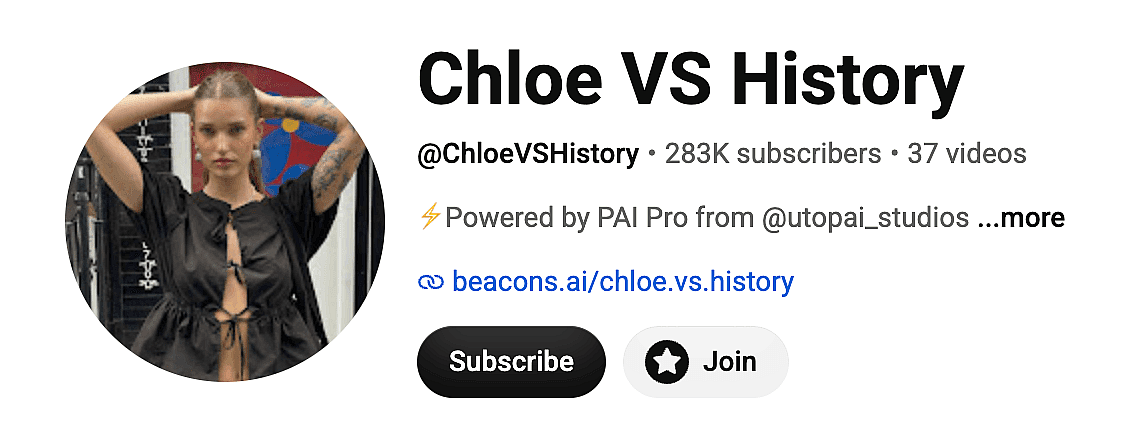
Chloe VS Historia — @ChloeVSHistory
El creador más reconocible del nicho de historia con IA. El canal publica episodios de "viajes en el tiempo" en primera persona: probar pastel de anguila en un mercado Tudor, explorar las suites de primera clase del Titanic o darse un baño en unas termas romanas. Ha crecido hasta más de 600.000 seguidores en Instagram y decenas de millones de visualizaciones en YouTube, y fue reseñado por El Guardián como ejemplo destacado de la tendencia de viajeros en el tiempo con IA.
Ejemplos de contenido:
- «Viajé en el tiempo a la Antigua Roma» (vlog de la vida cotidiana en el 44 a. C.)
- POV de primera clase del Titanic
- Recorridos por mercados de la época Tudor
Otros canales que merece la pena seguir en este nicho: la ola más amplia de «viajeros en el tiempo con IA» que documentó The Guardian, además de un conjunto creciente de canales de POV histórico regional. Busca «historical POV AI» en YouTube para ver nuevos participantes cada semana.
Cómo se hacen
La mayoría de los episodios históricos en primera persona empiezan con un personaje principal consistente (el "viajero del tiempo") más imágenes de referencia fieles a la época para cada localización. Los creadores generan primero el personaje y las tomas fijas de la escena con un Generador de imágenes con IAy luego anímalas. Las fotos antiguas de baja resolución pueden limpiarse primero con un Conversor de fotos a HD. El personaje tiene que verse igual en el baño romano y en el mercado Tudor, que es justo el Personaje de IA problema de consistencia con el que se topa todo creador de contenido histórico.
2. Cortometrajes con IA y narrativa cinematográfica
Por qué este formato está arrasando
El cine con IA se ha convertido en una de las categorías de creadores de más rápido crecimiento en YouTube. Los modelos modernos pueden generar escenas cinematográficas, interpretaciones de personajes, movimientos de cámara y secuencias narrativas completas a partir de un solo prompt o imagen de referencia.
Pero los canales que realmente crecen son los que tratan la IA como una cámara, no como el espectáculo. Se centran en la estructura narrativa, el ritmo y un estilo coherente. La herramienta es invisible; lo importante es la historia.
Canales que vale la pena estudiar
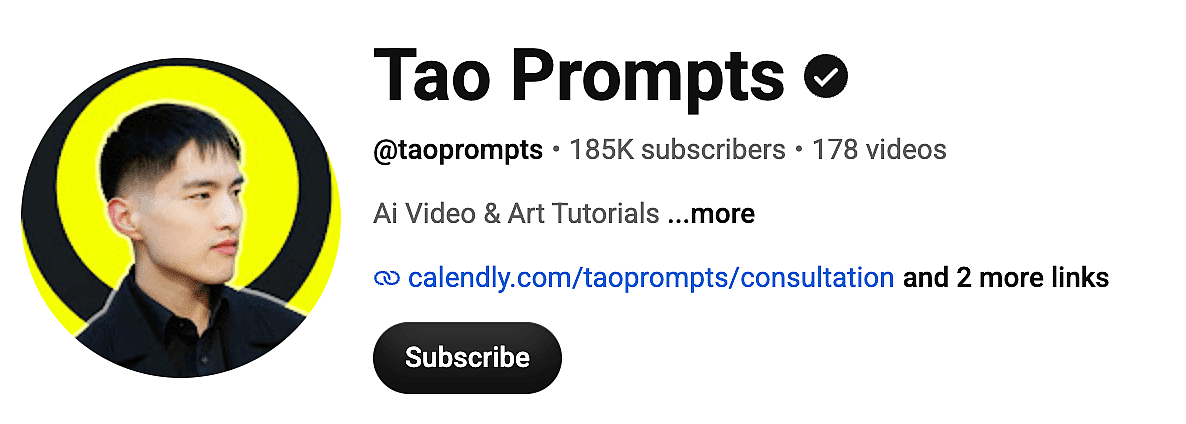
Tao Prompts — @taoprompts (~185K suscriptores)
Uno de los canales educativos más respetados sobre vídeo con IA cinematográfico. Tao Prompts trata sobre cine con IA, consistencia de personajes, movimiento de cámara y flujos de imagen a vídeo en modelos como Kling y Veo. Un buen vídeo para empezar es «How to Create AI Films Better Than 99% of People».
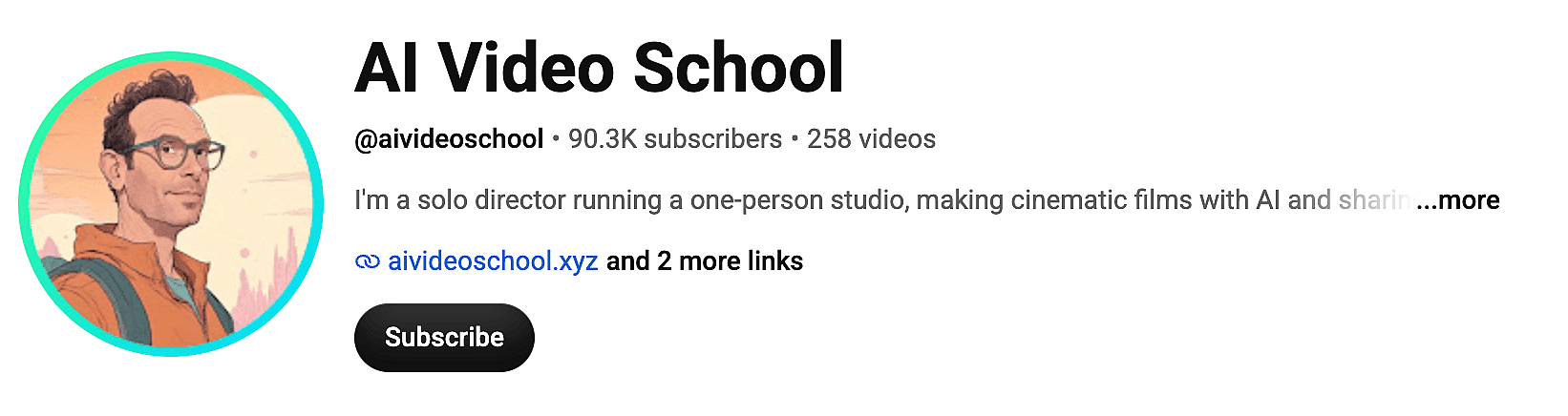
Escuela de Vídeo con IA — @aivideoschool
Centrado en flujos de trabajo prácticos de producción cinematográfica en lugar de perseguir cada nuevo lanzamiento de modelos. Los temas incluyen estructura narrativa, narración visual, dirección con IA y producción de cine con IA de larga duración, enseñados mediante tutoriales y análisis de películas.
Curious Refuge — @CuriousRefuge
Una de las comunidades más influyentes dedicadas al cine con IA. Curious Refuge ofrece formación en cine con IA, flujos de trabajo de producción, entrevistas del sector y formación narrativa que abarca desde la preproducción hasta la distribución.
El orden de producción que funciona
El look cinematográfico empieza antes del modelo de vídeo. Los creadores diseñan fotogramas de referencia plano a plano con un Generador de imágenes con IA y fija primero un estilo visual, luego anima esos fotogramas para que cada clip encaje. El Generador de vídeo con IA de OpenArt da acceso a modelos como Kling 3.0, Sora 2, Seedance 2.0 y Veo en un mismo lugar, lo que importa cuando escenas distintas requieren modelos distintos. Para planos cargados de efectos, los creadores también recurren a herramientas como OpenArt VFX.
3. Universos narrativos con personajes consistentes
Por qué ganan los personajes recurrentes
Uno de los mayores cambios de 2026 es el paso de los clips de IA aislados y aleatorios hacia personajes recurrentes, mundos y universos narrativos continuos.
Esta es la diferencia entre un golpe viral de suerte y un canal de verdad. El público vuelve por un personaje que reconoce, no por un modelo. Una vez que los espectadores se enganchan a una persona o a un mundo, cada nueva publicación tiene una audiencia garantizada.
También es la parte más difícil del vídeo con IA. En toda la comunidad del cine con IA, la consistencia de personajes se considera ampliamente el mayor reto técnico del medio: mantener el mismo rostro, complexión y vestuario de una generación a la siguiente. La solución que adoptan la mayoría de los creadores es la misma. Deja de depender de un prompt afortunado y crea un kit de identidad reutilizable con imágenes de referencia que introduces en cada escena.
Canales que vale la pena estudiar
CyberJungle — @cyberjungle
Conocido por sus tutoriales avanzados sobre cine con IA, Kling, Veo y flujos de trabajo con personajes consistentes, CyberJungle comparte con frecuencia técnicas prácticas para mantener el mismo personaje reconocible en varias escenas y vídeos. El canal es especialmente valioso para creadores que construyen personajes recurrentes, continuidad visual y narrativas de IA de formato largo.
Crear primero el personaje
Esta es la parte del proceso para la que se creó OpenArt. Muchos creadores empiezan un universo de personajes generando el Personaje de IA en sí: hojas de personaje, referencias faciales, variaciones de vestuario y conceptos de escena, todo a partir del Generador de imágenes con IA. Algunos creadores también convierten un solo retrato en un protagonista recurrente estilizado con un foto a avatar La parte difícil es reutilizar la misma identidad en distintos planos antes de animarla, y la Historia con un clic convierte esos personajes en una narrativa secuenciada. También puedes explorar historias de personajes de la comunidad para ver el formato en acción. Ese enfoque de referencia primero es exactamente el método del "kit de identidad" que recomiendan los cineastas de IA con experiencia.
4. Canales de contenido con IA sin rostro
Por qué el formato sin rostro escala
Los canales sin rostro no dejan de crecer porque escalan. Un solo creador puede publicar tutoriales, contenido educativo, novedades del sector y explicaciones de nicho sin aparecer nunca en cámara y sin reservar un estudio.
Las cuentas salen a favor. Los creadores de Shorts elegibles reciben el 45 % de los ingresos compartidos de los Shorts de YouTube (Ayuda de YouTube), y YouTube generó 40.370 millones de dólares en ingresos publicitarios en 2025 (Sprout Social). Como los canales sin rostro pueden funcionar con costes de producción más bajos, el modelo puede encajar bien con creadores en solitario.
El aviso de los creadores: evita la automatización masiva de bajo esfuerzo. Los canales que sobreviven al listón de calidad de YouTube siguen escribiendo guiones de verdad y eligen un nicho claro.
Canales que vale la pena estudiar
Matt Wolfe — @mreflow
Uno de los creadores de IA más influyentes de YouTube. Su contenido combina noticias de IA, análisis de herramientas, flujos de trabajo para creadores y análisis del sector, y es un ejemplo de manual de cómo el contenido educativo sobre IA escala hasta convertirse en una marca de medios completa.
Carl Faceless — @CarlFaceless
Conocido por marcas de contenido sin rostro y flujos de trabajo de creadores impulsados por IA, con el foco puesto en construir identidades recurrentes que las audiencias reconocen y a las que vuelven con el tiempo.

Influencer de diario — @diaryinfluencer
Centrado en la creación de contenido con IA y el crecimiento de los creadores, incluyendo Influencer con IA canales de estilo.

Revolución de la IA — @airevolutionx
Flujos de trabajo prácticos con IA y análisis centrados en la productividad, con una audiencia amplia y en rápido crecimiento.

Tef AI — @tef-AI
Conocido por la formación en herramientas de IA y las demostraciones prácticas de flujos de trabajo.
Cómo es el flujo de trabajo
Los vídeos sin rostro se apoyan en imágenes generadas por IA más una voz en off sintética. Los creadores generan b-roll e imágenes explicativas con un Generador de imágenes con IA y la Generador de vídeo con IAy luego añade narración con herramientas de voz con IA. Algunos combinan esto con un Influencer con IA como presentador recurrente fiel a la marca, o un Generador de retratos con IA para un avatar de canal pulido. Las imágenes limpias también ayudan: un Eliminador de fondos con IA y cambiador de fondo facilitan colocar a un sujeto en cualquier escena. Como no hay una cara real que grabar, la calidad visual y el guion sostienen todo el vídeo.
5. Automatización con IA y canales de negocio
Por qué este público es valioso
No todos los creadores de éxito con IA hacen películas. Algunos de los canales que crecen más rápido enseñan a las empresas a automatizar el trabajo con agentes y flujos de trabajo de IA.
Estos canales atraen a una audiencia de alto valor: fundadores, agencias, consultores y equipos de marketing. Esa audiencia convierte muy bien, y por eso este nicho cuenta con una sólida economía de patrocinios y cursos.
Canales que vale la pena estudiar
Liam Ottley — @LiamOttley
Uno de los creadores más reconocibles del sector de las agencias de IA.

Vaibhav Sisinty — @VaibhavSisinty (~694K suscriptores)
Contenido sobre negocios centrados en la IA, sistemas de crecimiento y productividad para fundadores.
AI Automation Labs — @AIAutomationLabs
A fondo sobre agentes de IA, automatización de flujos de trabajo y sistemas de negocio.
Bloqueo con IA — @ailockup (~210K suscriptores)
Herramientas de IA para empresas, flujos de trabajo de software y estrategias de automatización.

La ventaja de la IA — @aiadvantage
Popular por sus tutoriales prácticos de implementación de IA orientados a los negocios.
6. Arte con IA y creación visual
Por qué el arte es la vía de entrada
Todo vídeo con IA empieza con una imagen. Incluso los creadores centrados en el cine suelen comenzar con generación de imágenes, arte conceptual y exploración de estilos antes de que algo se mueva. Eso hace que el nicho del arte con IA sea tanto su propia categoría de contenido como la puerta de entrada a todos los demás formatos de esta lista.
Canales que vale la pena estudiar
Dankieft — @Dankieft (~255K suscriptores)
El canal de Dan Kieft trata sobre creación de imágenes con IA, Midjourney e ingeniería de prompts a través de tutoriales prácticos.

Prompt Muse — @PromptMuse
Estrategias detalladas de prompts y flujos de trabajo de diseño visual/3D.
Thaeyne — @Thaeyne
Uno de los nombres respetados en la comunidad del arte con IA, centrado en Midjourney y la experimentación con prompts.

RoboVerse — @roboverse987
Visuales con IA, flujos de trabajo creativos y demos de productividad.
Diseñar el estilo antes de animar
La creación visual es el terreno propio de OpenArt. Los creadores usan el Generador de imágenes con IA para diseño de personajes, arte conceptual, experimentación de estilos e ideación visual antes de pasar a la animación o el vídeo. Para acabados estilizados e ilustrados, el generador de arte con IA abarca estilos anime, pictóricos y de concept art, y un Generador de dibujos animados en 3D convierte una foto en un personaje al estilo Pixar. Para reproducir un look que te guste, un de imagen a prompt la herramienta extrae el prompt de una referencia. Modelos como GPT Image 2, Nano Banana 2, Nano Banana Pro, Seedream y Recraft V4 abarcan desde imágenes fotorrealistas hasta arte conceptual estilizado, así que puedes probar un look de forma barata antes de comprometerlo a un vídeo completo.
7. Novedades de IA y descubrimiento de herramientas
Por qué crecen estos canales
El panorama de la IA cambia cada semana. Nuevos modelos, nuevos precios, nuevas funciones. Muchos creadores han construido grandes audiencias simplemente ayudando a la gente a estar al día, y esa audiencia es fiel porque la información es realmente útil.
Canales que vale la pena estudiar
IA explicada — @AIExplained-official
Conocido por su análisis reflexivo y ponderado de los grandes avances en IA.
Wes Roth — @WesRoth
Actualizaciones frecuentes sobre OpenAI, Anthropic, Google y herramientas emergentes.
Futurepedia — @futurepedia_io
Un recurso de confianza para descubrir nuevas herramientas y plataformas de IA.
Qué tienen en común los mejores youtubers de IA
Tras analizar decenas de creadores de IA que triunfan en estos siete formatos, aparece un patrón claro. No ganan por usar el modelo más nuevo. Ganan porque combinan:
- Narrativa potente que da un motivo para seguir viendo.
- Una identidad visual clara para que el canal se reconozca en el feed.
- Publicación constante en lugar de un único pico viral.
- Flujos de trabajo repetibles que les permiten publicar sin quemarse.
- Contenido centrado en la audiencia, pensado para un espectador y no para una demo de la herramienta.
El lado de la plataforma lo refuerza. En enero de 2026, el CEO de YouTube, Neal Mohan, dijo que gestionar el slop de IA y detectar deepfakes son prioridades máximas para la plataforma en 2026 (CNBC). La investigación de Sprout Social también señala que los Shorts más largos y bien hechos suelen rendir mejor de media que los clips más cortos (Sprout Social). La conclusión es la misma: la plataforma premia el esfuerzo y la identidad, no el volumen bruto. Crea un sistema y un estilo reconocible, no persigas tendencias.
El flujo de trabajo típico de un creador con IA en 2026
La mayoría de los youtubers de IA siguen ahora un flujo parecido a este:
Idea → Guion → Diseño de personajes → Imágenes fijas de escenas → Generación de vídeo → Voz en off → Edición → Publicación
Los tres primeros pasos deciden si el resto funciona. Consigue un personaje coherente y un estilo visual fijado desde el principio, y cada clip posterior se mantendrá fiel al modelo. Sáltatelos y pasarás la edición luchando contra la deriva.
Entre las herramientas habituales de este flujo se incluyen:
- OpenArt para diseño de personajes, fotogramas de referencia, generación de imágenes y convertir fotos fijas en vídeo.
- Kling, Sora, Veo, Seedance para la generación de vídeo (todo disponible dentro de la Generador de vídeo con IA de OpenArt).
- ElevenLabs y herramientas similares para voz.
- ChatGPT para escribir guiones y generar ideas.
Estas herramientas no sustituyen a la creatividad. Permiten a los creadores avanzar más rápido y dedicar más energía a la historia.
Preguntas frecuentes
¿Con qué tipo de vídeo de IA es más fácil empezar?
Vídeos educativos o de historia en POV sin rostro. Ambos se basan en imágenes de IA más una voz en off, así que no necesitas aparecer en cámara, y los dos tienen una retención comprobada. Elige un nicho concreto y escribe un guion de verdad.
¿Necesito software caro para crear vídeos con IA?
No. La mayor parte del proceso se ejecuta en el navegador. Diseñas personajes e imágenes fijas en un Generador de imágenes con IA, anímalos en un Generador de vídeo con IA, y añade voz con una herramienta de voz con IA. OpenArt requiere una cuenta gratuita para empezar a generar e incluye créditos gratis cada mes.
¿Cómo mantienen los creadores el mismo personaje en todas las escenas?
They build a reusable identity kit: a set of reference images of the character that gets reused in every generation. This is the method experienced AI filmmakers recommend, and it is what OpenArt's Personaje de IA gira en torno al flujo de trabajo.
¿Cómo crean los YouTubers de IA miniaturas llamativas?
Incluso los mejores vídeos de IA necesitan miniaturas potentes para atraer clics. Muchos creadores de éxito dedican mucho tiempo a probar distintos estilos de miniatura, expresiones faciales y conceptos visuales. En lugar de diseñar miniaturas desde cero, los creadores pueden usar un Generador de miniaturas de YouTube con IA para generar rápidamente conceptos de miniaturas con aspecto profesional optimizados para la interacción y el porcentaje de clics.
¿Puedo ganar dinero con vídeos de IA en YouTube?
Los canales de YouTube con IA pueden ganar dinero, pero los ingresos por anuncios rara vez bastan por sí solos. Los canales que generan ingresos significativos suelen usar la IA para reducir los costes de producción mientras crean una audiencia que pueden monetizar mediante patrocinios, afiliados, membresías o productos.
¿Se permite el contenido de vídeo con IA en YouTube?
Sí, con la debida transparencia cuando sea necesaria. YouTube ha endurecido su listón de calidad frente al contenido producido en masa y con poco esfuerzo, así que los canales que perduran invierten en guiones, edición y un punto de vista claro.
Reflexiones finales
Las herramientas de IA seguirán evolucionando, pero los creadores que triunfan en YouTube comparten la misma base: una buena narrativa, imágenes memorables y una publicación constante.
Tanto si te interesa el cine con IA, la narrativa histórica, el contenido sin rostro, la automatización o el arte con IA, los creadores anteriores ofrecen algunos de los mejores ejemplos para aprender en 2026.
Si estás creando tu propio flujo de trabajo de contenido con IA, empieza por la base visual. Muchos creadores usan OpenArt para generar personajes, explorar estilos visuales y mantener la coherencia entre proyectos antes de convertir esas ideas en vídeos. Cuanto mejores sean tus imágenes, más fácil será crear contenido que el público reconozca y al que vuelva.