 ChatGPT
 Perplexity
 Claude
 Gemini
La imagen generada por IA se ha convertido rápidamente en una de las herramientas creativas más usadas hoy en día, con más de 34 millones de imágenes con IA que se generan cada día. La gente usa la IA para producir imágenes de alta calidad a una escala que antes era simplemente imposible.
Lo que hace este cambio tan potente es la accesibilidad. En lugar de depender de herramientas caras, grandes equipos o flujos de trabajo que consumen mucho tiempo, ahora los creadores pueden generar imágenes pulidas en segundos.
Pero a medida que esta tecnología se integra más en los flujos de trabajo del mundo real, empieza a surgir un nuevo reto.
Los modelos de IA se entrenan con enormes conjuntos de datos formados por imágenes del mundo real: obras de arte, fotografías, activos de marca y rostros humanos. Aunque los resultados suelen ser originales, a veces pueden parecerse a contenido ya existente de formas sutiles.
Esto crea el riesgo de una infracción involuntaria, en la que una imagen que generes podría evocar material protegido sin que te des cuenta. En algunos casos, esto puede llegar incluso a los rostros, cuando un retrato generado se parece a una persona real.
¿Por qué importa? ¿Y cuáles son los riesgos legales?
A primera vista, estos riesgos pueden parecer teóricos. Al fin y al cabo, no copiaste nada a propósito. Pero en la práctica pueden tener consecuencias reales, sobre todo cuando las imágenes se usan de forma pública o comercial.
Un ejemplo reciente que puso este asunto en primer plano tuvo que ver con OpenAI, donde una función de voz de ChatGPT fue percibida ampliamente como que suenan parecido a la actriz Scarlett Johansson. Planteó cuestiones importantes sobre el parecido y el consentimiento en los resultados generados por IA. OpenAI acabó teniendo que retirar esa voz concreta tras la polémica.
Existen riesgos similares cuando los visuales generados por IA se parecen a logotipos o marcas registradas. Incluso las semejanzas sutiles pueden dar a entender una asociación o respaldo, algo que las empresas se toman muy en serio. Usar esos visuales en marketing o contenido comercial puede dar lugar a disputas, retiradas de contenido o daños a la reputación.
En última instancia, estas situaciones entran en la categoría más amplia de la infracción de propiedad intelectual (PI), y son cada vez más relevantes a medida que el contenido generado por IA se usa más ampliamente.
Entender los distintos tipos de propiedad intelectual
Para gestionar bien estos riesgos, conviene entender que la PI no es un concepto único. Es un término genérico que abarca varios tipos de protección:
- Derechos de autor: protegen obras creativas originales como ilustraciones, diseños y composiciones
- Marcas comerciales: protege los identificadores de marca como logos, nombres y símbolos
- Derechos de personalidad: protege la imagen, la identidad y la imagen pública de una persona
Las imágenes generadas por IA pueden llegar a cruzarse con los tres. Un solo resultado podría parecerse a una obra con derechos de autor, incluir elementos similares al logotipo de una marca o parecerse a una persona real.
Lo que hace esto especialmente complicado es que estas coincidencias a menudo no se ven de inmediato. Puede que no reconozcas el parecido, o que pienses que no es tan grave, sobre todo si es sutil o queda fuera de tu área de conocimiento.
Esto es lo que hace que la infracción involuntaria sea una preocupación tan real: no se trata de copiar, sino de un parecido que no puedes detectar fácilmente.
Te presentamos AI IP Check, con la tecnología de CopySight
Para hacer frente a este creciente reto, OpenArt ha presentado AI IP Check, con la tecnología de CopySight — una herramienta diseñada para ayudar a creadores y equipos a evaluar posibles riesgos de propiedad intelectual en sus imágenes antes de usarlas.
En esencia, AI IP Check es una herramienta de análisis basada en probabilidades. No ofrece garantías legales, pero te da una imagen más clara de posibles similitudes y riesgos para que puedas actuar en consecuencia.
En lugar de depender de conjeturas, obtienes información estructurada que te ayuda a decidir si una imagen está lista para usarse, necesita ajustes o debería replantearse por completo.
Cómo te ayuda AI IP Check
Detecta y puntúa riesgos de infracción
IP Check analiza tu imagen y la compara con conjuntos de datos conocidos de contenido protegido, incluidas marcas, diseños y rostros. Después ofrece una etiqueta de riesgo clara: Seguro, Aviso o Inseguro, y te indica de dónde procede la coincidencia.
Esto te permite entender rápidamente si es probable que una imagen sea segura de usar o si necesita una revisión más a fondo. En lugar de analizar cada detalle manualmente, obtienes una señal clara que guía tu decisión.
Lanza campañas más rápido y optimiza los costes
Al detectar posibles problemas pronto, los equipos pueden evitar revisiones costosas, retrasos o repetir el trabajo más adelante en el proceso. En lugar de descubrir los problemas cuando el contenido ya se ha publicado o entregado, puedes validarlo de antemano.
Esto ayuda a agilizar los flujos de producción a la vez que garantiza que tus visuales sigan siendo conformes y listos para usar.
Protege tu exclusividad
Para las marcas y creadores, la originalidad es fundamental. AI IP Check ayuda a garantizar que tus imágenes no coincidan sin querer con propiedad intelectual existente, permitiéndote mantener una identidad distintiva y reconocible.
Esto es especialmente valioso al producir contenido a gran escala, donde tanto la coherencia como la originalidad importan.
Demuestra la autoría humana
A medida que el contenido generado con IA se vuelve más habitual, demostrar un uso responsable es cada vez más importante. AI IP Check aporta una capa extra de validación al mostrar que tu contenido se ha revisado para detectar posibles conflictos.
Esto puede reforzar los procesos internos, la confianza de los clientes y la credibilidad general.
Mantén la cadena de titularidad
Para las organizaciones que trabajan con IA a gran escala, mantener una cadena de titularidad clara, con pruebas de propiedad y derechos, es esencial. AI IP Check ayuda a garantizarlo documentando el análisis y la validación antes de usar el contenido comercialmente.
Esto facilita la integración de imágenes generadas por IA en estrategias de negocio y contenido más amplias.
Cómo funciona
Usar la comprobación de IP con IA es sencillo y está diseñado para integrarse a la perfección en tu proceso creativo.
Genera y selecciona tu imagen
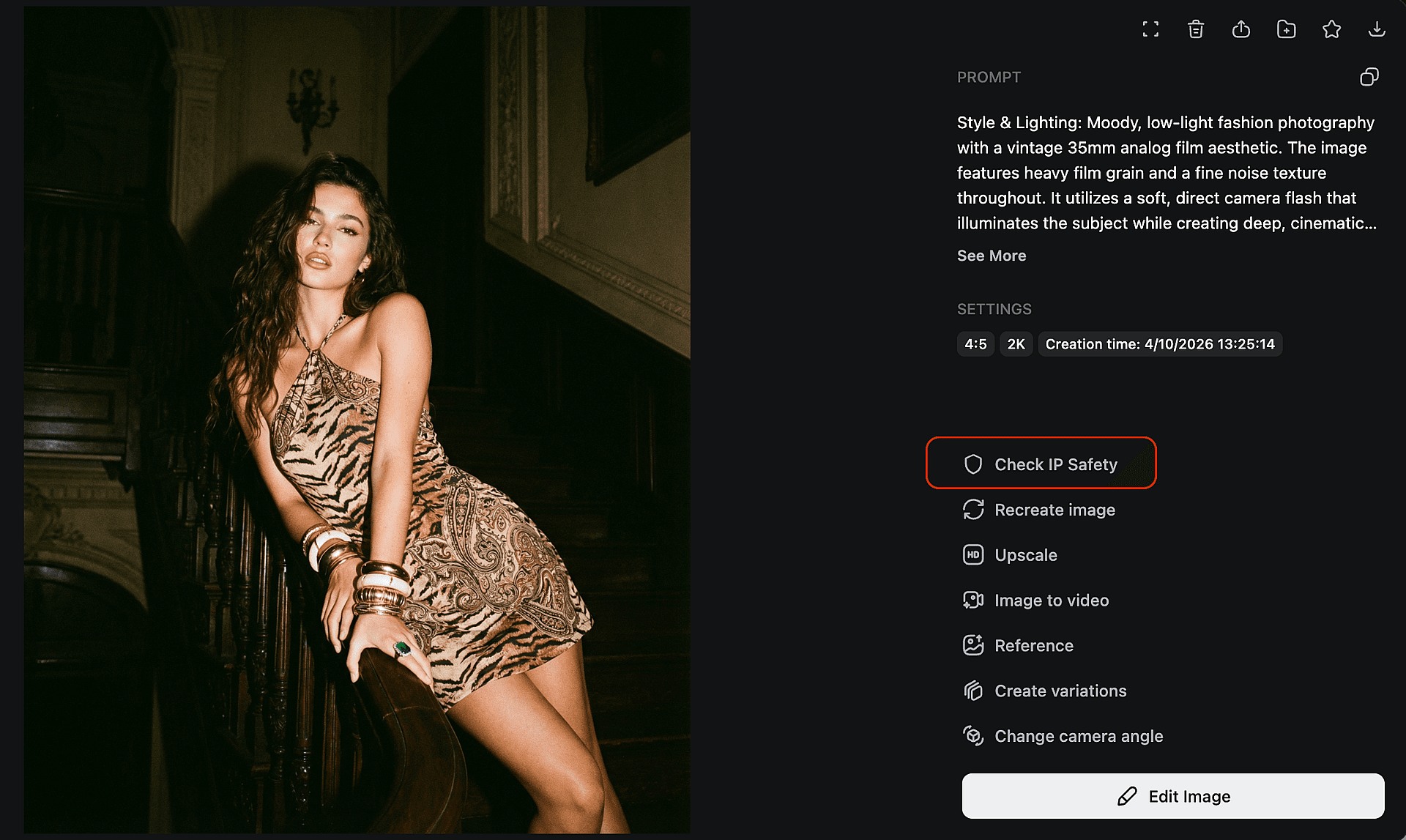
Empieza seleccionando la imagen que quieres analizar dentro de OpenArt. Puedes hacerlo directamente desde tu espacio de trabajo, ya sea que estés revisando una sola imagen o varios resultados.
Ejecutar la comprobación de PI
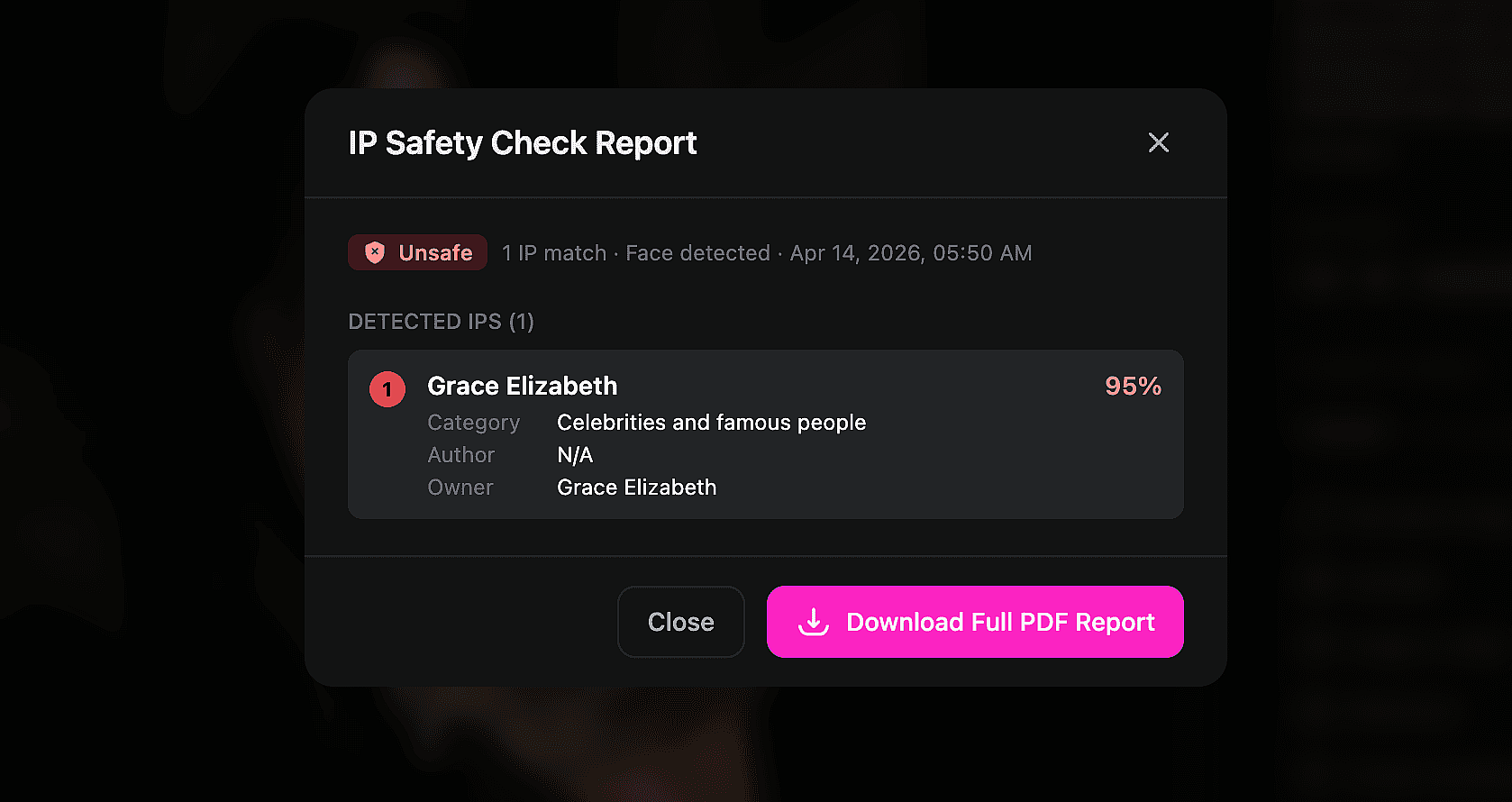
A continuación, ejecuta el IP Check. En segundos, el sistema analiza la imagen en busca de similitudes con marcas, activos y rostros, y le asigna una etiqueta de riesgo clara —Seguro, Advertencia o No seguro— e indica la fuente probable de la coincidencia.
Revisa el informe
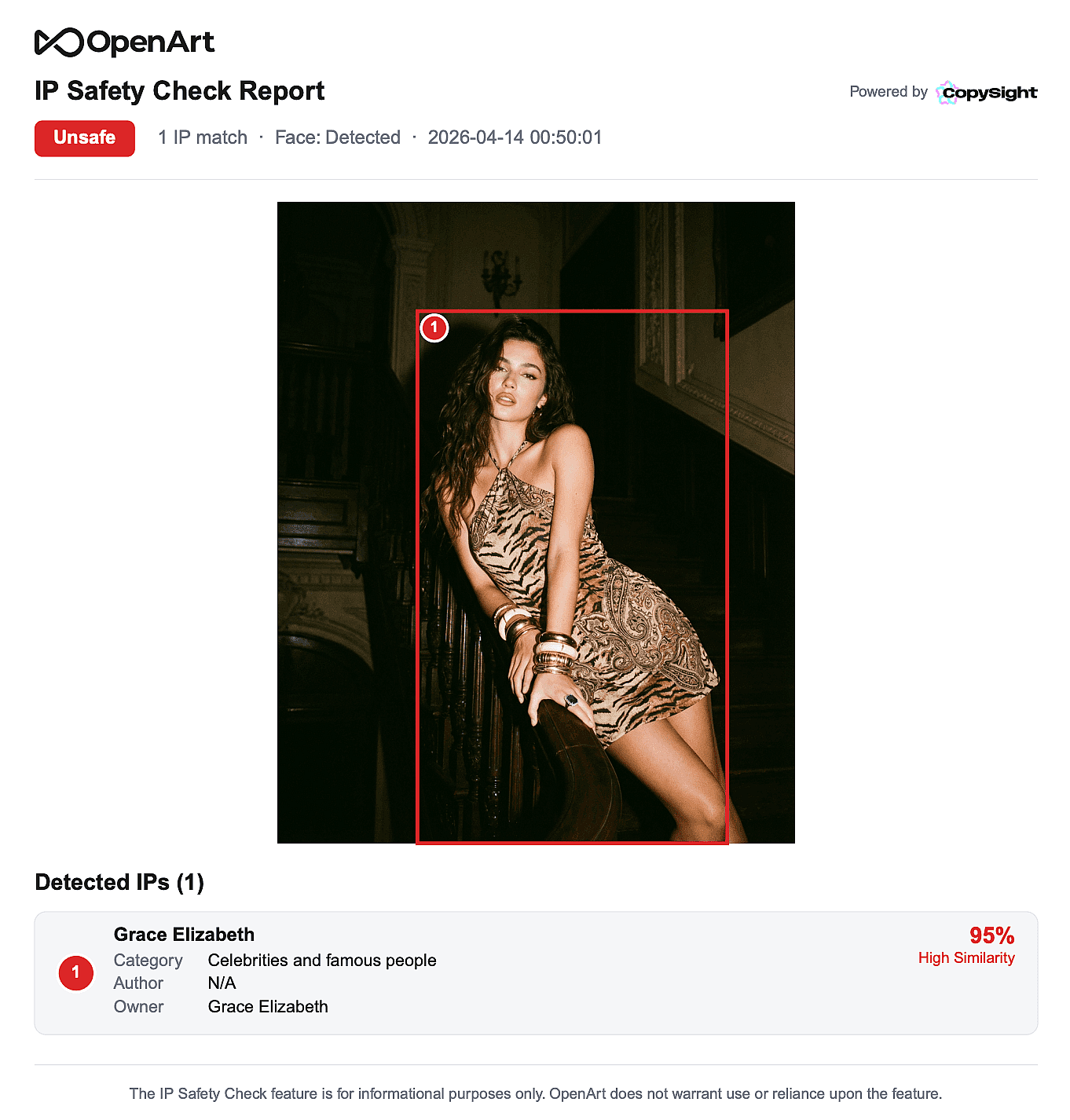
Por último, revisa los resultados y descarga un informe detallado en PDF. Este informe incluye porcentajes de similitud, marcado visual e información más profunda sobre qué elementos se marcaron y por qué.
Con este nivel de detalle, puedes entender mejor los riesgos potenciales y decidir si continuar, refinar o regenerar tu imagen.
Crea con confianza, no a ciegas
La IA ha hecho más fácil que nunca crear imágenes de alta calidad. Pero, a medida que estas herramientas se integran en flujos de trabajo reales, crece la necesidad de concienciación y responsabilidad.
Al entender cómo las imágenes generadas con IA pueden cruzarse con la propiedad intelectual y al usar herramientas como OpenArt's verificador de PI para analizar tu trabajo, puedes evitar riesgos innecesarios mientras sigues creando con libertad.