
 ChatGPT
 Perplexity
 Claude
 Gemini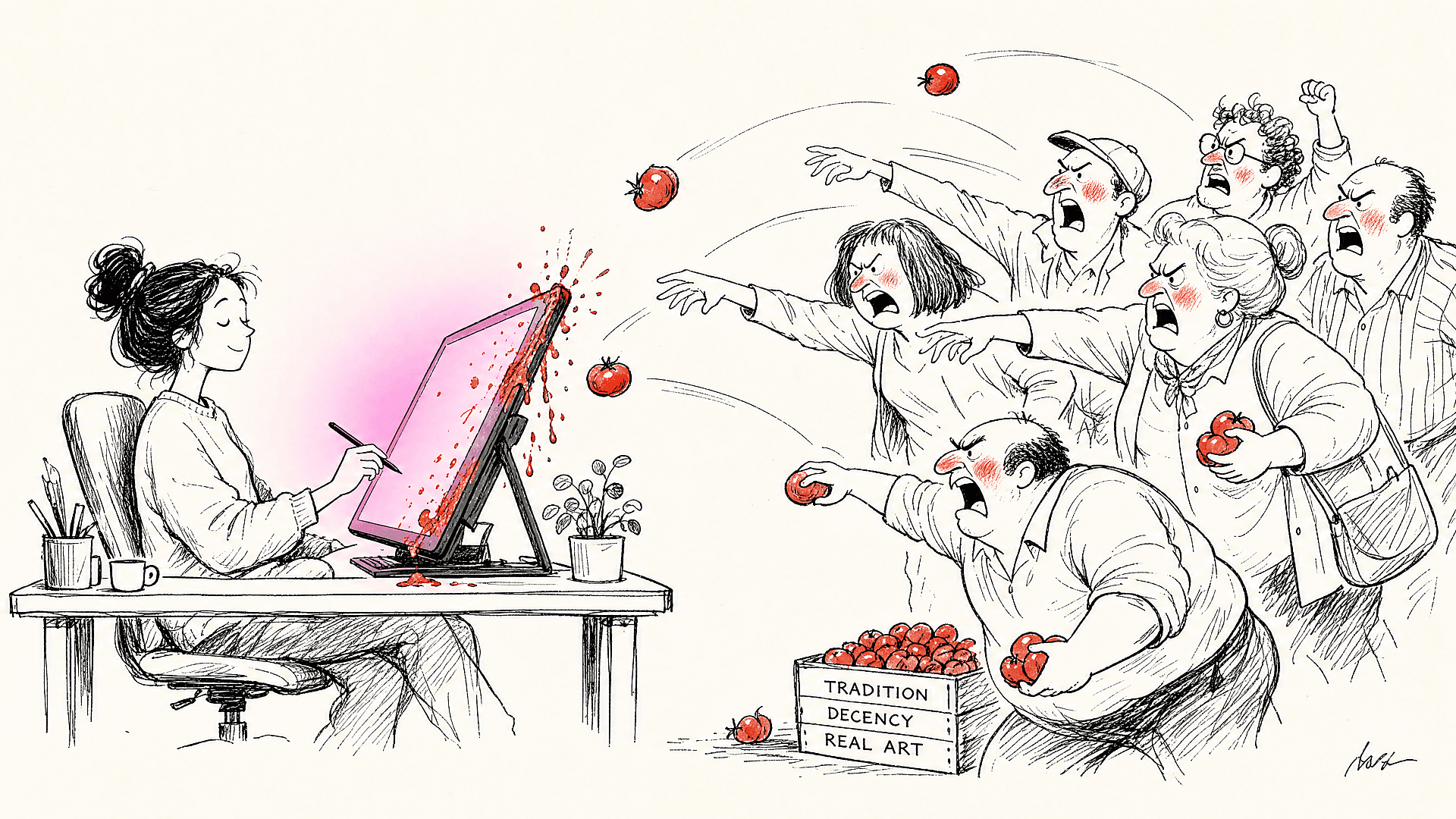
If you're even remotely online right now, you've seen the comments. They show up under any post that looks slightly AI-adjacent, in the quote-tweets, in the half-second verdict someone delivers out loud in their own video while reacting to someone else's: "ugh, this is AI." Sometimes it's "ew, AI, unfollowing," sometimes it's a single disgusted word, sometimes it's a long paragraph about everything wrong with the world. The wording barely matters because the sentiment is always the same, a mix of disgust and finality, the sound of a door closing. And it's become common enough that creators are now quietly engineering their work to avoid setting it off, adding disclaimers, obfuscating their process, over-explaining how much human effort went in, or backing away from the tools altogether.
值得放慢脚步,看看这种反应背后究竟隐藏着什么,因为 看似铁板一块的抵触,其实往往是四种各自独立的异议被压缩进了同一种本能反应,它们并不同样公平、并不同样针对你,也不能用同一种方式来回应。把它们逐一厘清,其实是创作者能做的最有用的事,既让自己心里踏实,也提升了大家一直没能好好展开的那场对话的质量。
首先,是那些粗制滥造的内容
这种反应里藏着的第一种反对意见,针对的是粗制滥造的内容,因为在这个人最近的记忆里,总有一段没完没了的信息流:同样的五张脸、同样塑料感的灯光、同样成千上万批量生产、专为博取互动的轮播图。这种反应完全合情合理,因为粗制滥造的内容真实存在、无处不在,确实拉低了每个人的上网体验。但这个反对意见真正针对的,其实是 用心与匠心 而非工具本身,而粗制滥造早在AI出现的几千年前就已存在。用这些工具精心打磨的作品,除了底层技术之外与劣质内容毫无共通之处——这让"呃,AI啊"这种反应,听起来就像因为有些书写得糟糕就干脆拒绝阅读一样。
接着是剽窃论
The second objection has real teeth, and it's about theft. Many image models were trained on the work of living artists who never consented and were never paid, and a great deal of the legitimate anger about AI traces directly back to that fact, which deserves to be taken seriously rather than waved off. What's worth noticing is that this is a specific grievance about how certain models were built and how the industry has handled consent, not a blanket indictment of everyone who's ever opened one of the tools. It points toward genuine questions about training data, licensing, and which platforms a creator chooses to work with, but it doesn't actually resolve into the conclusion that 你,个人, 因为创作了东西而遭人鄙视。
还有代价问题
The third objection is about cost in the most literal sense, since the energy and water required to train and run large models at scale is a real environmental concern that's entirely fair to raise. Like the others, though, it operates at the level of infrastructure rather than the level of the individual, a question about how these systems are built and powered and at what scale, which sits with companies, energy grids, and the regulatory bodies meant to hold them accountable rather than with one person making one image on a random Tuesday.
面对其他环境焦虑时,我们早已见识过这一幕——真正能扭转局面的机构悄悄把责任转嫁到普通人日常生活的肩上。所谓个人"碳足迹"这个概念本身就是 由石油巨头 BP 在 2000 年代初通过一场广告活动推广开来, explicitly to shift responsibility for climate change away from fossil fuel companies and onto individual consumers, and the same move has been run on recycling and a dozen other problems. It works because guilt is easier to manufacture than systemic change. Pointing disgust at a single creator follows the same logic, and it belongs in the conversation about AI's real costs the same way your recycling bin belongs in the conversation about climate: it's not nothing, but it's not where the actual leverage is.
而这一切的底层,是那份恐惧
第四种异议是潜藏在所有其他异议之下、最不动声色的那个,也正是真正催生出厌恶的那个:那种感觉——AI的创造力威胁到了身而为人某种本质的东西。相关研究出人意料地直接。有一项 涵盖六项实验的研究 发现人们一旦得知作品由AI生成,便立刻贬低它的价值——哪怕他们承认自己分辨不出它与人类作品的区别,哪怕被告知有人参与了协作。另一项独立的 来自UBC的研究 发现这种偏见在那些认为创造力是人类独有特质的人群中最为强烈,他们也愿意为自己认为出自人手的作品支付更高的价格。这所指向的与其说是一种论点,不如说是一种 身份认同的本能反应。它源自一个可以理解的地方——那份恐惧:如果机器也能创造出美好的东西,那我们的独特性岂不是突然要打上问号?但这其实是一种关于人类处境的情绪,被投射到了你的创作之上。
如果这听起来令人沮丧,大可不必,因为我们曾目睹过一模一样的恐惧上演,也知道故事最终如何收场。19世纪,摄影被斥为毫无灵魂、纯属机械, 是对真正绘画的侮辱随后它才成为我们拥有的最富表现力的形式之一。一个世纪后,人们又断言合成器将让音乐人被淘汰,直到它成为你所钟爱的几乎每首歌曲的支柱。 一旦有机器介入,某样东西就不再 没有理由认为这一轮会有什么不同的结局。
这套障眼法,以及它为何让人无从反驳
Something clarifying happens when you set these four objections side by side. Slop is a problem of effort, theft is a problem of consent and law, environmental cost is a problem of infrastructure, and the "it's not real" reaction is a problem of philosophy and identity, which means they have different causes, different solutions, and different people responsible for addressing them. Almost none of those people is the individual creator who made something with care and caught a stray "boooo AI 🍅" for the trouble.
这也是为什么和这类评论争辩总是徒劳无功。你回应了劣质内容的问题,对方就滑向剽窃论;你谈剽窃,他们又转向"这东西没灵魂";你回答了这点,话题突然又变成了数据中心。异议不断转移阵地,因为它从一开始就不是一套连贯的论点,而是几种半成型的情绪捆绑在一起——每当你回应其中一个,其余的仍原地待命,等着被再次抛出。
这对创作者意味着什么
The goal, then, isn't to win the argument but to unravel it, because once the four objections come apart two things become clear at the same time. The legitimate concerns, theft and labor and environmental cost, genuinely deserve to be taken seriously, and the right response to them is engagement, not denial: choosing tools built responsibly, being honest about your process, pushing for better practices across the industry. The identity panic, meanwhile, the part doing most of the emotional work behind AI shaming, was never really about your work at all. It was about someone else's relationship to a changing world, and it's not a verdict you're obligated to accept on their behalf.
这些都不会让羞辱停止,而且在尘埃落定之前声浪很可能会更大,因为我们正身处一场真正文化转型喧闹的早期阶段,而这样的阶段听起来向来如此。但那份厌恶,尽管声势浩大,大多其实是针对劣质内容、针对榨取式的公司、针对能源基础设施,以及针对一种和以往每一项曾让人类怀疑自己还能做些什么的技术一样古老的哲学焦虑。 其中真正针对你的少之又少。 所以,去创作你的作品,用新工具去创作,并认真对待那些真实的问题,等它们出现时你才有真正的答案。能顺利走过这个时代的创作者,不会是那些隐藏自己创作过程的人,也不会是那些假装这些顾虑不存在的人,而是那些能同时把握全局的人——而这种清醒,永远比一句免责声明更有价值。