
 ChatGPT
 Perplexity
 Claude
 Gemini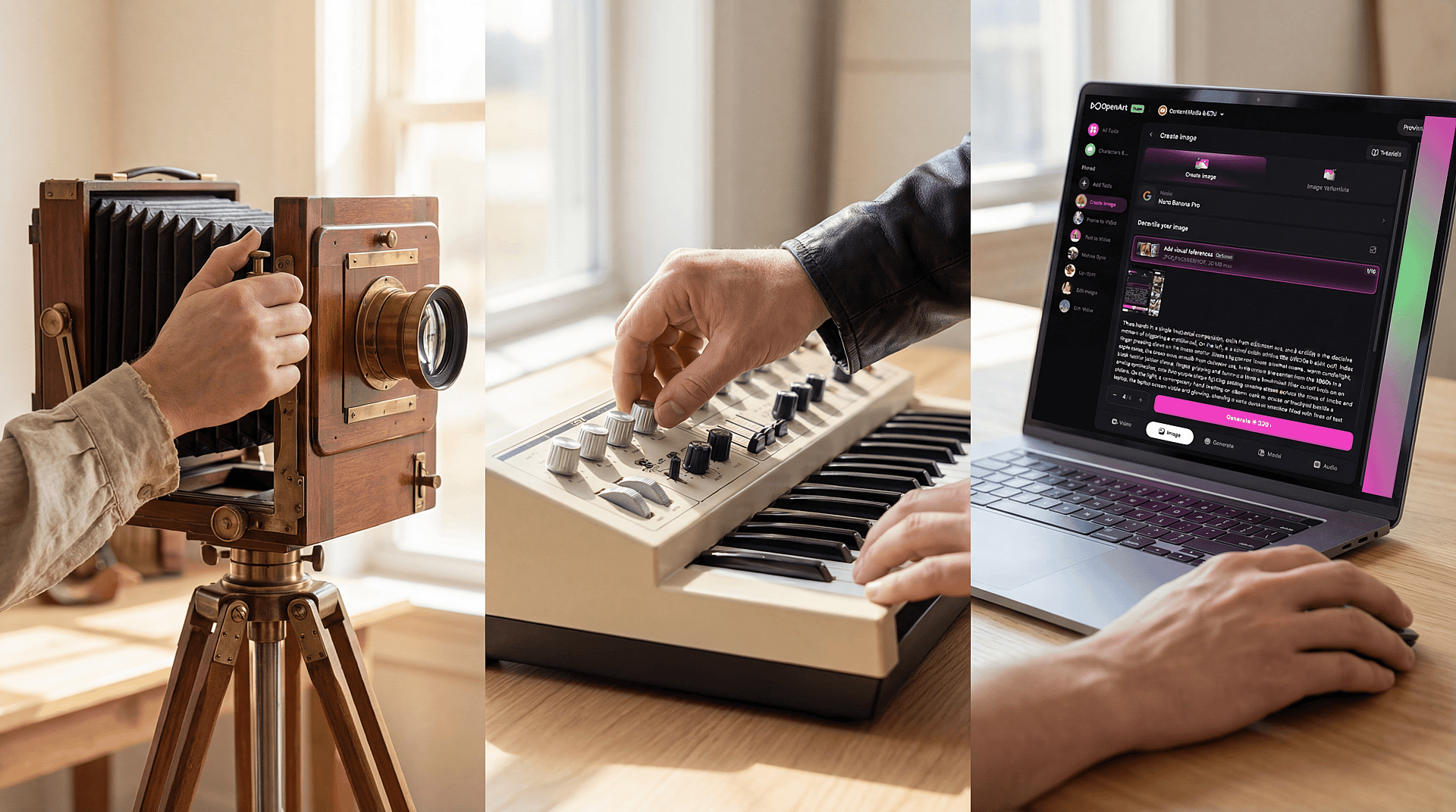
1859 年,诗人夏尔·波德莱尔写下了艺术评论史上最著名的抨击之一。他的矛头指向摄影,称其为“艺术最致命的宿敌」,还将它斥为 每一位失败画家的避难所 没有才华,拿不起真正的画笔。在他看来,摄影不过是一台机器,假装在做艺术家的活儿。它不需要想象力、不需要技巧,也不需要创作视野。它纯粹是机械的,因而也纯粹是没有灵魂的。然而,多萝西娅·兰格的 移民母亲 在大萧条时期帮助推动了联邦粮食援助,Apollo 8 号机组的 Earthrise 照片重塑了整整一代人对地球的认知,摄影也从此成为人类历史上最重要的创作形式之一。
一个多世纪之后,合成器也遭遇了同样的境遇。1970 年代末到 1980 年代初,当合成器流行乐开始霸榜时,反对声浪立刻铺天盖地而来。Gary Numan 形容那种敌意」——那些认为电子乐算不上真正音乐的评论家给了他这样的评价,因为他们觉得是机器在替人干活。OMD 主唱 Andy McCluskey 直白地说:当年真有很多人以为是设备替你写好了歌。Queen 在 1970 年代连续四张专辑封套上印着「No Synthesizers!」,仿佛在向听众保证,他们听到的音乐依然「正宗」。到了 1982 年, 英国音乐家工会曾投票决定彻底禁用合成器和鼓机,坚信电子乐器会让真人演奏者被淘汰。然而如今,电子音乐已是全球最受欢迎的音乐类型之一,合成器更深深融入现代音乐制作,以至于大多数流行歌曲若没有它们根本无从谈起。
这些批评听起来大概会让人觉得莫名熟悉。如果把「AI 艺术」换成「摄影」或「合成器」,你几乎能在今天的评论区和各种评论文章里找到一模一样的论调——因为工具在变,焦虑显然没变。
We are, as a species, compulsively creative. We build tools, we extend our capabilities, and then we spend a generation or two being deeply unsettled by what we've built before finally absorbing it into the fabric of normal life. Cities once felt like an affront to the natural world. The printing press was going to destroy the memory of scholars. Recorded music was supposed to end live performance. The internet was going to rot our brains (jury's still out on this one). But in each of these cases, the tool eventually became so thoroughly woven into human culture that we stopped seeing it as foreign and started seeing it as ours.
围绕「AI 艺术」的讨论如今仍深陷恐惧阶段,而这个标签本身就是让它停滞不前的原因之一。
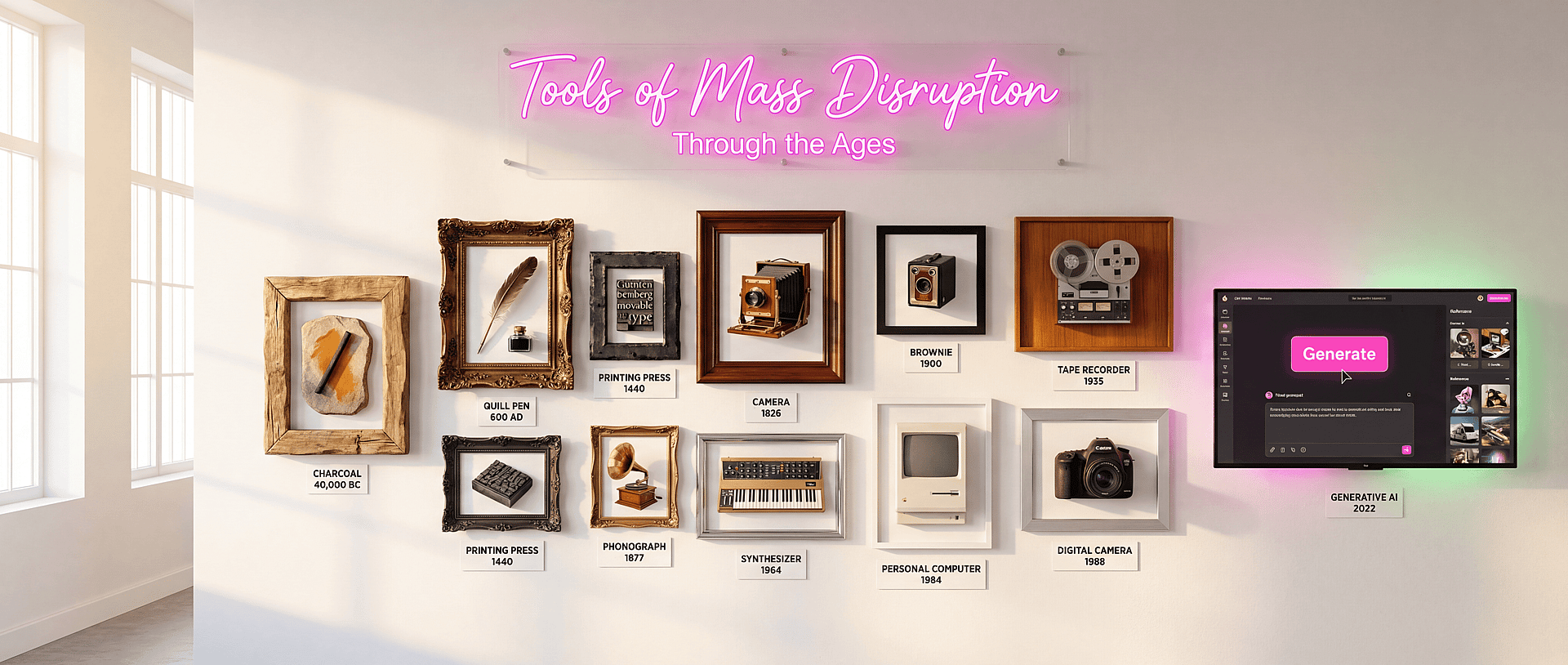
当你把某样东西称为「AI 艺术」,你就把人类艺术家挤到了边缘
摄影师不是“相机艺术家”,电影人不是“镜头讲述者”,平面设计师也不是“软件插画师”。我们从不用工具去称呼创作者,因为让作品作为最终成果变得有意义、有辨识度的,从来不是工具。真正做到这一点的,是背后的创意视野。
当你把某样东西称作「AI 艺术」时,你就把工具推到了聚光灯下,而把人挤下了舞台。随后的每一场讨论都自然地围着软件转:AI 有创造力吗?它该不该被算作作者?如果不是人一笔一画画出来的,那还算不算艺术?这些都是有趣的哲学问题,但对于每天用生成式工具做真正创作的数百万人来说,这几乎都不是重点。
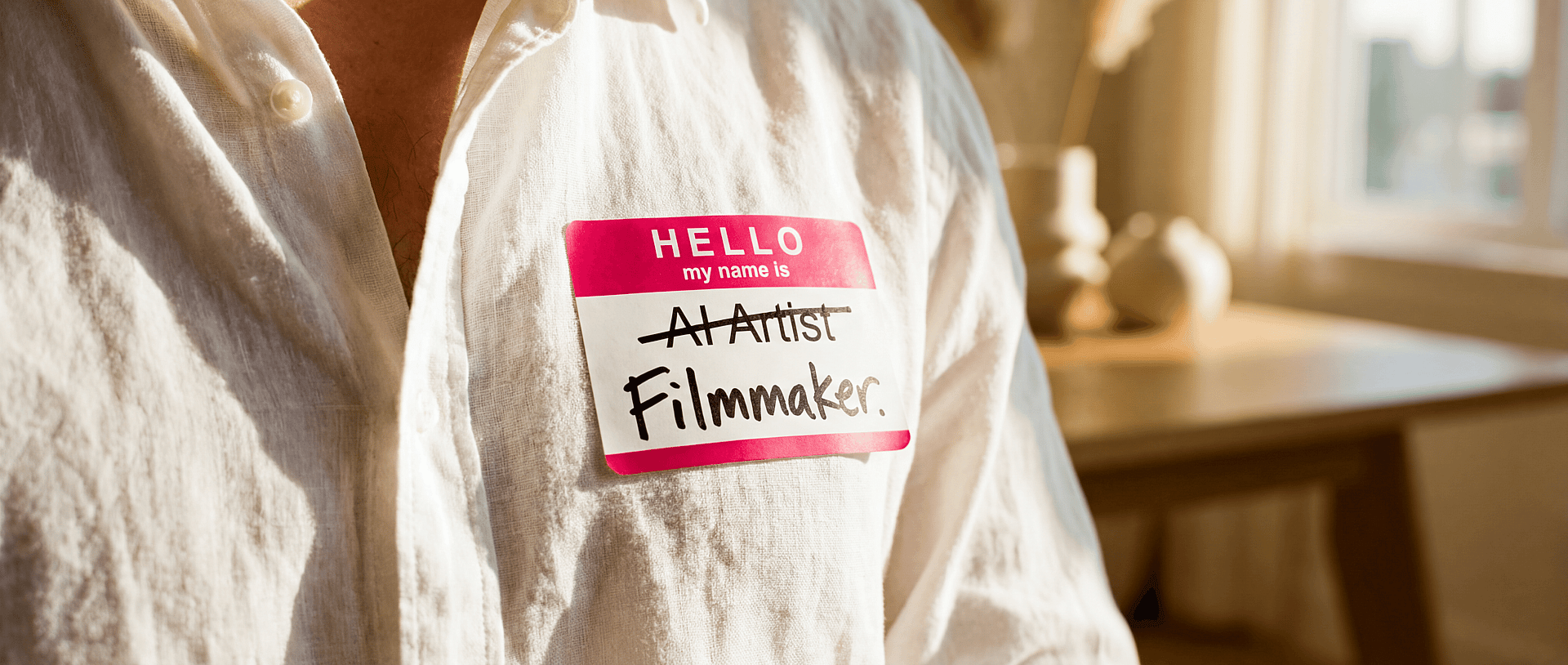
The label also flattens an enormous range of creative practices into one reductive term. Consider what "AI art" is currently being asked to cover: a brand creative director prototyping visual directions for a campaign, a solo illustrator building a consistent fantasy world they couldn't afford to render any other way, a filmmaker generating storyboard imagery at speed, a fashion designer exploring colorways in real time, a small business founder who finally has a way to make content that feels like their brand instead of like stock footage. These are wildly different practices with different goals, different skill sets, and different outputs. The only thing they share is one piece of the pipeline, and that shared tool has somehow become the defining characteristic of all of them, which would be a bit like calling every piece of writing created in Google Docs "software literature."
就连艺术界对这个词的含义也莫衷一是。一位 Artsy 近期调查 of more than 300 gallery professionals found three competing definitions in active use: some define "AI art" as fully prompt-based work, others focus on artistic intent regardless of tool, and others classify anything where AI meaningfully shapes the outcome. The survey's own conclusion was telling: these debates about legitimacy and value are happening without a common vocabulary. Professionals in the same field are using the same term to describe fundamentally different things, and then arguing about whether those different things have merit.
法律界也开始对此发表看法
The court of cultural opinion tends to dominate these conversations, but it's worth paying attention to what's happening in actual courts. Because when the legal system starts hearing cases and making room for how a new technology is actually being used, that's historically one of the clearest signs that it's here to stay and that culture will eventually follow. It always starts with a few brave people who just want to create, and little by little their work becomes recognized not just in law but in our colloquial way of life.
2026 年 3 月 2 日, 美国最高法院拒绝受理 Thaler 诉 Perlmutter 案, the decade-long case about whether AI can be an "author" under copyright law. The ruling was clear: copyright requires human authorship. Works created autonomously by AI, with no human creative contribution, cannot be copyrighted. But the court left room for works where humans maintain genuine creative control through direction, prompting, and alteration. In other words, the legal system already distinguishes between "the AI made this" and "a human made this using AI." When we call something "AI art," we linguistically frame it as the first category, even when the reality is almost always the second.
那我们该怎么称呼它呢?
也许最简单的办法是:按成品来称呼它。插画、概念艺术、品牌视觉、动态图形、视觉设计、故事板、活动摄影。作品指的是最终产出,而非创作它的流程——没有人会在决定如何称呼一张照片前,先问摄影师用的是佳能还是哈苏。
或者,谁知道呢,也许它会是一个全新的、尚不存在的词,一个我们所有人都能参与塑造的词。为我们新生的创意工具创造词汇来包裹它,本身就是一项艰苦的工作。
我们真正该停止的,是习惯性地用一个把 AI 当作作者、把人类当作旁观者的说法。因为在实际使用这些工具的每一个工作室、品牌团队和创意流程里,情况根本不是这样。真实发生的是:人们在做决策、在执导、在剪辑、在策展、在取舍。他们在运用审美,做着那些一直以来让创意工作之所以有创意的事情——只不过手里多了一件新工具。
如果你在想这种转变是否已经在实践中发生——答案是肯定的。
积极信号
We know that it can feel like there's a lot of shade being thrown at creators who use these tools right now, and that it's hard to tell how far we really are from a cultural shift where this kind of work is simply accepted for what it is. But the positive signals are already there. Every generation's technological revolution has its naysayers, but there are also always the Gary Numans and Andy McCluskeys of the world, already jamming out on their synths and pioneering entirely new sounds before the rest of the culture catches up. The same thing is happening right now with GenAI.
Paul McCartney 用 AI 从一盘几十年前的样带中提取出 John Lennon 的人声,完成了《Now and Then」——披头士的最后一首歌。没有人叫它「AI 歌曲」,大家称它为披头士的歌,因为 AI 只是乐器,真正重要的是音乐本身。
Grimes 打造了 围绕 AI 打造的一整套创作基础设施,从让粉丝用她 AI 生成的嗓音创作音乐的 Elf.Tech 语音模型,到 在佳士得拍卖的视觉艺术作品。她不自称为"AI 艺术家"。她是一位艺术家,AI 只是她众多创作工具中的一种,帮助她实现横跨音乐、视觉艺术与科技的创作愿景。
而当 粗野派 在 2025 年斩获多项奥斯卡奖,包括阿德里安·布洛迪的最佳男主角奖,而这背后是它用 AI 打磨了布洛迪和费莉希缇·琼斯花数月跟方言指导苦练出来的匈牙利口音。这项技术在后期精修了特定的元音和发音,以保留那些从任何实质意义上讲都完全属于演员本人的表演的真实感。没有人会说 粗野派 “AI 电影”。这是一部电影,而 AI 只是其制作过程中一个微小、隐形的环节。
OpenArt 对此的看法
When we talk about the people who use OpenArt, we don't call them "AI artists." We call them creators, storytellers, filmmakers, founders. When we describe what the platform does, we don't say "AI generates images for you." We say "bring your characters, stories, brands, and worlds to life." That's not a branding exercise. It's a reflection of something we genuinely believe, informed by the same history this piece has been tracing. (In fact, every image in this post was made with generative tools on OpenArt.)
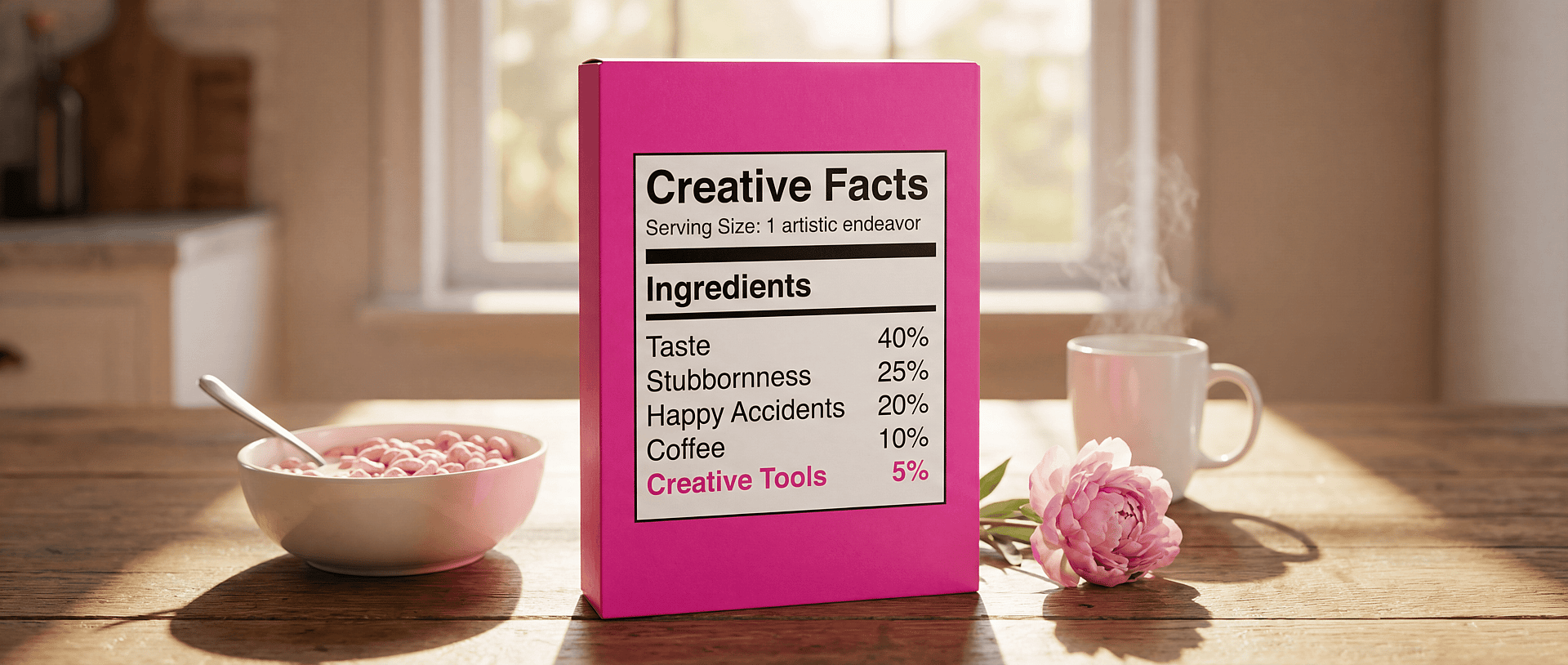
这一规律告诉我们 1. 恐惧是真实存在的, 2. 它本质上属于人类,而且 3. 这一切终将过去。 它告诉我们,工具最终总会融入人们创作的宏大叙事之中。它也告诉我们,眼下我们能做的最有价值的事,就是打造不碍事的工具,让创作者专注于自己在做什么、为何而做。
我们一次又一次走到这样的时刻——人类创造出新事物,又争论它算不算数,这件事本身真的很美妙。在波德莱尔试图封杀摄影几百年后,在音乐家工会试图禁止合成器几十年后,我们依然在发明彼此创作与分享的新方式,而任何早期的抵触,都从未真正阻止过这一切的发生。