 ChatGPT
 Perplexity
 Claude
 Gemini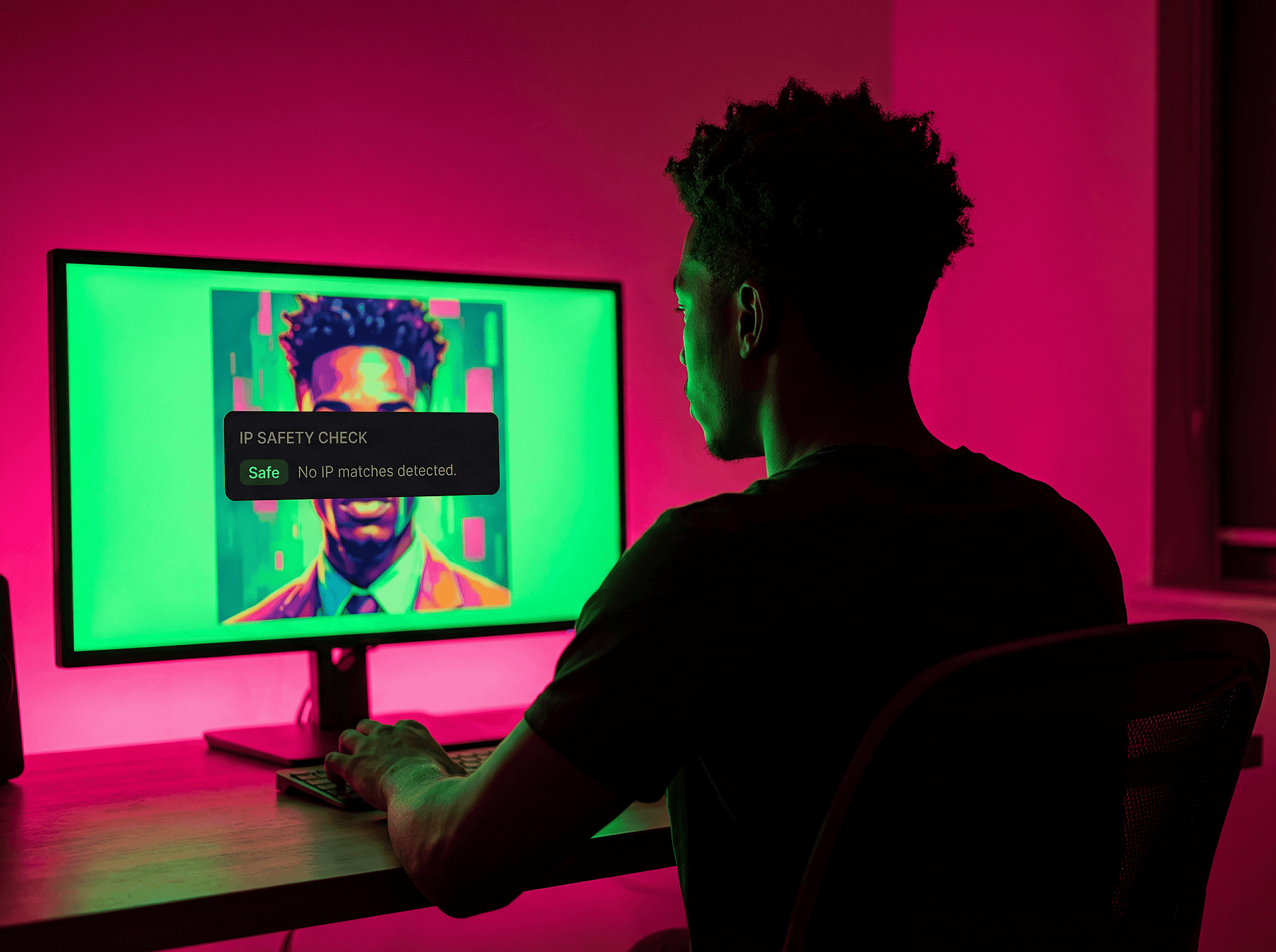
Hay un subidón creativo muy particular al generar una imagen o un vídeo que resulta completa e inconfundiblemente tuyo. Los colores, la composición, el vibe. Tú lo guiaste hasta hacerlo realidad. Quieres compartirlo, publicarlo, quizá incluso venderlo.
O está ese retrato que acabas de generar. La iluminación es perfecta, la expresión justo la que buscabas. No intentabas generar a nadie en concreto, pero algo en esa cara te resulta familiar. Estás orgulloso de él. Quieres publicarlo.
Pero entonces surge una vocecita: Un momento. ¿Podría este personaje pertenecer a otra persona o, peor aún, podría ser otra persona por completo?
Estas son algunas de las preguntas más incómodas del contenido generado por IA ahora mismo, y ninguna tiene una respuesta sencilla. Los modelos de IA aprenden de océanos inmensos de imágenes existentes: obras de arte, fotografías, retratos y logotipos. Lo que producen a veces puede recordar a material protegido de formas difíciles de detectar a simple vista. Eso no es un defecto de la tecnología. Es simplemente la realidad de cómo funciona. Y hasta ahora, la mayoría de creadores no tenían una forma real de comprobarlo.
Por eso creamos Commercial Safety Check, una nueva herramienta de OpenArt impulsada por CopySight, que te permite analizar tu trabajo antes de que salga de tus manos, para que puedas crear con audacia y publicar con confianza. OpenArt es la primera y única plataforma en ofrecer esta tecnología.
Por qué la propiedad intelectual + IA es complicada
Cuando se entrena un modelo de imágenes con IA, aprende de enormes conjuntos de datos de imágenes existentes: fotografías, ilustraciones, pinturas, arte digital. Ese proceso le da un rico vocabulario visual.
La mayoría de las veces, lo que sale es genuinamente nuevo. Pero a veces una imagen generada puede parecerse a algo protegido. La ley de propiedad intelectual es complicada y está llena de zonas grises. Estos son algunos de los posibles problemas de PI que debes tener en cuenta:
- Obras con derechos de autor: Un estilo artístico distintivo, un diseño de personaje concreto o una composición reconocible que, si se usa o evoca (aunque sea sin querer), puede vulnerar los derechos de propiedad del creador original.
- Personas reales y famosos: los generadores de retratos con IA pueden producir imágenes que se parecen mucho a figuras públicas, a veces sin ningún prompt evidente. Compartirlas puede generar exposición en torno a los derechos de imagen y de publicidad, o parecer un deepfake deliberado aunque no lo fuera.
- IP y personajes famosos: los personajes de películas, videojuegos, cómics y franquicias suelen estar protegidos. Una imagen que refleje el diseño de un personaje reconocible puede infringir la propiedad intelectual, independientemente de la intención.
- Logos y marcas comerciales: Las imágenes generadas pueden incorporar involuntariamente elementos de logotipos o identidades de marca reconocibles, una categoría de riesgo de propiedad intelectual completamente distinta.
Para los creadores, esto plantea un verdadero dilema. No te propusiste copiar a nadie, y puede que ni siquiera reconozcas el parecido, pero eso no elimina el riesgo legal o ético si la imagen sale al mundo. Como creadores, queréis y debéis respetar los derechos de otros creadores.
La conversación en torno a esto no va a desaparecer. Hay demandas abriéndose paso en los tribunales, y las plataformas y los legisladores empiezan a prestar atención. Tanto si eres un aficionado que comparte en redes sociales como un profesional que vende impresiones, estas cuestiones son cada vez más relevantes para ti.
La respuesta no es dejar de crear. Es crear de forma ética, con herramientas que te ayudan a hacer lo correcto.
Lo que hemos creado
El Chequeo de Seguridad Comercial está diseñado para ser simple a propósito. Es una herramienta de confianza creativa, pensada para el momento justo antes de decidir qué hacer con algo que has creado.
Hemos creado la Comprobación de Seguridad Comercial con nuestros socios, CopySight, expertos en seguridad de propiedad intelectual con IA. Esta herramienta no ofrece asesoramiento legal ni pretende sustituir tu propio criterio ni el de un asesor legal. Sin embargo, está pensada para ayudarte a tomar decisiones más informadas al señalar posibles cuestiones de infracción de propiedad intelectual para que las revises.
Así es como se ve en la práctica: Imagina que has estado experimentando con retratos generados por IA y uno de ellos sale espectacular. Gran composición, iluminación natural, muy convincente. No describiste a nadie en concreto en el prompt, pero antes de usarlo en una campaña o publicarlo en abierto, haces una comprobación rápida. En segundos descubres que se parece mucho a una figura pública real que ni siquiera conocías. Nunca lo habrías notado. Ese es el tipo de problema que esta herramienta existe para detectar antes de que se convierta en tu problema.
Puedes revisar imágenes de dos maneras: directamente desde tu cuadrícula principal seleccionando varias imágenes a la vez, o desde el diálogo ampliado cuando estás viendo una sola pieza. Ejecuta la revisión y cada imagen vuelve con una de tres etiquetas.
A green ✅ means the tool didn't identify anything risky. A ⚠️ warning means the tool flagged something worth a closer look before you publish or share. A 🚨 unsafe result means there's a meaningful similarity to protected work, whether that's an artwork, a likeness, a character, or a logo, and you'll want to address it. Keep in mind that no automated tool is perfect: the results are informational, not guarantees, and responsibility still rests with you as the creator. For warnings and unsafe results, you can dig into the details to understand what was flagged and why.
Cada imagen que has revisado también queda registrada en un solo lugar, para que puedas consultar tu historial y seguir el estado de tu trabajo a lo largo del tiempo. El objetivo aquí no es controlar lo que creas, y usarlo es totalmente opcional. Está ahí cuando lo necesitas, una forma de quedarte tranquilo antes de compartir algo que te importa.
Por qué esto importa
El panorama legal en torno a la IA y los derechos de autor sigue evolucionando, las conversaciones siguen su curso y nadie tiene todas las respuestas todavía. No pretendemos que esta herramienta resuelva eso.
Lo que sí sabemos es que los creadores de OpenArt, tanto aficionados como profesionales, están haciendo trabajos cada vez más serios. La gente está construyendo porfolios, vendiendo impresiones, presentando propuestas a clientes, haciendo crecer audiencias. Y el riesgo ya no es solo el parecido accidental entre obras: es generar por accidente la cara de un famoso, un personaje querido, la marca registrada de una empresa. La pregunta de «¿esto se puede publicar?» ha pasado de ser una curiosidad casual a algo que de verdad quita el sueño a la gente.
Creamos esto porque queremos que crear en OpenArt se sienta bien de principio a fin, incluida la parte en la que compartes tu trabajo con el mundo. Las mejores herramientas creativas no solo te ayudan a crear cosas; también te ayudan a respetar los derechos de otros creadores. Prueba hoy la comprobación de seguridad de IP en OpenArt.