

 ChatGPT
 Perplexity
 Claude
 Gemini
There is a version of creative development that gets talked about constantly: consume voraciously, collect references obsessively, surround yourself with work you love until your own work starts to reflect it. Build a mood board. Fill a swipe file. Study the people you admire. This advice is not wrong, but it is incomplete, because it points you toward your enthusiasms and asks you to build a creative identity from them, and enthusiasm alone is one of the least reliable guides to a genuine point of view.
Enthusiasm is diffuse, because it wants to say yes to too many things. It's moved by quality wherever it finds it, which means it is moved by contradictory things, incompatible aesthetics, ideas that can't coexist in the same body of work. Every creative person who has spent time carefully curating a collection of things they love has also experienced the paralysis that comes with it: the references pull in ten directions at once, and instead of clarifying your aesthetic, the collection just reflects the breadth of your taste rather than the specificity of your vision.
真正能磨砺出观点的,是拒绝,因为「不」比「是」更精准,往往也更能说明问题。当你遇到一件让你哪怕只是微微反感的作品——不是因为它糟糕,而是因为它从根本上就不是你——你就比任何量的灵感收集都更接近自己真正的审美身份的轮廓。
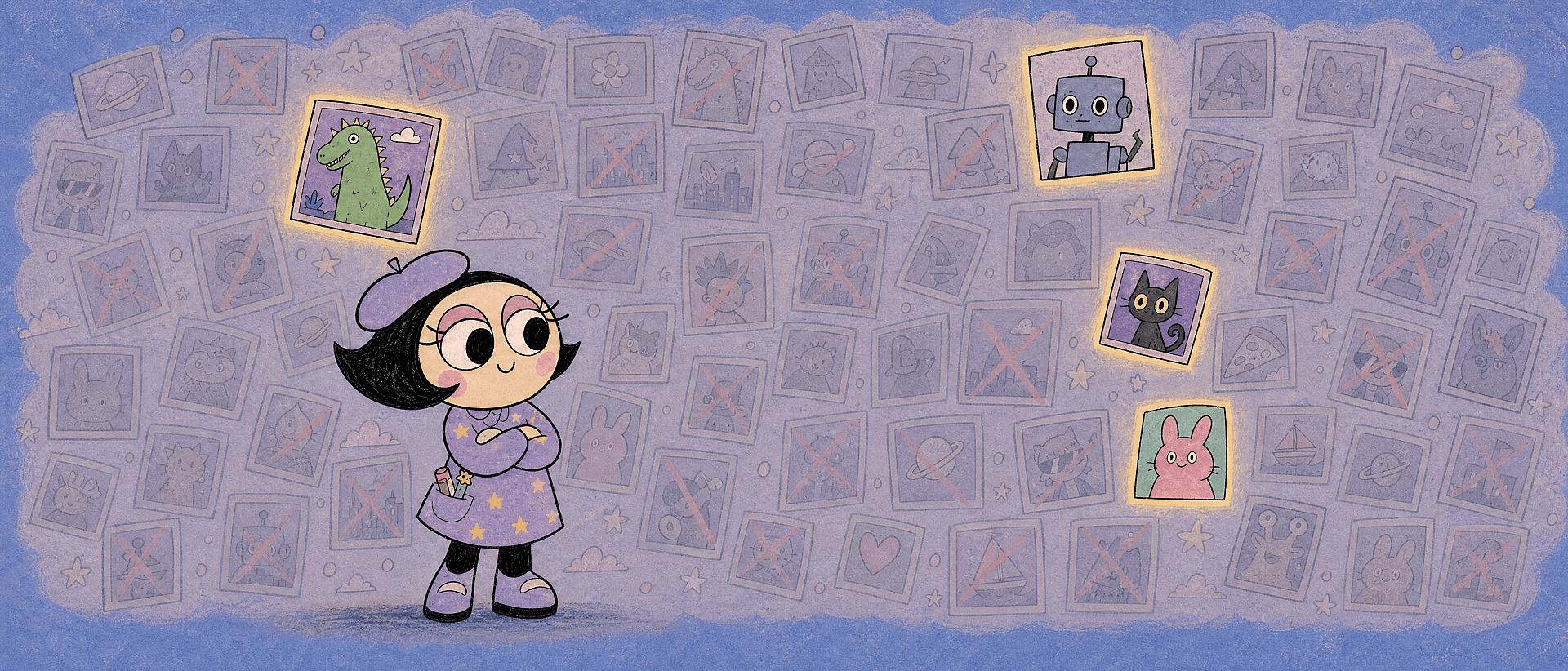
Think about the creatives whose work you can identify instantly across mediums and years. What makes them recognizable is not just what they chose to include but what they conspicuously excluded: the designer who never uses more than two typefaces, the photographer who won't touch a golden hour shot, the illustrator who refuses sentimentality even when the subject invites it, the AI creator who generates fifty images and throws away anything that feels safe. These aren't arbitrary constraints; they're the result of a thousand small refusals, each one carving the work a little closer to something that couldn't have come from anyone else.
The "no" is also more durable than the "yes," because the reality is that enthusiasms shift. The references that move you at 22 are not the ones that move you at 35. Influences come and go and leave their marks in ways that are hard to predict and harder to control. But the things you've decided you genuinely cannot stand tend to be more stable, more structural, more connected to something fundamental about your point of view. The refusals accumulate into a kind of negative space that holds its shape even as everything inside it changes.
This is especially true in an era when the volume of available reference material is essentially infinite and the tools to generate more of it are equally unlimited. The challenge is no longer finding inspiration, it's maintaining the ability to refuse, edit, and curate. When everything is possible and everything is fast and the model will happily produce whatever you describe, the creative muscle that needs the most deliberate exercise is not imagination, but discernment. It's the voice that says "not that, not quite, not yet, keep going."
培养内心那个小声音,需要你密切留意自己的反应,尤其是负面的反应,并认真对待它们,在创作过程中把它们清晰表达出来。不只是「我不喜欢这个」,而是「我不喜欢这个,因为构图太居中、配色太用力,而且这种氛围仿佛借用了我见过上百次的东西」。这种拒绝的具体程度 就是数据。随着时间推移,这些数据会汇聚成一套立场,而这些立场就是你的视角。
The practical version of this is simple: start keeping a rejection file alongside your reference library. Not screenshots of bad work, but screenshots of work that is technically accomplished, clearly professional, and somehow still not you: the kind of work you could imagine someone else making but that you would never make, and that you can articulate precisely why. Review it as often as you review your inspirations, because you'll learn more about your aesthetic from studying the conviction in your refusals than from studying your endlessly shifting enthusiasms.
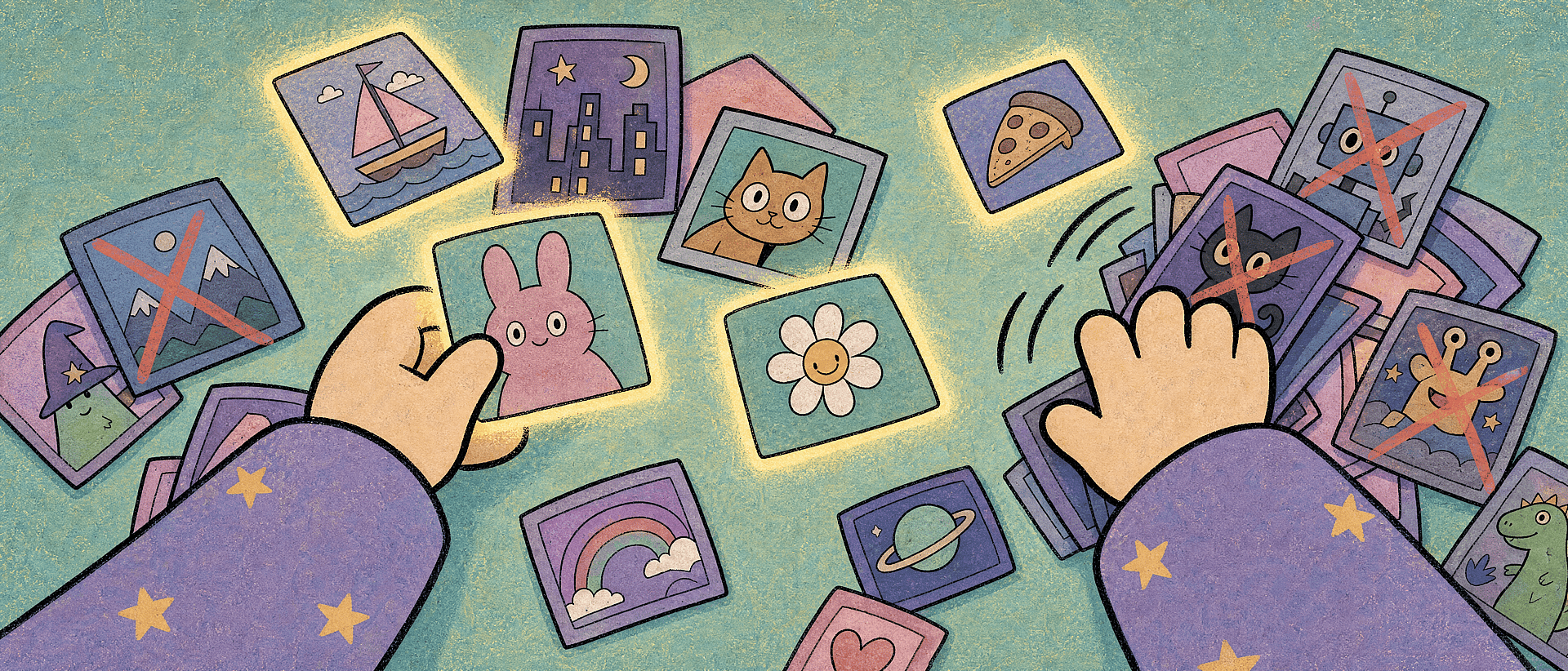
创意视角不是一堆你喜爱的事物,而是你所坚守的一套立场(没错,立场需要明确的对立。)「要」只有在与「不要」的对照中才有意义。最独属于你的作品,是那些换成拒绝方式不同的人就无法创作出来的作品;而通往这一境界的方式不是收集更多灵感,而是把「你不做什么」想得非常清晰、非常具体、非常坦诚。
OpenArt 的多模型工作空间正是为这种鉴别力而打造:让你能大批量生成、在各种工具间切换,并不断筛选,直到剩下真正属于你的作品。工具的好坏取决于掌控它的那双眼睛,而每一次你说「不」,那双眼睛都会变得更敏锐,创意之声也会更响亮。