

 ChatGPT
 Perplexity
 Claude
 Gemini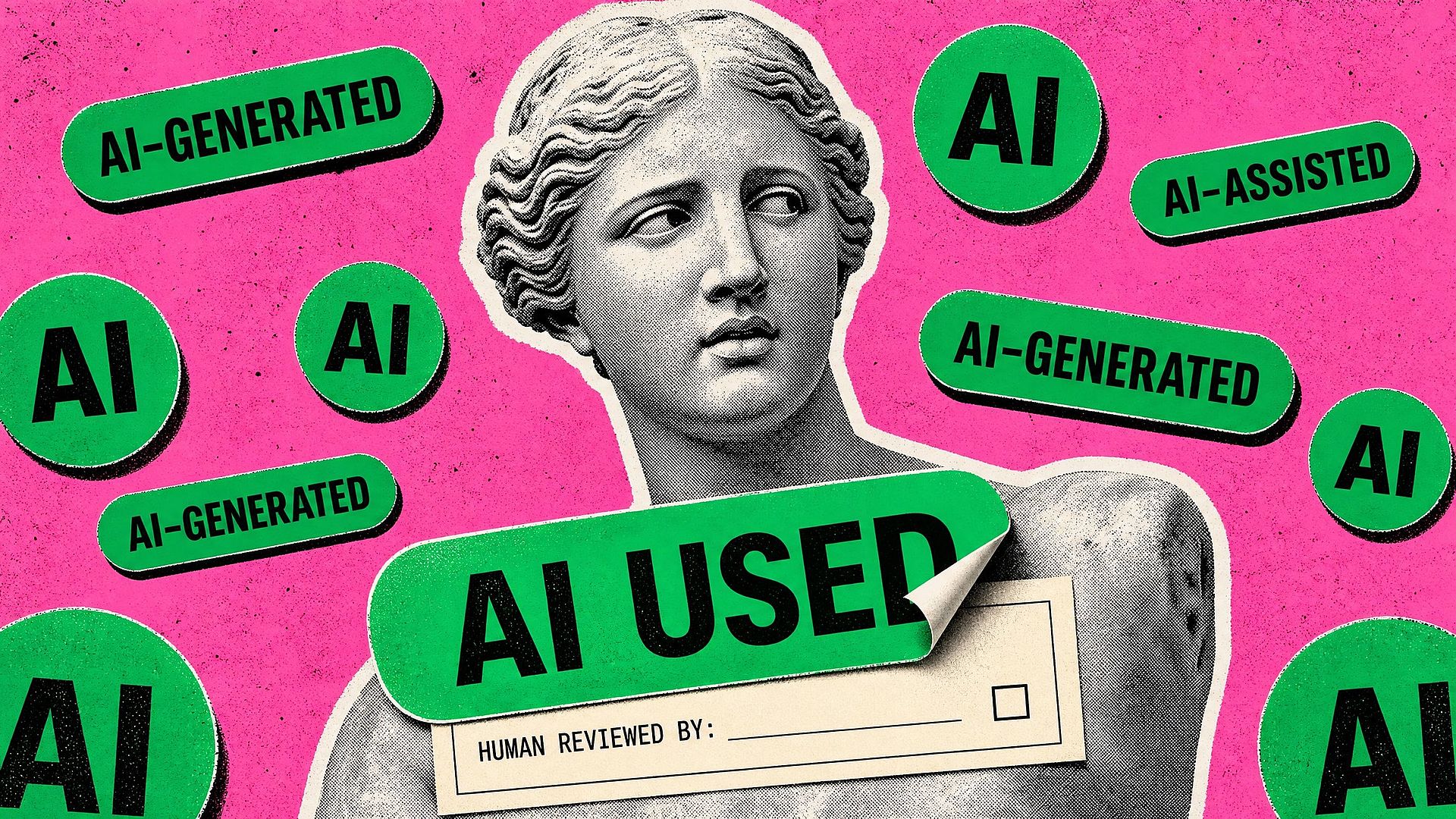
从需求端来看,这个论点毫无悬念。 Fractl 在 2026 年对逾千名消费者的调查 found that 84 percent want written AI content labeled, 91 percent want it on video, 90 percent on images, 87 percent on audio, with strongly-agree responses alone clearing half in every category. The supply side isn't close either, just in the other direction: only 20 percent of organizations say they always disclose AI use to their audience, and 33 percent say they never do. Framed that way, this looks like a straightforward compliance gap. Get more companies labeling their content, close the gap, problem solved.
不过《Digital Journalism》期刊在 2026 年发表的两项研究表明,这道鸿沟其实并非信任问题的症结所在。 其中一项针对智利媒体消费者的联合分析实验让人们把各媒体的 AI 政策逐一对比,结果发现真正影响可信度、决定人们愿意阅读哪家媒体的关键因素,是人工监督,而非单纯的披露。媒体是用 AI 处理琐碎任务还是个性化内容格式,几乎都无关紧要。真正起作用的,是有没有人审核过 AI 生成的内容。标签只回答一个问题:是否使用了 AI。而事实证明,这几乎从来不是受众真正想问的问题。
第二项研究, 基于访谈而非实验,发现了更犀利的结论: 标签可能起到反效果。 One participant described their reaction to seeing an AI label as "I probably need to fact-check this and try and find another article," which is the opposite of what a disclosure label is supposed to accomplish. Others saw AI use itself as a kind of professional shortcut, with one interviewee putting it bluntly about a fully AI-written article: "You can do that as an 11-year-old. You don't need the training for that if you're going to use AI to generate your entire article." A vague, generic label doesn't resolve that instinct. It just confirms the suspicion without giving anyone a reason to set it aside.
What the same research found does help: specificity about degree, not just presence. Interview subjects drew a real line between an article labeled as fully AI-generated and one labeled as AI-assisted, treating those as different claims requiring different levels of scrutiny, and they wanted that distinction visible at the top of a piece rather than buried in a footer where it could look like it was trying not to be noticed. None of that is about whether to disclose. It's about whether the disclosure actually tells someone what happened and whether a person was accountable for it.
这正是合规视角完全忽略的区别。法律可以强制要求标签存在,却无法强制标签真正承担起重建信任的职责,因为信任取决于受众是否相信仍有一位称职的人参与其中,而不取决于页面上是否有标签。 让那 33% 从不披露的人开始披露,本身就意义重大。 但潜藏其下更棘手也更有价值的问题是:披露的内容究竟是否真的向人传达了什么,还是只是走个过场,根本没触及人们最初真正担心的问题。