
 ChatGPT
 Perplexity
 Claude
 Gemini
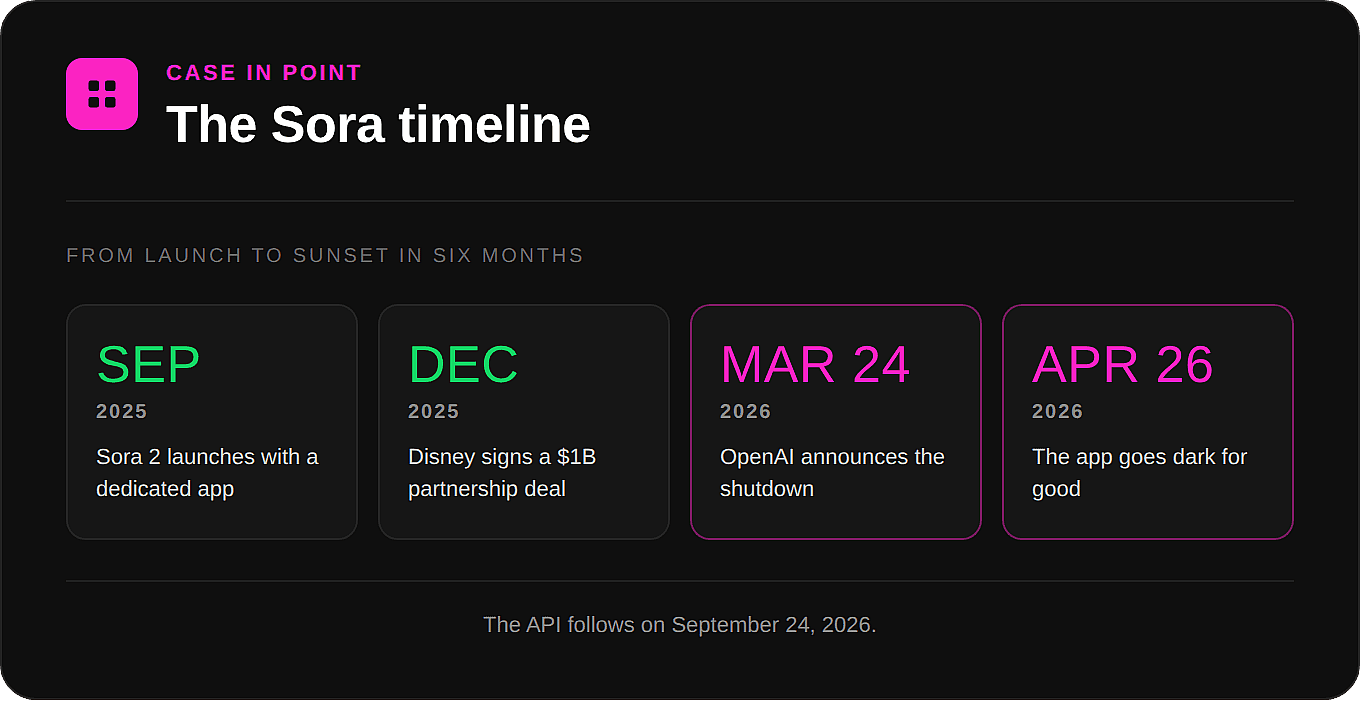
3月24日、OpenAIはSoraの終了を発表しました。アプリは4月26日に停止し、APIは9月に続きます。昨年12月に締結された数十億ドル規模のDisneyとの提携も同時に解消され、報道によればDisneyがそれを知ったのは、世界の他の人々よりわずか1時間足らず前だったとのことです。
クリエイティブなワークフローをSora内で完結させていたなら、作業をエクスポートして次にどうするかを考えるまで数週間の猶予があります。この種のスケジュールこそが、AI戦略をめぐる抽象的な議論を、きわめて具体的な問題へと変えるのです。
それはまた、じっくり考える価値のある問いも突きつけます。これほど変動の激しい分野で、AIツールの上に創作活動を築く正しい方法とは何なのか。それは、OpenArtが最初から独自の答えを築いてきた問いです。ただ、その答えに触れる前に、なぜこの問いがますます避けられなくなっているのかを見ておく価値があります。
この状況は落ち着く気配がありません
何かが急速に動いているとき、落ち着くのを待とうという自然な本能が働きます。ほこりが収まってから最終的な勝者を選ぼう、というわけです。それはもっともな本能ですが、今のAI画像・動画生成で起きていることとは実際には噛み合っていません。
The pace isn't slowing. If anything, it's picking up. In just the last few months, Midjourney shipped V8 with a rewritten engine and native 2K output. Black Forest Labs released Flux 2. Google's Nano Banana 2 became one of the fastest image models available. Imagen 4 raised the bar for photorealism again. Recraft V4 took over as the model people reach for when they need vectors. Ideogram keeps leading on text rendering. Kling and Seedance are pushing video forward on a near-monthly cadence. And Sora, which a year ago looked like the future of AI video, is being sunset.
The pattern isn't a market consolidating around a few stable winners. It's a research frontier where the leader changes regularly, capabilities leapfrog each other constantly, and the economics of running these models are demanding enough that even well-funded labs are making hard tradeoffs. Sora wasn't shut down because it was bad. By most accounts the underlying model is impressive. It was shut down because video generation is enormously expensive to run, the user numbers didn't justify the compute, and OpenAI needed those resources elsewhere. That same math applies, in some form, to almost every model in the space.
すべてに最適な単一モデルは存在しません
この分野を日常的に扱うようになると、「どのモデルが一番良いか」という問いが的外れに感じられてきます。何にとってのベストなのか、が本質です。
現状をざっくりまとめると次の通りです:
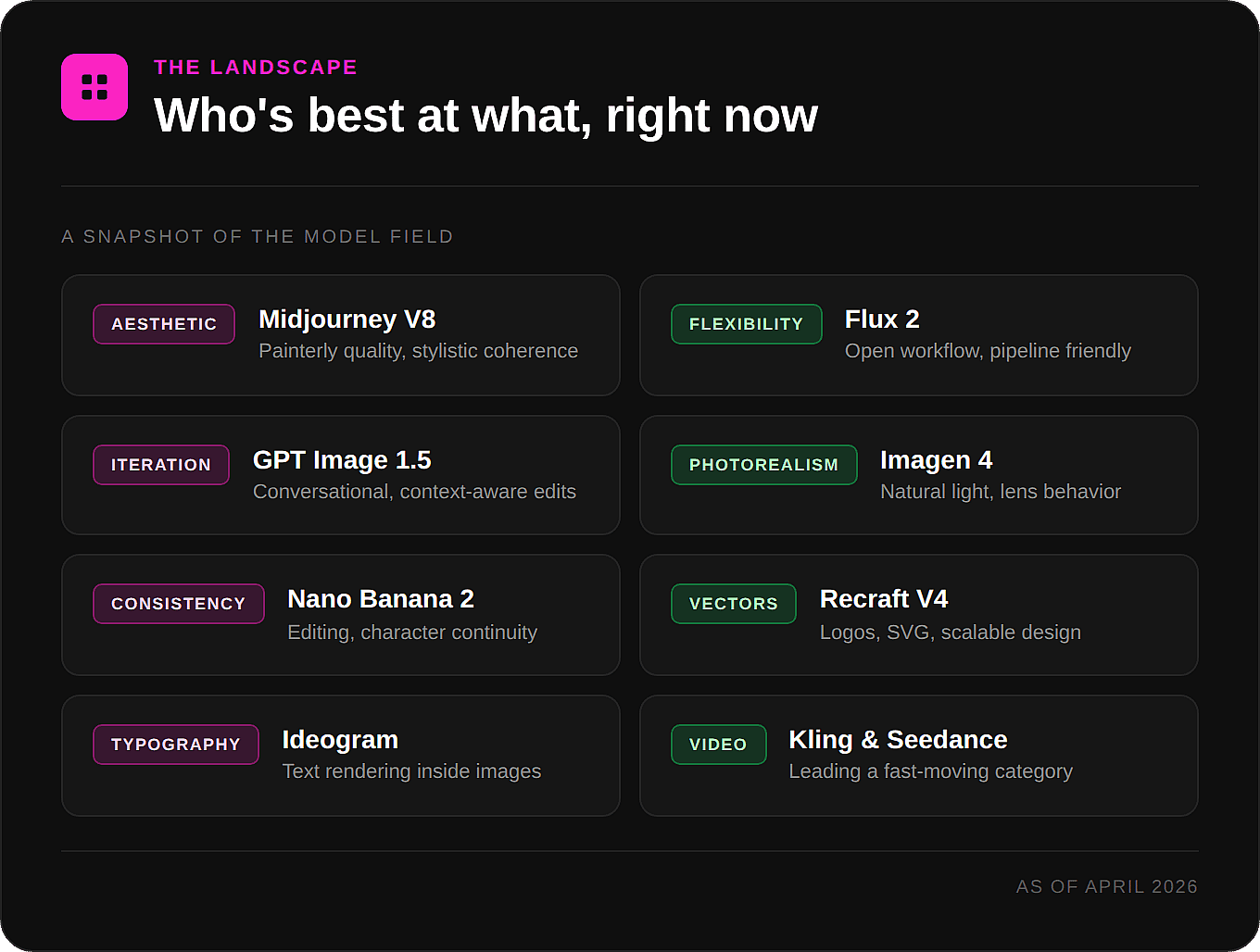
Midjourney 美的なクオリティとスタイルの一貫性において基準を打ち立て続けています。生成した瞬間に美しく見える画像が欲しいなら、これに勝るものはほとんどありません。トレードオフはクローズドなエコシステムであること。本格的なAPIがなく、より広いワークフローへの統合も限られ、Discordとサブスクリプションのモデルはすべての用途に合うわけではありません。
Flux 2 は、オープンソースのワークフローコミュニティが多く集まる場所です。柔軟でコントロールしやすく、ファインチューニングやLoRA、パイプラインツールといった広範なエコシステムとの相性も抜群。複数の処理をつなげたり、独自のものを作りたいときには右に出るものがありません。
GPT Image 1.5 は反復を軸に設計されています。会話型インターフェースなので、まるで共同制作者に話しかけるように画像を調整できます。ここをもっと温かく、あの要素を移動して、別の背景でもう一度試して。モデルは会話全体を通してコンテキストを保持し、この反復ループこそが製品そのものなのです。
Google Imagen 4とNano Banana 2 はフォトリアリズムとスピードで目覚ましい成果を上げています。特にNano Banana 2は編集とキャラクターの一貫性で定番となりました。これは、プロジェクトを完成させられるのか、それとも見栄えのいい単発作品を生成するだけで終わるのかを左右する、地味だけれど重要なインフラ課題です。
Recraft V4 ベクター、ロゴ、きれいに拡大縮小できるデザインが必要なときに頼れるモデルです。
Ideogram はテキストレンダリングで依然としてリードしており、画像に文字を入れようとすると、これが想像以上に重要になります。
KlingとSeedance は今まさに動画の話題をリードしていますが、新バージョンが次々と登場するペースを考えると、「最高の動画モデル」という主張はどうしても一時的なものに感じられます。
重要なのは、どれか1つが正解だということではありません。写真家、コンセプトアーティスト、製品モックアップを作る中小企業のオーナー、シーンの絵コンテを描く映画製作者は、それぞれ必要とするものが異なり、ある人にとって最適なモデルが他の人にとっても最適とは限らないのです。
囲い込みのコスト
制作プロセスを一つのモデルに委ねると、思っている以上のものを背負うことになります。そのモデルの制約、価格改定、新バージョン投入時の品質低下、そして開発元が方針を変えた場合のリスクまで引き継ぐのです。来月登場する何かを活用できる柔軟性も失われます。さらに、つい最近まで多くの人が理論上のものと捉えていたようなテールリスクまで抱え込むことになります。
Soraの終了は今のところ最も大きな例ですが、それだけではありません。モデルは廃止され、価格は変わり、APIは消えます。品質も、前日まで問題なく動いていたワークフローを壊すような形で変わることがあります。これは個々のモデルが悪い選択肢だという意味ではありません。ただ、どれか1つのモデルを制作活動の土台として扱うのは、見た目以上に脆いということです。
OpenArtが賭けたもの
特定のツールに固執しない選択肢は、大げさなものではありません。写真家がレンズを、ミュージシャンが楽器を扱うようにAIモデルを扱うだけのことです。それぞれの得意分野を学び、作品が求めるときに適したものを手に取り、どれか一つに執着しすぎない。それだけです。
That's the premise OpenArt was built on. Not "we have more models than the other guys" as a feature checklist, but a position about where the power in a creative practice should sit: with the person making the work, not with whichever lab happens to be in the lead this quarter. The Suite is designed so that the right model for the job is one click away, rather than another subscription, another interface, and another file format to wrangle. When a new model launches, it shows up in the workflow you're already using. When a model shuts down, and more will, the work moves with you instead of getting stranded.
OpenArtは、状況が変わるたびにクリエイターがプラットフォームを移り変える必要はないと考えています。クリエイティブツールの役割は、そうした慌ただしい変化を作品に押し付けるのではなく、そこから守ることです。もちろん、柔軟であり続ける方法は他にもあります。別々のプラットフォームをまたいで独自のマルチツールワークフローを組むこともでき、多くの人がそうしています。どの道を選ぶにせよ大切なのは、何らかの形での柔軟性が、ますます唯一の理にかなった選択肢になりつつあるということです。
いくつかの実践的な原則
これを自分の作品にどう活かすか考えるなら、これまでのところ有効だったポイントをいくつか紹介します。
アイデアにモデルを合わせるのではなく、モデルをアウトプットに合わせましょう。1つのモデルにできることに合わせてアイデアを作り変えている自分に気づいたら、それは注目すべきサインです。
作業を持ち運びやすく保ちましょう。プロンプト、リファレンスライブラリ、決定事項、エクスポートは、最初から移動できるように作っておけば、すべて動かしやすくなります。
新しいモデル、特に今使っているもの以外のモデルには常に好奇心を持ちましょう。今日あなたの仕事に最適なモデルが、半年後もそうである可能性は低いですが、それは不安ではなくワクワクすべきことです。
それに、慣れていることを最適な選択と混同しないでください。よく知っているからそのモデルを使い続けるのと、その仕事に一番だから使い続けるのは別の話です。
ここから見えてくること
マルチモデル時代は、もはや予測というより、いまの現実をそのまま言い表しているだけです。 Soraの終了は、なぜ柔軟性が大切なのかをはっきりと思い出させてくれますが、これが初めての警鐘でもなければ、最後でもありません。 この時期にうまくやっていけるクリエイターやチームは、おそらくAIモデルを縛りではなくツールキットとして捉え、各モデルが実際に得意とする分野に注目し、状況の変化に合わせてワークフローを進化させていく人たちでしょう。
それこそがOpenArtが賭けているものであり、別のモデルが台頭し、廃れ、ルールを書き換えるたびに、私たちが賭け続けていくものです。これはお気に入りのモデルを手放すことを意味しません。ただ、少し肩の力を抜いて付き合い、次に来るもののための余白を残しておくということです。