
 ChatGPT
 Perplexity
 Claude
 Gemini
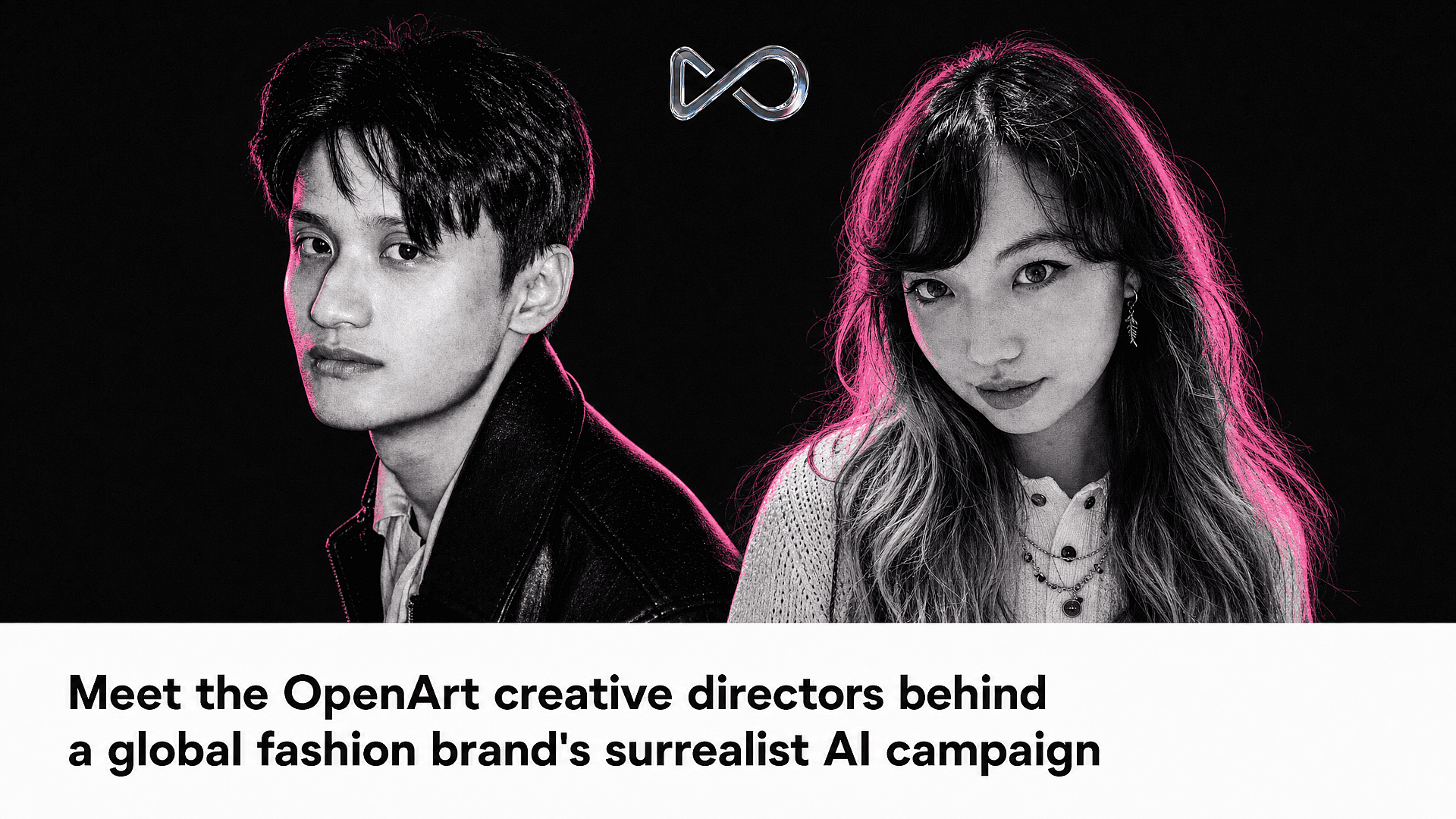
For its 2026 fall/winter collection, Shein worked with OpenArt on a campaign of six fully AI-generated social ads, one for each of the season's trends: dark romance, folk revival, power dressing, regal maximalism, retro remix and soft glam. Ash He and Minyu Chen, two of OpenArt's creative directors, helped shape and deliver all six.
Both are part of OpenArt's Studios team, a group of storytellers and creative producers who are making some of the best work in film, music and advertising today, and the Shein campaign was a chance to show a brand at that scale what the team can do. Ash came to AI from CGI commercials, Minyu from producing across film, TV and advertising. They're two of the most talented storytellers and creative technologists I've known, and after working with them, I'm nearly certain there's nothing they couldn't make if they set their minds to it.
这份简报给了他们充分的发挥空间。Shein让团队尽可能地发挥创意,而有了AI,他们不再受限于真实场景、出行、天气或布景预算。 "他们想要一些在现实中做不到的东西," Ash 说。 "这正是我们使用AI的原因。" Minyu 把目标描述为 "一些只有AI才能实现的极致狂野的创意,或者一些真实拍摄起来非常困难、成本高昂的东西," 这把作品推向了超现实的方向。
It was the brand's first time working with an AI creative team, and they didn't arrive with a fixed idea of what the process should look like. Ash's read is that, to the brand, AI was just another production method, much like CGI, which left room for him and Minyu to help define the workflow with Shein instead of inheriting one. In July, Shein sent over the trend names and the pieces from the collection, and the two creative directors styled them into looks for the screen. Some trends came with outfits already assembled, and when Minyu, building the dark romance spot, saw a way to push the looks closer to the world she was imagining, she proposed changes and asked. "他们非常开放," 她说。
That openness didn't mean the creative directors said yes to everything, and it didn't mean they were attached to their first ideas. "我们不会觉得,这太棒了,我一点都不想改。我们不是那样的人," Minyu 说。 "我们绝对不是全盘接受。我们肯定会据理力争一番。" That balance is a large part of what makes the two of them good at this work. They push creative boundaries without making it about themselves: the goal is to keep peeling back layers until the best idea is what's left, not to hang one person's vision on a wall, and that matters even more when the work belongs to a client. Their curiosity and humility, as much as their passion for the craft, are what make them such an asset to OpenArt and, as this project shows, to the creative vision of a global fashion brand.
AI also changed how many jobs a single creative can step into. On a traditional shoot, that work is split across specialists. The director shapes the vision, and the director of photography decides how every shot is framed, lit and moved. A costume department chooses and fits the wardrobe, a stylist pulls it into looks, and hair and makeup artists finish each one, while a production designer builds the world the story takes place in. Each of those is its own department, and the people in them rarely touch one another's decisions. "如果我是摄影指导,通常我是不会碰服装的,那完全是另一个部门的事," Minyu 说。 "但现在我们是自己把这一切都做了:导演、镜头运动和取景、服装、妆发,还要琢磨镜头里到底该放什么。我们连美术指导的活儿也一起干了。"
For Ash and Minyu, that meant stepping into roles they would never have held on a traditional production, building new skills as they went and getting a level of control over each ad that a director rarely has. None of it took work away from the specialists who do those jobs on a live shoot. Shein ran both lanes, its traditional human-made campaigns and an AI campaign built to push the limits of what's possible, and nobody lost anything along the way. For creatives wary of what AI means for their work, it's a useful picture of what the technology can open up instead of close off.
A third person kept the arrangement workable. Sissi Lei, from OpenArt's business development team, worked as producer, sitting between the two creative directors and Shein and running the relationship, communications and PR so neither of them had to. "Sissi 给了我们完全放开手脚去创作的空间," Minyu 说, "所以在反馈环节,我们能够直接与 Shein 团队沟通。"
两种写 prompt 的方式
So how did two creative directors turn six trends into six finished ads in about a month? They shared a process, and each worked inside it in their own way. Every trend started with a character sheet: a close-up, a side shot, a hero shot and a full-body shot of the model in each outfit, much like the costume and makeup test on a traditional production. Minyu built hers in GPT Image 2, which she found held the product and the model's likeness most faithfully. Concept stills came next, so the client could approve a look before any motion got generated, and OpenArt's Multi-view feature then pulled several angles out of a single approved location image, a kind of virtual location scouting that didn't need a new prompt for each one.
Minyu 的 prompt 读起来像拍摄脚本:很长、一个镜头接一个镜头,只用极少的参考图。Ash 的 prompt 则很短,主要靠参考图支撑,他说自己几乎没有写过那种像脚本一样的长 prompt。他会先做出高保真的静帧,有了这些之后, "我觉得,好,这个视频我能掌控了。" 他们一起为每个潮流做头脑风暴,然后把六支广告一人分三支,由于各自的时间线不同,便分头进行,过程中不断对接。 "不知怎么的,Ash 用了我的一些 prompt,我也用了一些 Ash 的做法," Minyu 说。 "我们互相帮助。"
两人都坚信,工具并不是难点所在。 "创意才是最重要的部分," Minyu 说。 "剩下的就看你对 AI 的掌控程度了。" 对 Ash 而言,关键在于判断力:你选哪些片段、你想要怎样的画面,都存在你的脑海里,你的审美也是如此。Minyu 每段 prompt 大约八成由她自己写,然后交给 GPT 去扩写和收紧,因为 "和 AI 对话是有特定方式的。" 她的观点是 "AI 创作者应该把时间和精力留给创意本身。"
真实模特,版权清晰
这次战役中的模特都是真人。他们的肖像经过授权清算,并通过持牌 AI 模特合作方付费使用,团队根据模特照片而非生成的面孔来构建每个潮流造型。Sissi 在网络研讨会上将其定位为一种让真实模特得以继续参与时尚广告的方式,也是 OpenArt 希望以之闻名的技术愿景。Minyu 还有一个现实的理由。 "世界上有那么多人,你永远说不准," 她说。 "AI 最后可能生成一个长得像名人的人,甚至像某个小众 YouTuber。"
这也意味着模特中途退出会是个真正的麻烦。在那支职场穿搭视频做到一半、希音已确认终剪之后,一位授权模特退出了。在成片的 AI 视频里换脸,比听起来要难得多。 "大家都知道AI没法生成百分之百一模一样的东西," Minyu 说。 "而且一个视频不是一次生成。它是那么多次生成叠加在一起的。所以到那个阶段真的很冒险。"
剪辑通过、档期敲定后,Minyu 动用自己的人脉去找一位替代模特。 "我很珍视自己的作品,我不想让这件事把它毁掉," 她说。大约半天之内,她就找到了一个和原模特长得非常像的人。
更棘手的难题在于人脸本身。视频模型可以接受一段视频作为参考,但当她把原始素材和新模特的照片一起输入时,模型却把两张脸融合在了一起。 "旧视频里的脸部信息对 AI 来说算是一种干扰," 她说, "所以模型很难摆脱那一部分。" 他们尝试了好几种变通办法,没有一种行得通。
然后 Ash 提议用深度图。Minyu 在网上见过这种技术,但没想到可以这样用。 "我当时就想,等等,这真是个天才的点子," 她说。她几乎没有 vibe coding 的经验,所以她用 Codex 从通过的剪辑中生成深度图视频,这花了她比 Ash 更长的时间。 "但我的时间只有两个小时," 她说。 "两个小时并不算多。"
一旦跑通,配方就是这样的:深度图成为镜头运动和构图的参考,新模特的照片提供面部,一段长 prompt 则逐秒描述场景、产品以及该发生的事情。Minyu 把深度图比作一个已经固化好镜头的灰模渲染,这样走位和运动保持不变,而上层的一切都会被重新贴皮。 "我们成功换掉了模特的脸," 她说, "而我们的客户根本没察觉。" 到那时Seedance 2.5已经发布,新版本甚至带来了更出色的光影效果。
The fix has outlived the project. Ash later built a simple web tool that outputs a depth map from any uploaded video, and the technique became Ad Remake, a feature in OpenArt where you upload a finished video and the platform builds the depth map behind the scenes. From there you can swap the model, the product or even the language, which Minyu pointed to as a natural fit for localization and global marketing. It has a limit worth knowing about: a depth map mostly captures outlines, so it works best when the hairstyle stays the same, and a different hairstyle calls for a different approach.
一个月腾出了怎样的空间
The schedule shows what the workflow changed. Ash laid out the math in the webinar for his retro remix spot. A live-action green screen version would mean a crew of eight to twelve, one to two weeks of pre-production, and an estimated $15,000 to $40,000 on location before model fees, plus a CGI team of more than ten people working for over a month. He finished the spot in about five days, with one or two people. Ash knows the other version of that timeline from his CGI work: the same work would have taken three to four months at least, and a single revision could take a week. Here, a major change of direction took twenty-four hours.
更耐人寻味的是关于命题本身。被问到如果这些广告全部用真人制作需要多久时,Ash 没有给出一个更长的时间表。他说,他根本不会提出这些创意。 "用 CGI 做成本会很高," 他说, "所以一开始,我根本不会提出这个想法。" 如此超现实的简报只有借助AI才能实现,因为换成真人拍摄成本高到根本不划算:这样的创意意味着在实景片场搭建复杂的机械装置,而任何涉及马匹的内容还会带来动物管理方面的顾虑。曾当过制片人的Minyu以制片人的思维说,放在以前她绝不会答应这种概念,如果当年有人向她提这些点子,她的回答会是:请先拿出超过十万美元的预算。
实拍也会在很早阶段就把一切定死。 "拍完之后你就没法做任何改动了," Minyu 说,这正是传统制作在开拍前要开那么多会的原因:重拍的代价就是这么高。而在这里,没有什么是必须定死的。某支广告做到一半时,团队把镜头里的动物换成了一匹马,这个想法还是客户看过初剪之后才冒出来的。OpenArt 企业市场拓展负责人 Chloe Fang 事后写的总结里,这正是她列出的第一个转变: "视觉成了沟通的媒介,而不仅仅是最终成品。"
Ash's retro remix spot shows how that played out. His first version blended Y2K nostalgia with early-computer imagery: a Windows XP sky, CRT monitors, a model riding a surfboard through a digital portal. The client had pictured American nostalgia instead, with motels, diners and vintage cars. His second version moved an American highway into space, and the client found it a little too rigid and wanted something softer, sweeter and more girlish. That was when Ash realized the cars and diners were never the point. "他们其实是在努力描述某种感觉," 他说,而且道具不必全部出现。成片开头短暂地置身于一个数字空间,接着进入一间木饰板卧室,床悬浮在空中,各种小装置嵌在家具里,最后定格在一幅上下颠倒的洛杉矶日落中,模特驾驶着快艇驶过云海。客户非常满意,而最后那轮迭代大约花了二十四小时。
这也是 Ash 在整个战役中最喜欢的镜头。 "就好像天空就是海洋," 他说。他形容这份工作有一种 CGI 几乎没有的乐趣:几天就能完成一支片子、测试一个想法,遇到问题还能换一条创意路线。在 AI 出现之前,他得在 Unreal 或 Cinema 4D 里耗上一个月, "那些东西本来就不是给人用的," 然后等上好几天出渲染结果,期间却无事可做。
对 Minyu 来说,最自豪的时刻并不是某一个镜头。而是每次向客户展示新作品时,看到他们的反应。 "他们当时就说,哇,我觉得这个很棒," 她说,当她征求反馈时,得到的答复是: "我觉得特别棒。" 她做过综艺、电视剧、电影和广告,她说经历了这一切之后, "现在我看到了一种新的可能,那就是 AI 制作。"
Ash 和 Minyu 在一场 OpenArt 网络研讨会上,从创意简报到最终战役,完整复盘了这次项目。 观看录像,也欢迎参加我们的下一场:我们每两周举办一次线上研讨会。