

 ChatGPT
 Perplexity
 Claude
 Gemini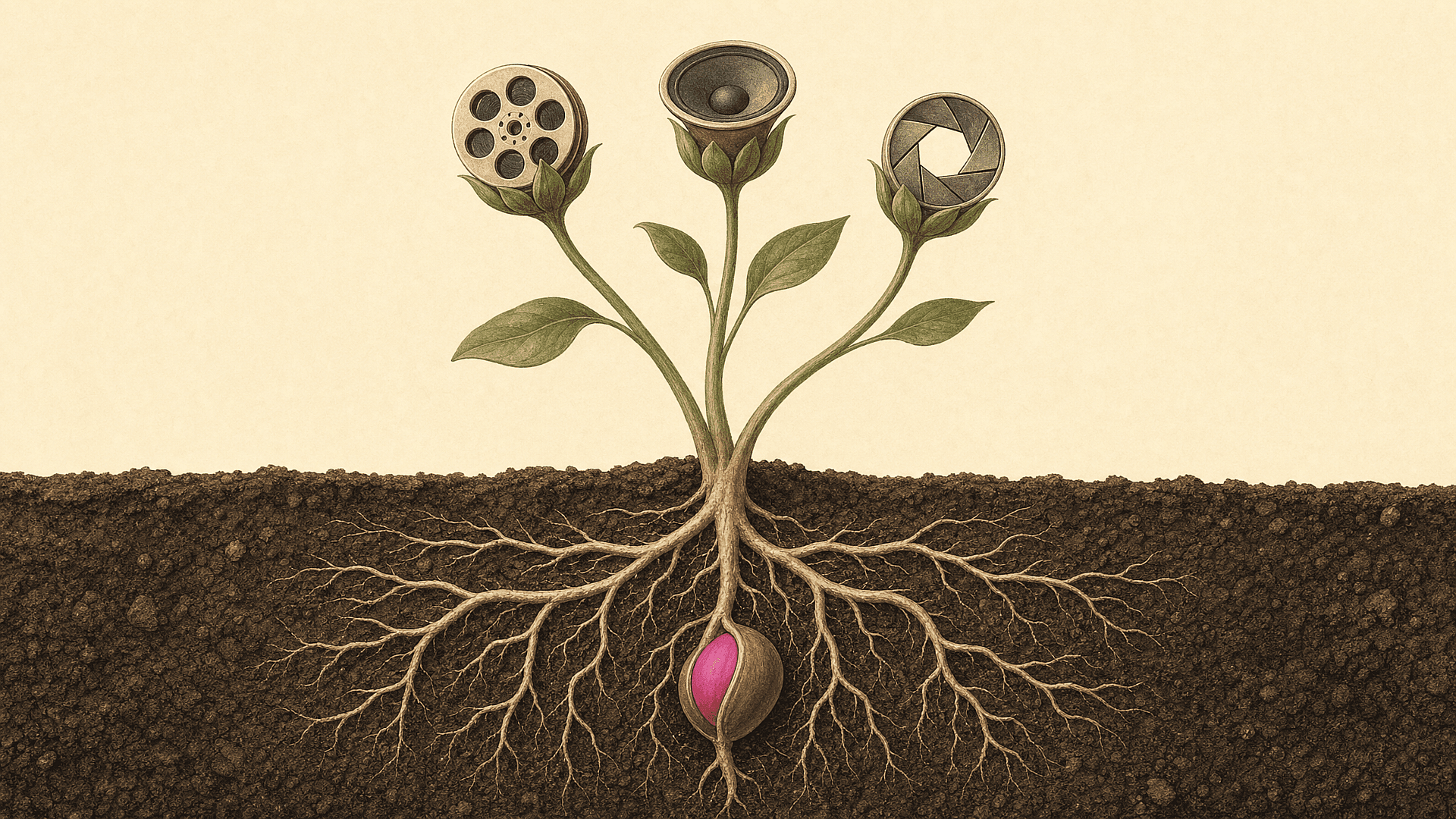
Black Forest Labs a ouvert l'accès anticipé à FLUX 3 on July 23, and the company's own explanation of why it built the model is more interesting than any spec sheet. Images, video, and audio, in BFL's framing, are each an incomplete "projection of the same underlying reality, captured by different sensors, each of which loses some information in the process." Train a model on only one of those projections and it learns that projection. Train it on all three at once, and the sound has to match the impact, the motion has to obey the mass, the future has to follow from the past, and the model ends up learning something closer to how the world actually holds together.
C'est un vrai choix d'architecture, pas du blabla marketing, et ça se voit directement dans ce que FLUX 3 sait faire. Il génère des vidéos jusqu'à 20 secondes avec un audio natif intégré dès le même passage, pas ajouté après coup, en plus de la synthèse et de l'édition d'images. Plus inattendu : la même architecture s'étend à la prédiction d'action. Black Forest Labs s'est associé à mimic robotics pour construire FLUX-mimic, un modèle vidéo-action qui tourne désormais sur les lignes de production d'Audi. La génération créative et le contrôle de robots physiques, issus d'un même modèle sous-jacent, voilà le détail qui compte vraiment ici, bien plus que n'importe quel benchmark.
Ce que BFL revendique réellement est facile à exagérer, donc la version précise a son importance. L'entreprise qualifie FLUX 3 de « notre premier modèle » entièrement construit sur ce principe d'entraînement conjoint, not the first multimodal model industry-wide, and Google's Veo 3 already generates audio and video jointly in a single pass. BFL's own early comparisons, preferring FLUX 3 over other video models in the majority of side-by-side tests, are preliminary and self-reported, an early signal rather than a settled result. The actual signal is that a serious lab spent its resources dissolving the boundary between "image model," "video model," and "audio model" into one shared representation, and that a growing list of others are converging on the same bet from different angles, not any single superlative claim.
Once that boundary stops being architecturally necessary, it stops being a useful way to think about the tools too. A creator working with something like this doesn't start by deciding "I'm making a video" or "I'm making an image." They start with a character, a world, a physical premise, and the medium that premise ends up taking, a still frame, a twenty-second clip, a sound design choice, becomes a downstream decision rather than the first one. That's a genuinely different working process than choosing a video generator and prompting it, and it's closer to how a director thinks about a scene than how someone thinks about operating a tool.
Rien de tout ça ne veut dire que les étiquettes de catégories actuelles vont disparaître du jour au lendemain. Beaucoup d'outils continueront à sortir comme « celui pour la vidéo » ou « celui pour l'image » un moment encore, car le déploiement est plus lent que la recherche. Mais le postulat de départ, selon lequel vidéo, image et audio seraient des choses distinctes nécessitant des modèles distincts, c'est ça qui commence vraiment à dater, et les créateurs qui en profiteront le plus ne seront pas ceux qui auront maîtrisé un modèle vidéo précis. Ce seront ceux qui auront cessé d'organiser leur processus autour de la question de savoir quel médium ouvrir en premier.