

 ChatGPT
 Perplexity
 Claude
 Gemini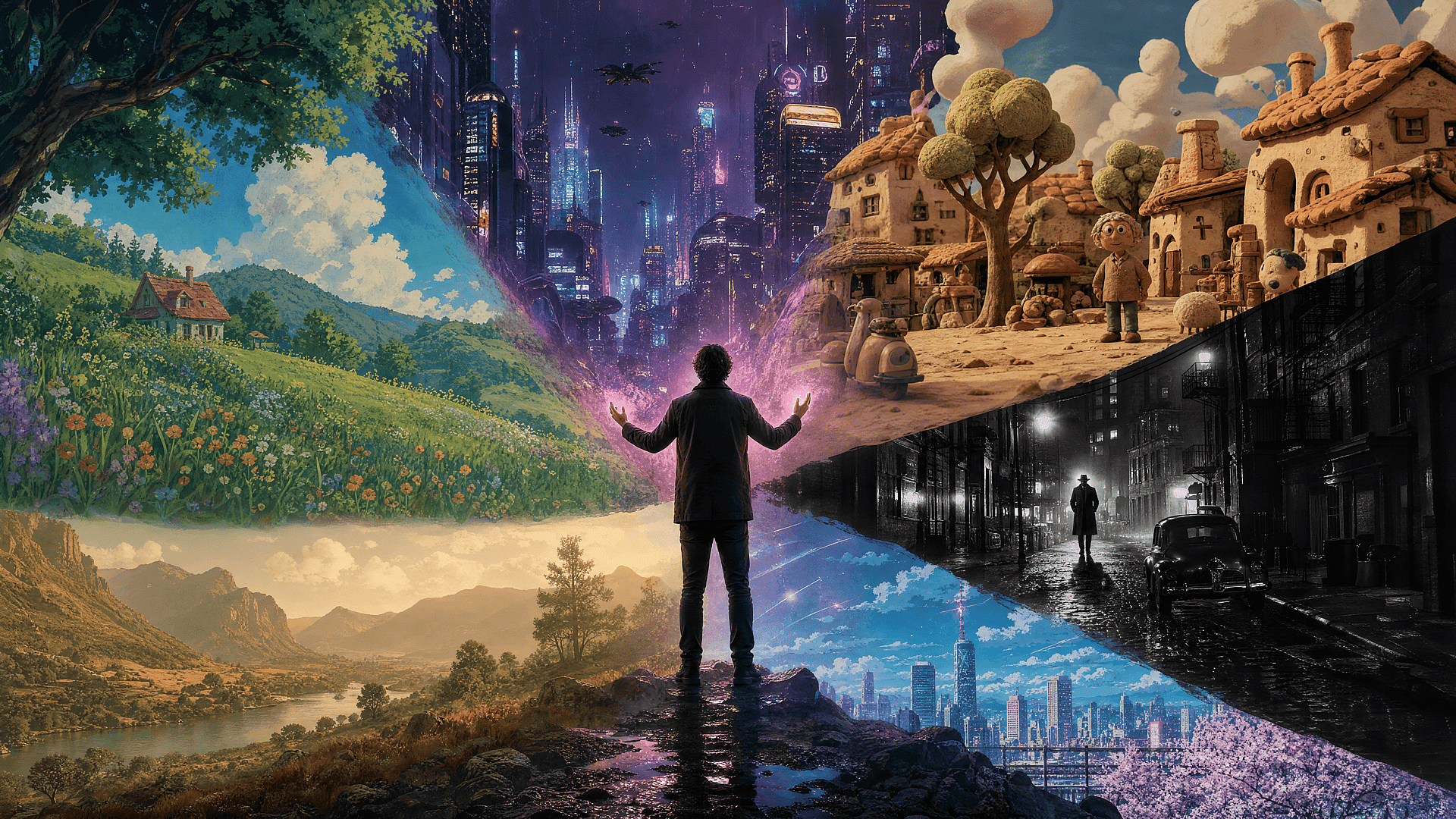
Presque chaque créateur et conteur a une réserve de projets jamais réalisés, et c'est rarement par manque d'idées. Le court-métrage qui n'a jamais quitté le papier, la campagne que tu voyais image par image mais qui n'a jamais été validée, le clip que tu aurais réalisé si le budget avait été trois fois plus élevé. Tu pourrais tout imaginer. What you couldn't do was get it out of your head and onto a screen, because the entire production system stood in the way: the crew, the gear, the budget, the schedule that never lined up, the years of craft training between an idea and the skill to execute it. Visual storytelling sat behind a kind of paywall, one measured not just in money but in time, access, and years of craft, and it asked whether you could afford all of that long before it ever asked whether you had something worth making. Somewhere along the way, most of us quietly accepted that directing was something other people did.
On a déjà vu exactement ça se produire une fois
Il y a quelques années, les logiciels fonctionnaient de la même façon. Créer quoi que ce soit de concret exigeait de savoir coder, donc des années d'apprentissage et une maîtrise que la plupart des gens n'avaient jamais le temps ni l'occasion d'acquérir. L'idée restait dans la tête de quelqu'un, parce que l'écart entre l'idée et le produit fonctionnel était rempli de syntaxe, d'outils et de savoir technique accumulé.
Mais ensuite, avec des outils comme Claude Code, le vibe coding est arrivé. Au début, les vrais ingénieurs l'ont balayé d'un revers de main : c'était un jouet, un raccourci, un moyen pour ceux qui ne comprenaient pas vraiment les systèmes de bricoler quelque chose de fragile. Pendant un temps, ce scepticisme a même semblé raisonnable, jusqu'à ce que les outils deviennent bons, plus vite que presque tout le monde ne s'y attendait, et l'histoire a vite changé. Cette année, la grande majorité des développeurs professionnels utilisent des outils d'IA comme une partie régulière de leur travail, et une part significative et croissante du code de production est générée plutôt que tapée à la main. Ceux qui s'en moquaient l'utilisent désormais pour livrer, car ce n'est pas une béquille de débutant mais un outil de vitesse, ce qui permet à un bon ingénieur d'avancer dix fois plus vite.
Le détail le plus important de cette histoire est celui que tout le monde survole : rien de tout cela ne fonctionnait sans un humain aux commandes. Les mesures les plus rigoureuses placent le code de production écrit par IA bien en deçà des gros titres tapageurs, et les développeurs qui ont le plus tiré parti de ces outils étaient ceux qui savaient exactement quoi demander, quoi garder et quoi jeter, l'IA se chargeant simplement de l'exécution. Le jugement, le goût, le sens de ce que la chose devait réellement être sont restés humains. Ce qui a vraiment changé, c'est qui pouvait créer : des gens qui n'avaient jamais écrit une ligne de code ont soudain publié l'appli, le site web, le petit outil dont ils avaient toujours rêvé, et la catégorie s'est élargie pour les inclure.
OpenArt Director apporte ce même déblocage à la narration visuelle
The first wave of AI video looked, for a moment, like it had already solved this. It tore down the production barrier overnight: no crew, no gear, no budget, just a prompt and a few seconds of footage in return. But it quietly put a new barrier in the old one's place: you could generate a clip, but to make anything that resembled a real piece you were stitching dozens of them together, fighting to keep a character's face consistent from one shot to the next, regenerating until the seams more or less disappeared. Access had opened, but direction, the actual work of shaping a story into a finished piece, was still out of reach: you weren't directing so much as operating a slot machine and assembling the winnings by hand.
C'est le changement qu'on voulait apporter à la vidéo : non pas une façon plus rapide de générer des clips, mais la même révolution que le vibe coding a apportée au logiciel, la possibilité de créer une œuvre finie en décrivant ce que tu veux et en la façonnant à mesure qu'elle prend forme, avec toi aux commandes de la création du début à la fin.
On appelle ça le vibe directing
Tu décris ce que tu veux voir et tu réagis à ce qui revient, en donnant le genre de directives que tu donnerais à une équipe créative : donne-lui plus l'allure d'un souvenir, donne plus d'impact au deuxième acte, ce personnage devrait être plus doux. Our AI video Director takes the note and the piece changes. You're not quite operating film equipment, but you're also not just firing off prompts and hoping the clip that comes back is close enough to your vision. It's an entirely new form of creating: you're co-directing a whole piece with AI, with its own story, pacing, voice, and sound, rather than a five-second fragment you'll have to stitch to forty others later. Every creative decision that matters, what the story is, how it should feel, where it should land, what stays and what gets cut, remains yours.
In practice it works across the whole arc of making something, not just the moment of generation. You start with whatever you have, a single sentence, a script, a song, a mood board, a product shot, a voice memo, and Director helps you develop it: proposing a story structure, building out characters and the worlds they move through, suggesting a visual style and tone. From there it produces the piece, with the visuals, dialogue, music, and sound generated together rather than assembled afterward. Then you refine by talking to it, the same way a director gives notes on set, until the thing on the screen matches the thing in your head. Bring more as you go, your own voice, a reference clip, a brand's guidelines, and it folds them in, holding everything consistent as the project grows.
Ce que tu récupères est une œuvre finie, pas de la matière brute. Director génère jusqu'à cinq minutes en une seule prise continue, avec des visuels, des dialogues, une musique et un design sonore pensés ensemble plutôt que rajoutés après coup, et il maintient tes personnages, tes produits et ton style stables de la première à la dernière image. Quand tu veux changer quelque chose, tu le dis. Raccourcis l'introduction. Donne-lui une lumière plus chaude dans la deuxième scène. Rends la musique plus angoissante. Pour la plupart des décisions, cette conversation est le moyen le plus rapide de façonner le résultat. Et quand tu veux mettre les mains dans le cambouis, le contrôle est là qui t'attend : une timeline complète et une vue storyboard où tu peux plonger dans chaque scène et affiner image par image. Dirige tout par la conversation, saisis les commandes manuelles, ou passe de l'un à l'autre aussi librement que tu veux. C'est ton œuvre, à toi de la façonner comme tu l'entends.
Diriger une histoire, ce n'est pas la même chose que développer un logiciel
For all its usefulness, the vibe coding parallel breaks down in one important place, because compelling visual storytelling is the harder, stranger craft. Code either runs or it doesn't, while a story has to make someone feel something, which is a far slipperier target. Pacing, performance, the exact emotional temperature of a scene, the way a cut lands, the silence before a line: these are judgment calls with no correct answer, only a better or worse one, and they're the difference between a video that technically exists and one that actually moves you.
C'est pourquoi l'humain aux commandes compte encore plus ici que dans le logiciel. Director sait garder un personnage cohérent sur cinq minutes et synchroniser la musique au rythme émotionnel d'une scène, et ce sont des choses vraiment difficiles à réussir. Mais la question de savoir si le deuxième acte devrait frapper plus fort, et ce que « plus fort » signifie même pour cette histoire précise, seule une personne avec un point de vue peut y répondre. L'outil te donne les moyens, et ce que tu en fais dépend toujours de ce que tu y apportes, comme ça a toujours été le cas.
Une barrière plus basse, un plafond plus haut
Ce que le vibe coding a finalement prouvé, c'est qu'abaisser la barrière n'a pas abaissé le plafond. Les professionnels ne sont pas devenus moins bons, ils sont devenus plus rapides, et toute une population de gens qui n'auraient jamais pu construire quoi que ce soit s'est mise à livrer du vrai travail. La catégorie a grandi sans s'appauvrir, parce que ce qui distinguait le bon logiciel du mauvais n'a jamais été la frappe au clavier, mais savoir quoi construire et pourquoi.
Vibe directing is arriving at the same moment: the people who already direct for a living get a way to clear the folder of projects the budget never allowed, and the people who always had the eye but never the access finally get to make the thing they've been envisioning all along. Welcome to the future of visual storytelling. We can't wait to see what you vibe direct.