
 ChatGPT
 Perplexity
 Claude
 Gemini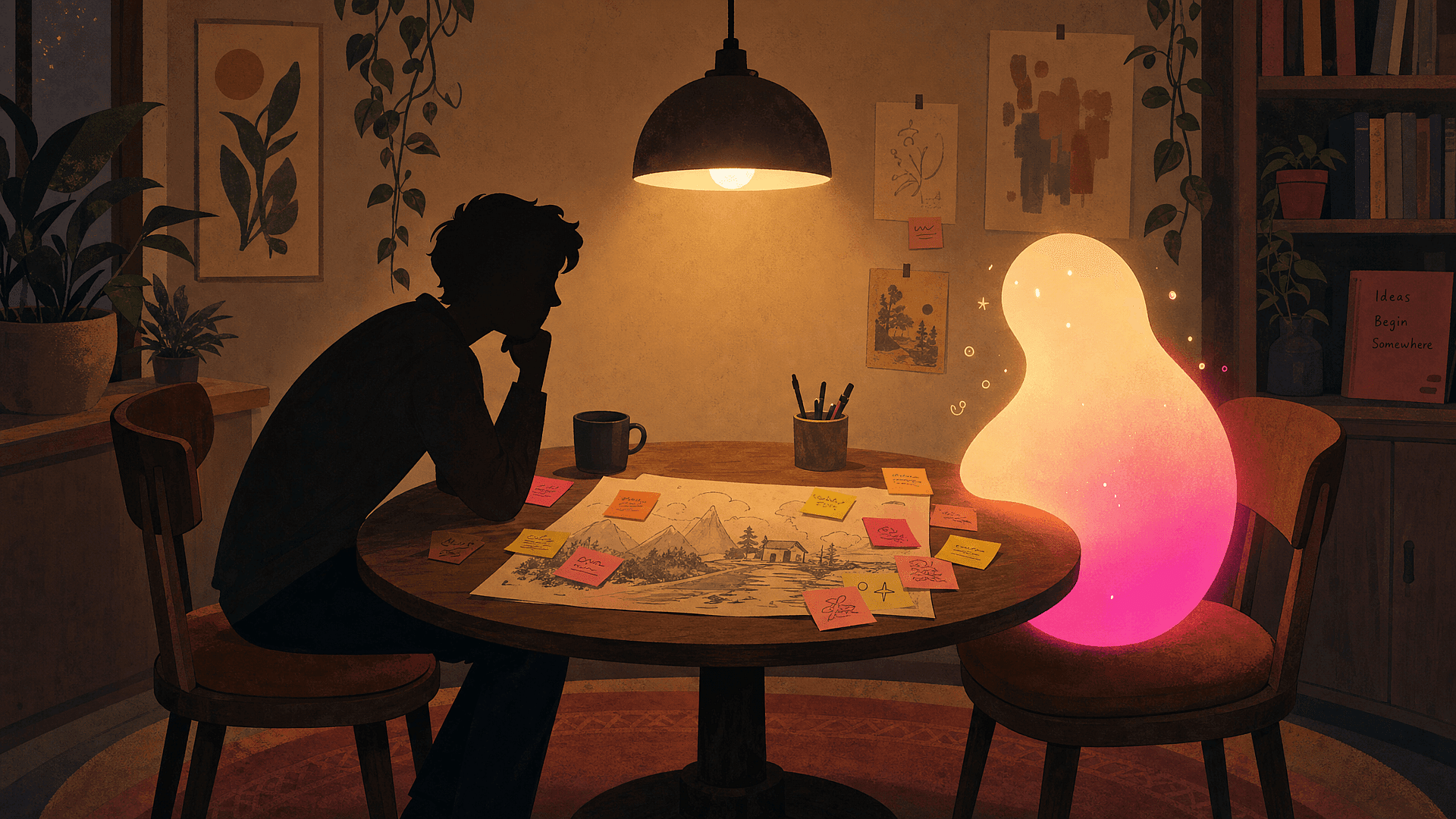
Regarde les exemples de prompts concrets Google DeepMind utilisé pour présenter Nano Banana Pro: « Passe cette scène en nocturne. » « Mets les fleurs en avant. » « Change le format en 1:1 en réduisant l'arrière-plan. Le personnage reste exactement figé dans sa position actuelle. » Aucun de ces exemples ne ressemble aux prompts denses et surchargés que les gens ont passé les deux dernières années à apprendre à écrire. On dirait plutôt des notes que tu laisserais à un collaborateur qui sait déjà sur quoi tu travailles et qui a juste besoin de la prochaine consigne.
That's not an accident of phrasing. It's the actual design of the tool. Nano Banana Pro is built to hold an image in an ongoing exchange: you don't redescribe the whole scene to change the lighting, you just say what to change and it edits the frame you already have. OpenAI's newest release works the same way, just from the chat side rather than the canvas side. Instead of writing one exhaustive prompt and hoping, you can say "make the sky more orange" or "add a coffee cup to the left," and the model modifies the existing image instead of generating a new one from scratch, closer to giving direction to a designer than typing a search query. When OpenAI shipped that generation of the model, ChatGPT Images 2.0, on April 21, il a immédiatement dominé toutes les catégories du classement Image Arena avec la plus large avance jamais enregistrée, ce qui en dit long sur l'endroit où l'industrie a décidé que se jouait désormais la vraie compétition : non plus uniquement sur la qualité de la première image, mais sur la capacité d'un modèle à tenir une conversation à travers les retouches sans perdre le fil.
That shift changes what the actual skill is. Prompt engineering, as a discipline, grew up around the idea that a prompt was a kind of incantation: get the wording, the modifiers, the syntax exactly right, and the single generation you got back was the whole game. A lot of the early advice reflected that, elaborate templates, keyword stacking, the sense that there was one correct spell for any given image. None of that disappears entirely, but it stops being the center of the skill once the tool expects you to keep talking. La question n'est plus seulement « qu'est-ce que je dis en premier ». C'est « quelle est la prochaine chose que je change, et comment savoir quand arrêter de tout modifier ».
That second question turns out to be the harder one, and it's a more familiar kind of hard. It's the same judgment a photographer uses deciding whether a shot needs one more adjustment or is already right, the same instinct an editor uses knowing which note to give first and which ones can wait. Directing a back-and-forth well means noticing what's actually wrong with a draft rather than everything that could theoretically be different about it, and it means knowing your own taste well enough to recognize the version that's actually finished instead of just the version that's different from the last one.
None of this makes the initial prompt irrelevant. A clear starting instruction still saves you several rounds of correction later, the same way a clear brief saves a designer several rounds of revision. But the center of gravity has moved. The people getting the most out of these tools right now aren't the ones with the cleverest opening prompt. They're the ones who know how to keep a conversation going toward something specific, correcting course a little at a time, without losing track of what they were en fait que tu cherchais à créer au départ.