
 ChatGPT
 Perplexity
 Claude
 Gemini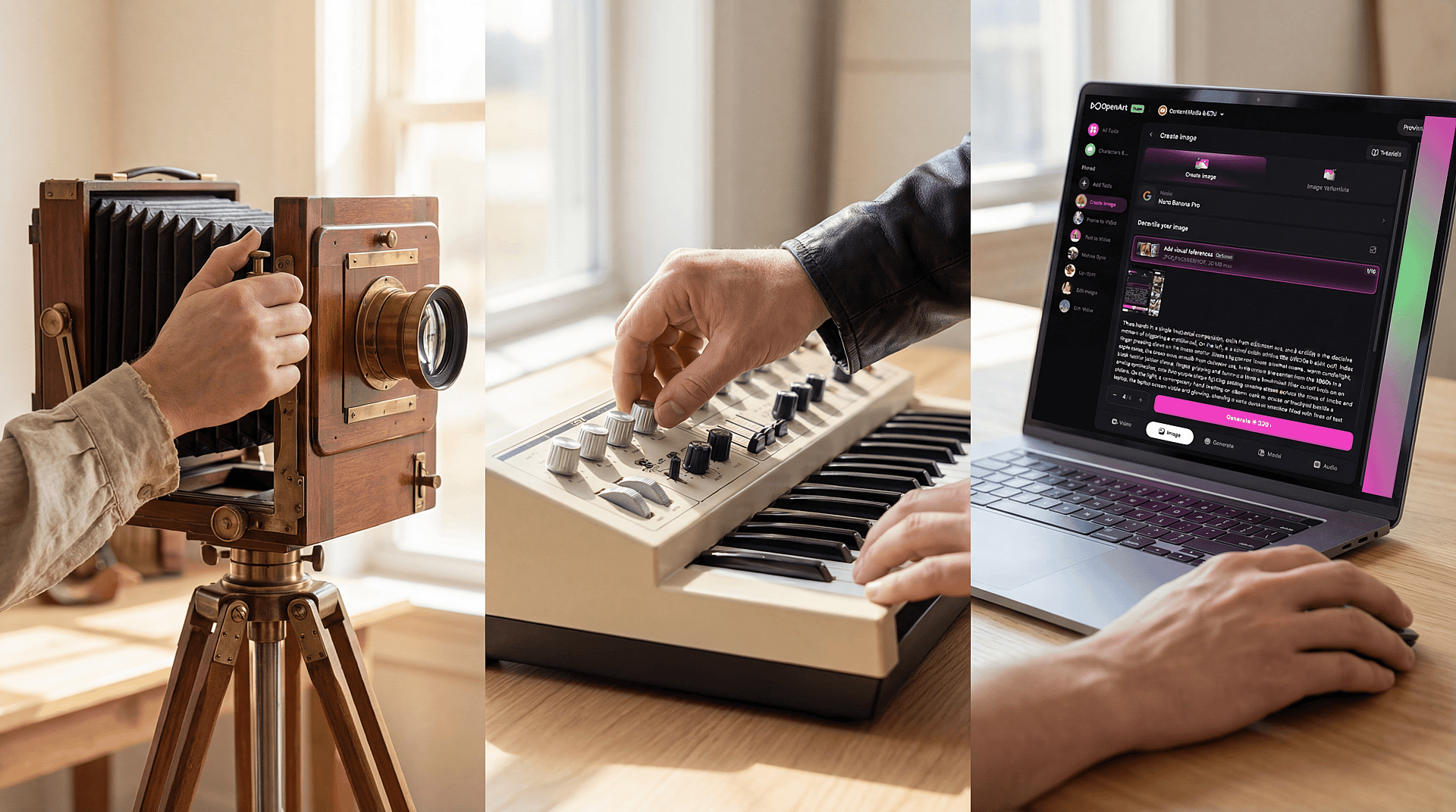
En 1859, le poète Charles Baudelaire a écrit l'une des critiques les plus célèbres de l'histoire de l'art. Sa cible : la photographie. Il l'a qualifiée de «le pire ennemi de l'art" et l'a écarté comme refuge de tous les peintres ratés trop peu doué pour prendre un vrai pinceau. La photographie, à ses yeux, était une machine qui prétendait faire le travail d'un artiste. Elle ne demandait aucune imagination, aucun talent, aucune vision créative. Elle était purement mécanique, et donc purement sans âme. Et pourtant, celle de Dorothea Lange Migrant Mother helped mobilize federal food aid during the Great Depression, the Apollo 8 crew's Earthrise la photographie a transformé la façon dont toute une génération a compris notre planète, et elle est devenue l'une des formes créatives les plus importantes jamais développées par l'humanité.
Un peu plus d'un siècle plus tard, les synthétiseurs ont eu droit au même traitement. Quand la synth-pop a commencé à envahir les charts à la fin des années 1970 et au début des années 1980, la levée de boucliers a été immédiate et viscérale. Gary Numan a décrit le "hostilité" qu'il a essuyée de la part de critiques pour qui la musique électronique n'était pas de la vraie musique, parce qu'ils pensaient que c'étaient les machines qui faisaient le travail. Andy McCluskey, leader d'OMD pour le dire simplement: beaucoup de gens pensaient sincèrement que l'équipement écrivait la chanson à ta place. Queen a imprimé « No Synthesizers ! » sur quatre pochettes d'album consécutives dans les années 1970, comme pour rassurer les auditeurs sur le fait que ce qu'ils entendaient restait légitime. Et dès 1982, le Le UK Musicians' Union avait voté pour interdire purement et simplement les synthétiseurs et les boîtes à rythmes, convaincus que les instruments électroniques rendraient les musiciens humains obsolètes. Et pourtant, la musique électronique est aujourd'hui l'un des genres les plus écoutés au monde, et les synthétiseurs sont si profondément ancrés dans la production moderne que la plupart des tubes pop n'existeraient pas sans eux.
Ces critiques te semblent sans doute troublantes de familiarité. Remplace « photographie » ou « synthétiseur » par « art IA » et tu retrouveras des arguments quasi identiques dans les commentaires et les tribunes publiés aujourd'hui : les outils changent, mais l'angoisse, elle, reste la même.
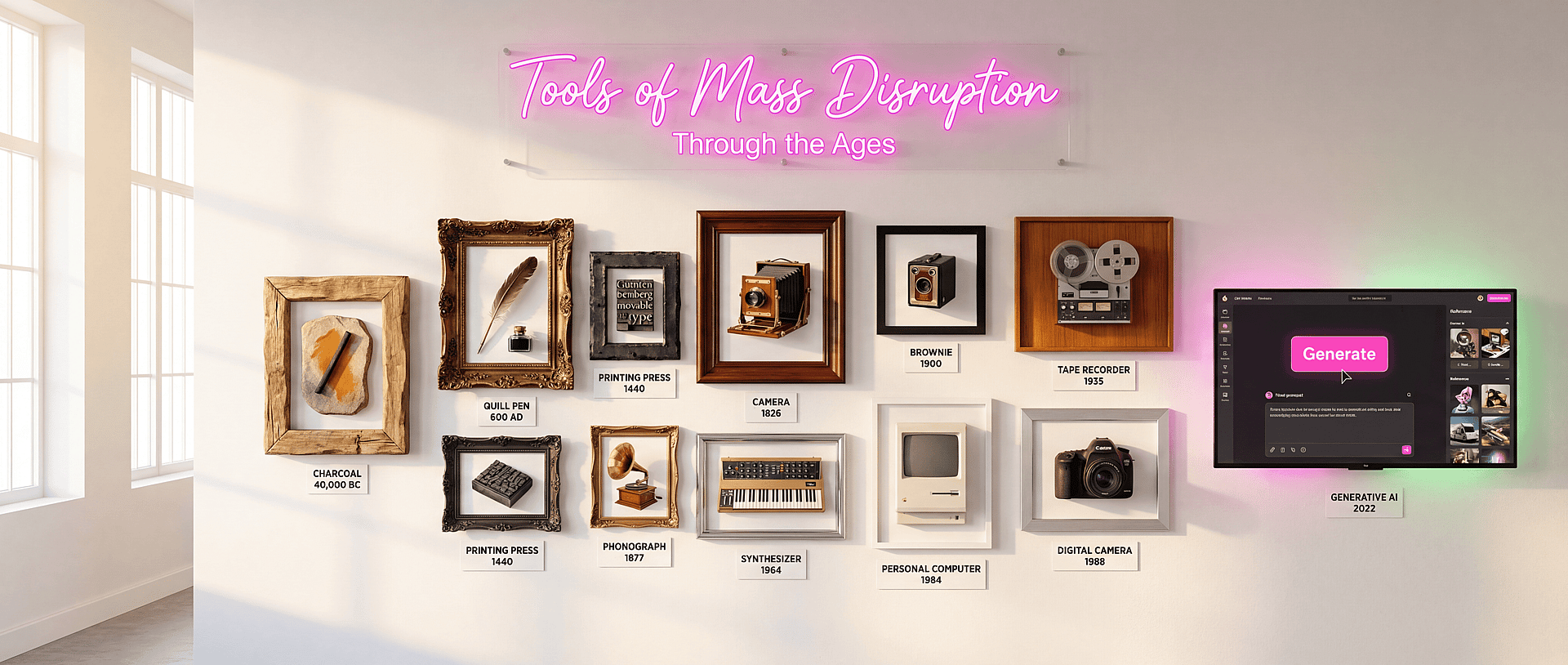
We are, as a species, compulsively creative. We build tools, we extend our capabilities, and then we spend a generation or two being deeply unsettled by what we've built before finally absorbing it into the fabric of normal life. Cities once felt like an affront to the natural world. The printing press was going to destroy the memory of scholars. Recorded music was supposed to end live performance. The internet was going to rot our brains (jury's still out on this one). But in each of these cases, the tool eventually became so thoroughly woven into human culture that we stopped seeing it as foreign and started seeing it as ours.
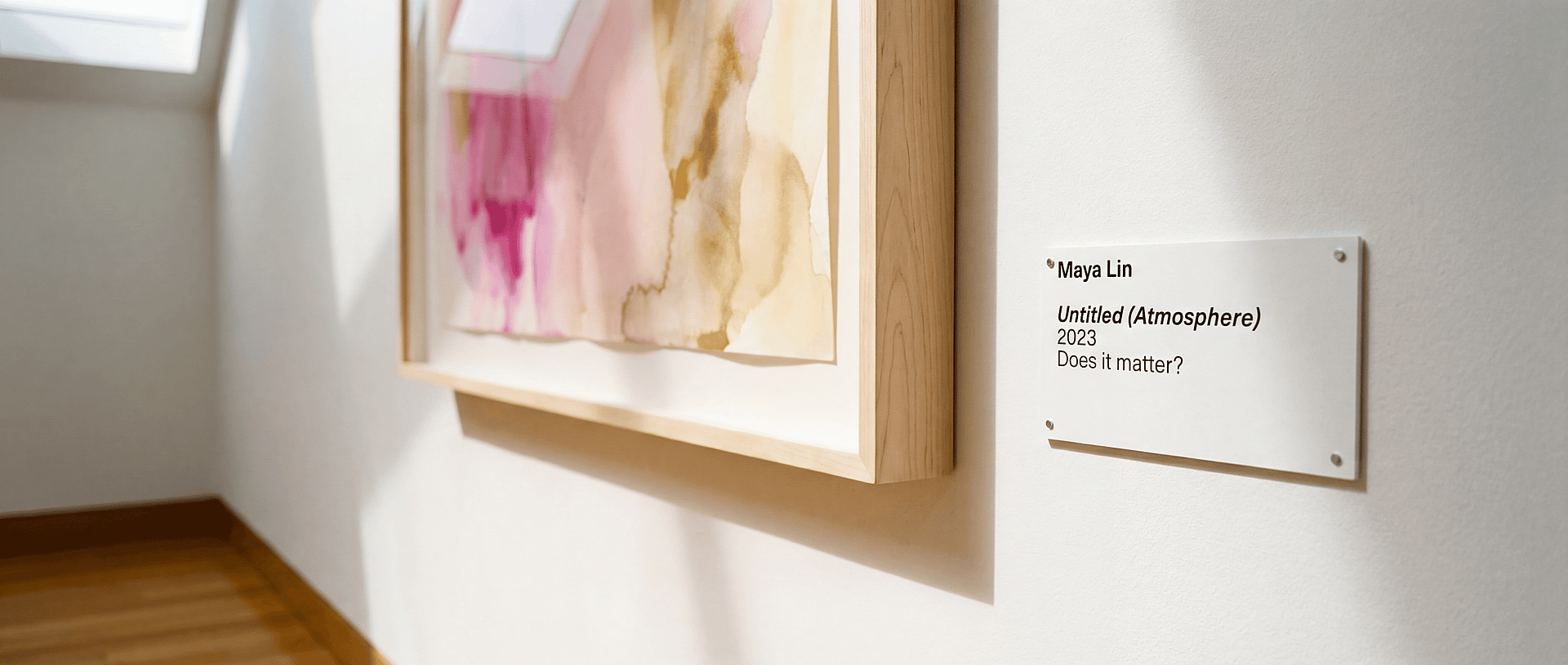
La conversation autour de l'« art par IA » est en plein dans la phase de la peur en ce moment, et l'étiquette elle-même contribue à l'y maintenir.
Quand tu qualifies quelque chose d'« art IA », tu relègues l'artiste humain au second plan
Un photographe n'est pas un « artiste de la caméra ». Un cinéaste n'est pas un « conteur d'objectif ». Un graphiste n'est pas un « illustrateur logiciel ». On ne nomme pas les créatifs d'après leurs outils, car ce n'est pas l'outil qui rend le travail significatif ou distinctif en tant que résultat final. C'est la vision créative derrière qui le fait.
Quand tu qualifies quelque chose d'« art IA », tu mets l'outil sous les projecteurs et tu repousses l'humain hors de la scène. Chaque conversation qui suit gravite naturellement autour du logiciel : l'IA est-elle créative ? Mérite-t-elle du crédit ? Est-ce vraiment de l'art si un humain n'a pas tracé chaque trait ? Ce sont des questions philosophiques intéressantes, mais elles passent presque totalement à côté de l'essentiel pour les millions de personnes qui utilisent des outils génératifs pour faire un vrai travail créatif au quotidien.
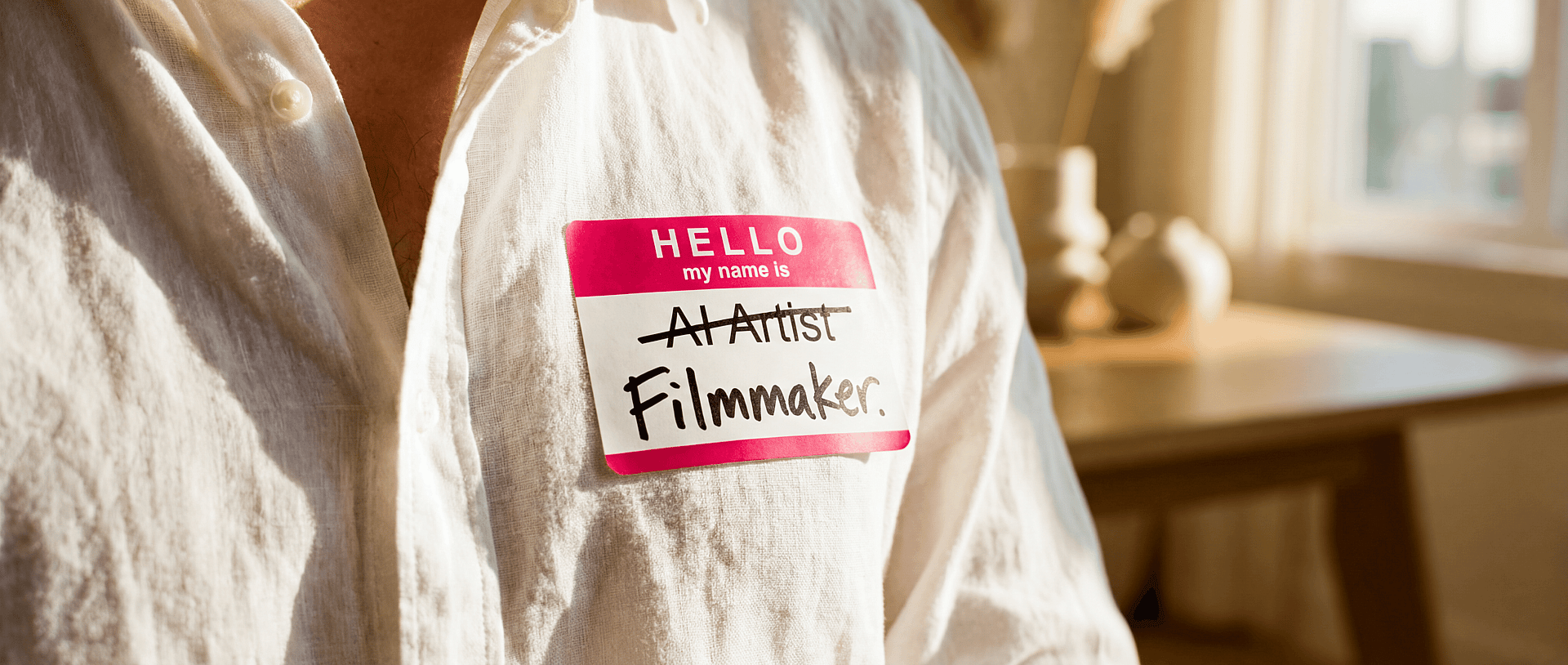
The label also flattens an enormous range of creative practices into one reductive term. Consider what "AI art" is currently being asked to cover: a brand creative director prototyping visual directions for a campaign, a solo illustrator building a consistent fantasy world they couldn't afford to render any other way, a filmmaker generating storyboard imagery at speed, a fashion designer exploring colorways in real time, a small business founder who finally has a way to make content that feels like their brand instead of like stock footage. These are wildly different practices with different goals, different skill sets, and different outputs. The only thing they share is one piece of the pipeline, and that shared tool has somehow become the defining characteristic of all of them, which would be a bit like calling every piece of writing created in Google Docs "software literature."
Même le monde de l'art ne s'accorde pas sur le sens du terme. Un récent sondage Artsy of more than 300 gallery professionals found three competing definitions in active use: some define "AI art" as fully prompt-based work, others focus on artistic intent regardless of tool, and others classify anything where AI meaningfully shapes the outcome. The survey's own conclusion was telling: these debates about legitimacy and value are happening without a common vocabulary. Professionals in the same field are using the same term to describe fundamentally different things, and then arguing about whether those different things have merit.
Le monde juridique commence à donner son avis
The court of cultural opinion tends to dominate these conversations, but it's worth paying attention to what's happening in actual courts. Because when the legal system starts hearing cases and making room for how a new technology is actually being used, that's historically one of the clearest signs that it's here to stay and that culture will eventually follow. It always starts with a few brave people who just want to create, and little by little their work becomes recognized not just in law but in our colloquial way of life.
Le 2 mars 2026, le La Cour suprême des États-Unis a refusé d'examiner Thaler c. Perlmutter, the decade-long case about whether AI can be an "author" under copyright law. The ruling was clear: copyright requires human authorship. Works created autonomously by AI, with no human creative contribution, cannot be copyrighted. But the court left room for works where humans maintain genuine creative control through direction, prompting, and alteration. In other words, the legal system already distinguishes between "the AI made this" and "a human made this using AI." When we call something "AI art," we linguistically frame it as the first category, even when the reality is almost always the second.
Alors, comment l'appeler ?
Le plus simple : nomme-le selon ce qu'il produit. Illustration. Concept art. Imagerie de marque. Motion design. Design visuel. Storyboards. Photographie de campagne. Le média, c'est le résultat, pas le pipeline qui l'a créé, et personne ne demande à un photographe si son image a été prise avec un Canon ou un Hasselblad avant de décider comment l'appeler.
Ou, qui sait, ce sera peut-être un mot entièrement nouveau qui n'existe pas encore, un mot que nous contribuerons tous à façonner. Créer un lexique pour emmailloter nos outils créatifs tout juste nés est un travail difficile à part entière.
Ce qu'on devrait sans doute arrêter, c'est d'utiliser par défaut un terme qui fait de l'IA l'auteur et de l'humain un simple spectateur. Car dans chaque studio, chaque équipe de marque et chaque workflow créatif où ces outils sont réellement utilisés, ce n'est pas ce qui se passe. Ce qui se passe, c'est que des gens prennent des décisions, dirigent, montent, sélectionnent et rejettent. Ils exercent leur goût et font le travail qui a toujours rendu le travail créatif créatif, simplement avec un nouvel instrument entre les mains.
Et si tu te demandes si ce changement est déjà en train de se produire concrètement, la réponse est oui.
Signaux positifs
We know that it can feel like there's a lot of shade being thrown at creators who use these tools right now, and that it's hard to tell how far we really are from a cultural shift where this kind of work is simply accepted for what it is. But the positive signals are already there. Every generation's technological revolution has its naysayers, but there are also always the Gary Numans and Andy McCluskeys of the world, already jamming out on their synths and pioneering entirely new sounds before the rest of the culture catches up. The same thing is happening right now with GenAI.
Paul McCartney a utilisé l'IA pour extraire la voix de John Lennon d'une cassette de démo vieille de plusieurs décennies afin de compléter «Avant et après, la dernière chanson des Beatles. Personne ne l'appelle une « chanson IA ». On l'appelle une chanson des Beatles, parce que l'IA n'était que l'instrument et que c'est la musique qui comptait.
Grimes a créé toute une infrastructure créative autour de l'IA, de son modèle vocal Elf.Tech qui permet aux fans de créer de la musique avec sa voix générée par IA jusqu'à des œuvres visuelles vendues chez Christie's. Elle ne se qualifie pas d'« artiste IA ». C'est une artiste qui utilise l'IA, parmi bien d'autres outils, pour réaliser une vision qui embrasse la musique, l'art visuel et la technologie.
Et quand Le style brutaliste a remporté plusieurs Oscars en 2025, dont celui du meilleur acteur pour Adrien Brody, il l'a fait après avoir utilisé l'IA pour affiner les accents hongrois que Brody et Felicity Jones avaient passé des mois à apprendre avec un coach en dialecte. La technologie a peaufiné certaines voyelles et sonorités en post-production afin de préserver l'authenticité de performances qui étaient, à tous les égards, celles des acteurs eux-mêmes. Personne n'appelle Le style brutaliste un « film IA ». C'est un film, et l'IA n'a été qu'une petite partie invisible de sa fabrication.
Notre point de vue chez OpenArt
When we talk about the people who use OpenArt, we don't call them "AI artists." We call them creators, storytellers, filmmakers, founders. When we describe what the platform does, we don't say "AI generates images for you." We say "bring your characters, stories, brands, and worlds to life." That's not a branding exercise. It's a reflection of something we genuinely believe, informed by the same history this piece has been tracing. (In fact, every image in this post was made with generative tools on OpenArt.)
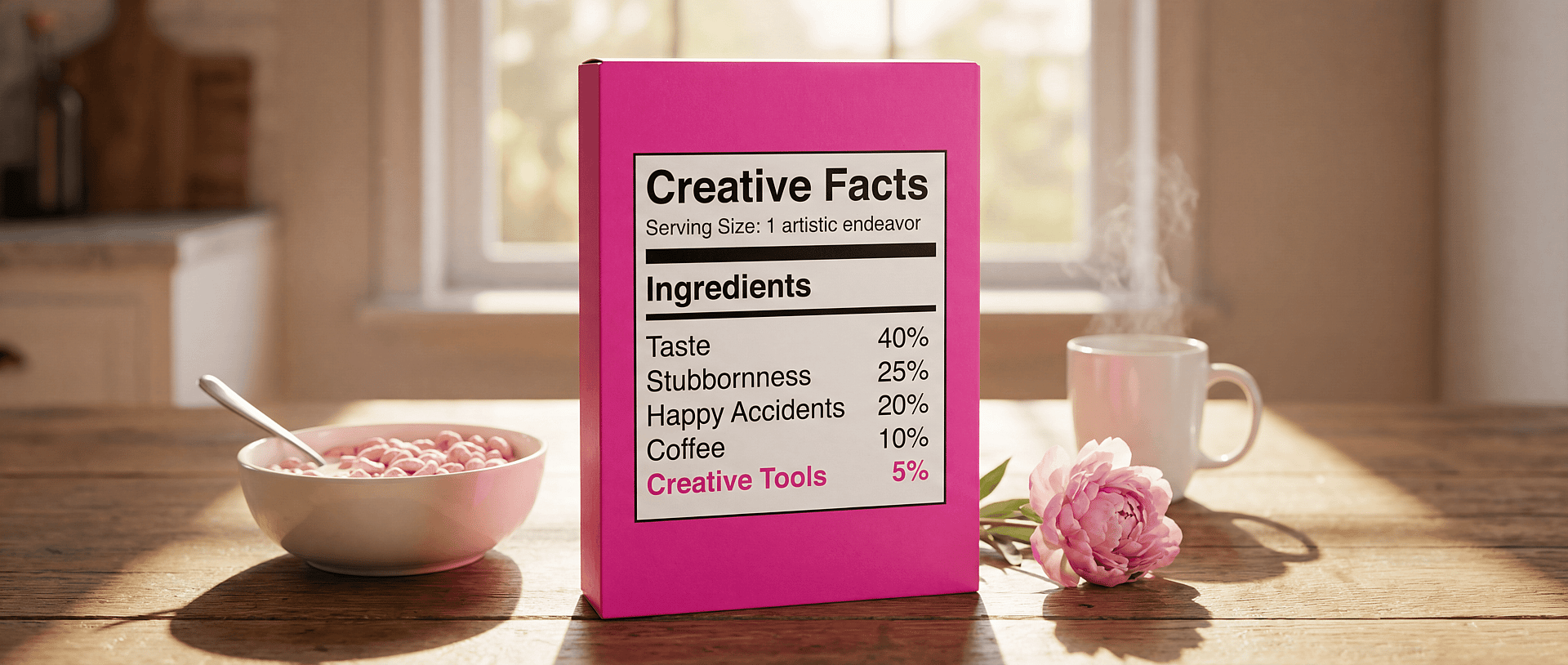
Ce motif nous indique que 1. la peur est bien réelle, 2. c'est fondamentalement humain, et 3. ça aussi, ça passera. Ça nous dit que les outils finissent toujours par se fondre dans l'histoire plus vaste de la manière dont les gens créent. Et ça nous dit que la chose la plus utile que l'on puisse faire en ce moment, c'est de créer des outils qui s'effacent et laissent les créateurs se concentrer sur ce qu'ils font, et pourquoi.
Il y a quelque chose de vraiment beau dans le fait que nous nous retrouvions encore et toujours ici, dans un nouveau moment où les humains ont créé quelque chose d'inédit et débattent pour savoir si ça compte. Des siècles après que Baudelaire ait tenté de faire taire la photographie et des décennies après que le syndicat des musiciens ait voulu interdire le synthétiseur, nous continuons d'inventer de nouvelles façons de créer et de partager, et aucune résistance des débuts n'a jamais réussi à empêcher cela.