

 ChatGPT
 Perplexity
 Claude
 Gemini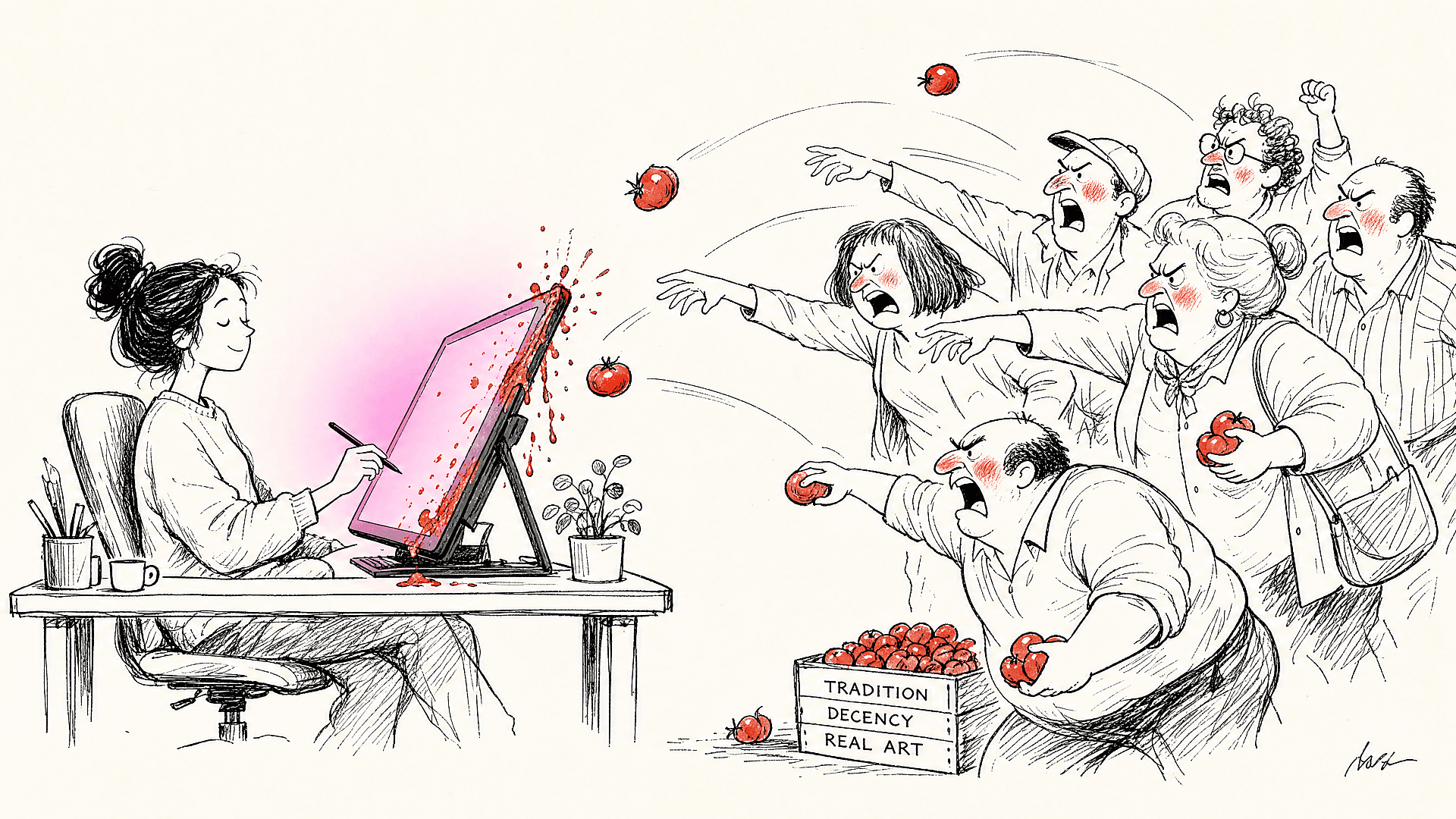
If you're even remotely online right now, you've seen the comments. They show up under any post that looks slightly AI-adjacent, in the quote-tweets, in the half-second verdict someone delivers out loud in their own video while reacting to someone else's: "ugh, this is AI." Sometimes it's "ew, AI, unfollowing," sometimes it's a single disgusted word, sometimes it's a long paragraph about everything wrong with the world. The wording barely matters because the sentiment is always the same, a mix of disgust and finality, the sound of a door closing. And it's become common enough that creators are now quietly engineering their work to avoid setting it off, adding disclaimers, obfuscating their process, over-explaining how much human effort went in, or backing away from the tools altogether.
그 반응 속에 실제로 무엇이 담겨 있는지 천천히 살펴볼 가치가 있습니다. 왜냐하면 하나의 거대한 거부 반응처럼 보이는 것이 사실은 네 가지 별개의 반발이 하나의 반사작용으로 압축된 경우가 대부분입니다, 그리고 그것들은 똑같이 공정하지도, 똑같이 여러분을 겨냥하지도, 똑같은 방식으로 책임질 수 있는 것도 아닙니다. 이를 구분해내는 일이야말로 크리에이터가 할 수 있는 가장 유용한 일임이 드러납니다. 자신의 마음의 평화를 위해서도, 그리고 모두가 계속 하지 못하고 있는 대화의 질을 위해서도요.
먼저, 대충 만든 결과물
이 반응 속에 숨어 있는 첫 번째 반발은 '슬롭(slop)'에 관한 것입니다. 왜냐하면 사람들의 최근 기억 어딘가에는 성의 없이 대량 생성된 콘텐츠가 끝없이 스크롤되고 있기 때문입니다. 똑같은 다섯 개의 얼굴, 똑같은 플라스틱 같은 조명, 똑같은 관심 끌기용 캐러셀이 수천 개씩 쏟아져 나오죠. 슬롭은 실재하고 어디에나 있으며 모두의 온라인 경험을 진짜로 망가뜨리기에, 그 반응은 충분히 합리적입니다. 하지만 그 반발의 진짜 핵심은 노력과 의도 도구 자체보다는 태도의 문제이며, 부주의함은 AI보다 수천 년은 앞서 존재해 왔습니다. 이런 도구로 사려 깊게 만든 작업물은 기반 기술을 제외하면 조잡한 결과물과 아무런 공통점이 없습니다. 그런 점에서 "으, AI네"라는 반응은 일부 책이 형편없이 쓰였다는 이유로 독서 자체를 거부하는 것과 조금 비슷합니다.
그리고 도난 사건
The second objection has real teeth, and it's about theft. Many image models were trained on the work of living artists who never consented and were never paid, and a great deal of the legitimate anger about AI traces directly back to that fact, which deserves to be taken seriously rather than waved off. What's worth noticing is that this is a specific grievance about how certain models were built and how the industry has handled consent, not a blanket indictment of everyone who's ever opened one of the tools. It points toward genuine questions about training data, licensing, and which platforms a creator chooses to work with, but it doesn't actually resolve into the conclusion that 바로 당신이 직접 무언가를 만들었다는 이유로 경멸받습니다.
비용 문제도 있습니다
The third objection is about cost in the most literal sense, since the energy and water required to train and run large models at scale is a real environmental concern that's entirely fair to raise. Like the others, though, it operates at the level of infrastructure rather than the level of the individual, a question about how these systems are built and powered and at what scale, which sits with companies, energy grids, and the regulatory bodies meant to hold them accountable rather than with one person making one image on a random Tuesday.
우리는 다른 환경 불안에서도 이런 상황을 겪은 적이 있습니다. 실제로 변화를 이끌 수 있는 기관에서 일상을 살아가는 평범한 사람들에게로 책임이 조용히 전가되는 상황 말이죠. 개인 "탄소 발자국"이라는 개념 자체가 2000년대 초 석유 대기업 BP의 광고 캠페인으로 대중화됨, explicitly to shift responsibility for climate change away from fossil fuel companies and onto individual consumers, and the same move has been run on recycling and a dozen other problems. It works because guilt is easier to manufacture than systemic change. Pointing disgust at a single creator follows the same logic, and it belongs in the conversation about AI's real costs the same way your recycling bin belongs in the conversation about climate: it's not nothing, but it's not where the actual leverage is.
그리고 그 밑바탕에 깔린 두려움
네 번째 반론은 다른 모든 반론 아래 조용히 깔려 있는 것으로, 실제로 거부감을 일으키는 바로 그 요인입니다. AI 창작이 인간다움의 본질적인 무언가를 위협한다는 감각이죠. 이에 관한 연구는 놀랄 만큼 직접적입니다. 한 연구에서는 여섯 가지 실험에 걸친 연구 사람들은 어떤 작품이 AI가 만든 것이라고 표시되는 순간 그 가치를 낮게 평가한다는 사실을 발견했습니다. 인간의 작업과 구분할 수 없다고 인정할 때조차, 그리고 인간이 협업했다는 말을 들었을 때조차 그랬습니다. 별개의 UBC 연구 이러한 편향은 창의성을 인간만의 고유한 특성이라 믿는 사람들에게서 가장 강하게 나타났으며, 이들은 사람이 만들었다고 생각하는 작품에 더 많은 돈을 지불하려 했습니다. 이것이 가리키는 것은 하나의 주장이라기보다는 정체성 반영. 이는 충분히 이해되는 지점에서 비롯됩니다. 기계가 아름다운 무언가를 만들 수 있다면 우리의 특별함이 갑자기 의문에 놓이는 게 아닐까 하는 두려움이죠. 하지만 그것은 인간 조건에 대한 감정을 당신의 창작물에 투영한 것일 뿐입니다.
이 말이 암울하게 들린다면, 그럴 필요는 없습니다. 우리는 바로 이 두려움이 펼쳐지는 것을 이미 지켜본 적이 있고, 그 이야기의 결말을 알기 때문입니다. 1800년대에 사진은 영혼 없고 기계적이라는 이유로 무시당했지만, 진짜 그림에 대한 모독, 우리가 가진 가장 표현력 있는 형식 중 하나가 되기 전까지 말이죠. 한 세기 뒤, 신디사이저가 음악가를 쓸모없게 만들 거라던 예측도, 당신이 사랑하는 거의 모든 곡의 근간이 되기 전까지의 이야기였습니다. 기계가 개입하는 순간 무언가가 더 이상 인간적이지 않게 된다는 두려움은 새로운 것이 아니며, 그 두려움은 매번 예외 없이 틀렸습니다. 이번 판이라고 다르게 끝날 이유는 없습니다.
눈속임, 그리고 반박이 불가능하게 느껴지는 이유
Something clarifying happens when you set these four objections side by side. Slop is a problem of effort, theft is a problem of consent and law, environmental cost is a problem of infrastructure, and the "it's not real" reaction is a problem of philosophy and identity, which means they have different causes, different solutions, and different people responsible for addressing them. Almost none of those people is the individual creator who made something with care and caught a stray "boooo AI 🍅" for the trouble.
이런 댓글과 논쟁을 벌여도 좀처럼 결론에 이르지 못하는 이유이기도 합니다. 저품질(슬롭) 지적에 답하면 상대는 도용 이야기로 넘어가고, 도용을 짚으면 "영혼이 없다"로 방향을 틀며, 그걸 답하면 어느새 데이터센터 이야기를 하고 있습니다. 애초에 하나의 일관된 주장이 아니라 어중간하게 뒤섞인 여러 감정을 묶어놓은 것이라 반론이 계속 자리를 옮기고, 하나를 다룰 때마다 나머지가 여전히 그 자리에서 다뤄지길 기다리고 있습니다.
크리에이터에게 주는 의미
The goal, then, isn't to win the argument but to unravel it, because once the four objections come apart two things become clear at the same time. The legitimate concerns, theft and labor and environmental cost, genuinely deserve to be taken seriously, and the right response to them is engagement, not denial: choosing tools built responsibly, being honest about your process, pushing for better practices across the industry. The identity panic, meanwhile, the part doing most of the emotional work behind AI shaming, was never really about your work at all. It was about someone else's relationship to a changing world, and it's not a verdict you're obligated to accept on their behalf.
이 중 어느 것도 비난을 멈추게 하지는 못하며, 잦아들기 전에 오히려 더 커질 가능성이 큽니다. 우리는 진짜 문화적 조정의 시끄러운 초기 단계를 지나고 있고, 그런 시기는 늘 이런 소리로 가득하니까요. 하지만 아무리 요란한 혐오라도, 그 화살은 대부분 저품질 콘텐츠, 착취적 기업, 에너지 인프라, 그리고 이전의 모든 기술이 그랬듯 '인간에게 무엇이 남을까'를 고민하게 만드는 오래된 철학적 불안을 향한 것이었습니다. 그중 당신을 겨냥한 건 거의 없었습니다. 그러니 작품을 만들고, 새로운 도구를 활용해 창작하며, 진짜 질문들이 떠오를 때 제대로 된 답을 내놓을 수 있을 만큼 그 질문들을 진지하게 마주하세요. 이 시대를 잘 헤쳐 나갈 창작자는 자신의 과정을 숨기는 사람도, 우려를 가짜라고 우기는 사람도 아니라, 전체 그림을 한눈에 아우를 수 있는 사람입니다. 그런 명료함은 언제나 어떤 면책 문구보다 값진 것입니다.