

 ChatGPT
 Perplexity
 Claude
 Gemini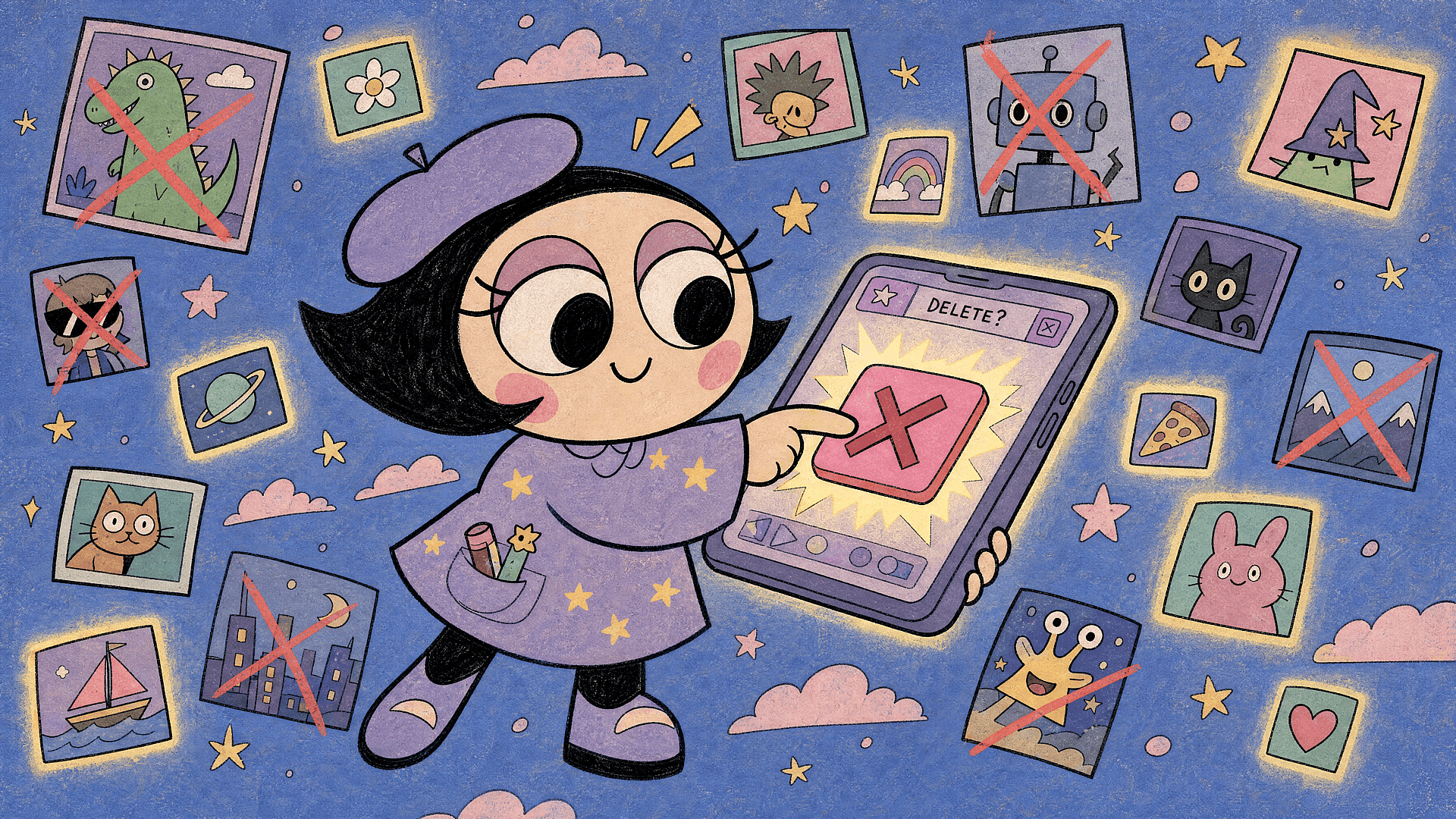
There is a version of creative development that gets talked about constantly: consume voraciously, collect references obsessively, surround yourself with work you love until your own work starts to reflect it. Build a mood board. Fill a swipe file. Study the people you admire. This advice is not wrong, but it is incomplete, because it points you toward your enthusiasms and asks you to build a creative identity from them, and enthusiasm alone is one of the least reliable guides to a genuine point of view.
Enthusiasm is diffuse, because it wants to say yes to too many things. It's moved by quality wherever it finds it, which means it is moved by contradictory things, incompatible aesthetics, ideas that can't coexist in the same body of work. Every creative person who has spent time carefully curating a collection of things they love has also experienced the paralysis that comes with it: the references pull in ten directions at once, and instead of clarifying your aesthetic, the collection just reflects the breadth of your taste rather than the specificity of your vision.
Was einen Standpunkt tatsächlich schärft, ist die Ablehnung, denn das „Nein“ ist präziser als das „Ja“ – und oft aufschlussreicher. Wenn du auf Arbeiten triffst, vor denen du auch nur leicht zurückschreckst, nicht weil sie schlecht sind, sondern weil sie grundlegend nicht du sind, kommst du der Form deiner tatsächlichen ästhetischen Identität näher, als es dir noch so viel Inspirationssammeln je bringen wird.
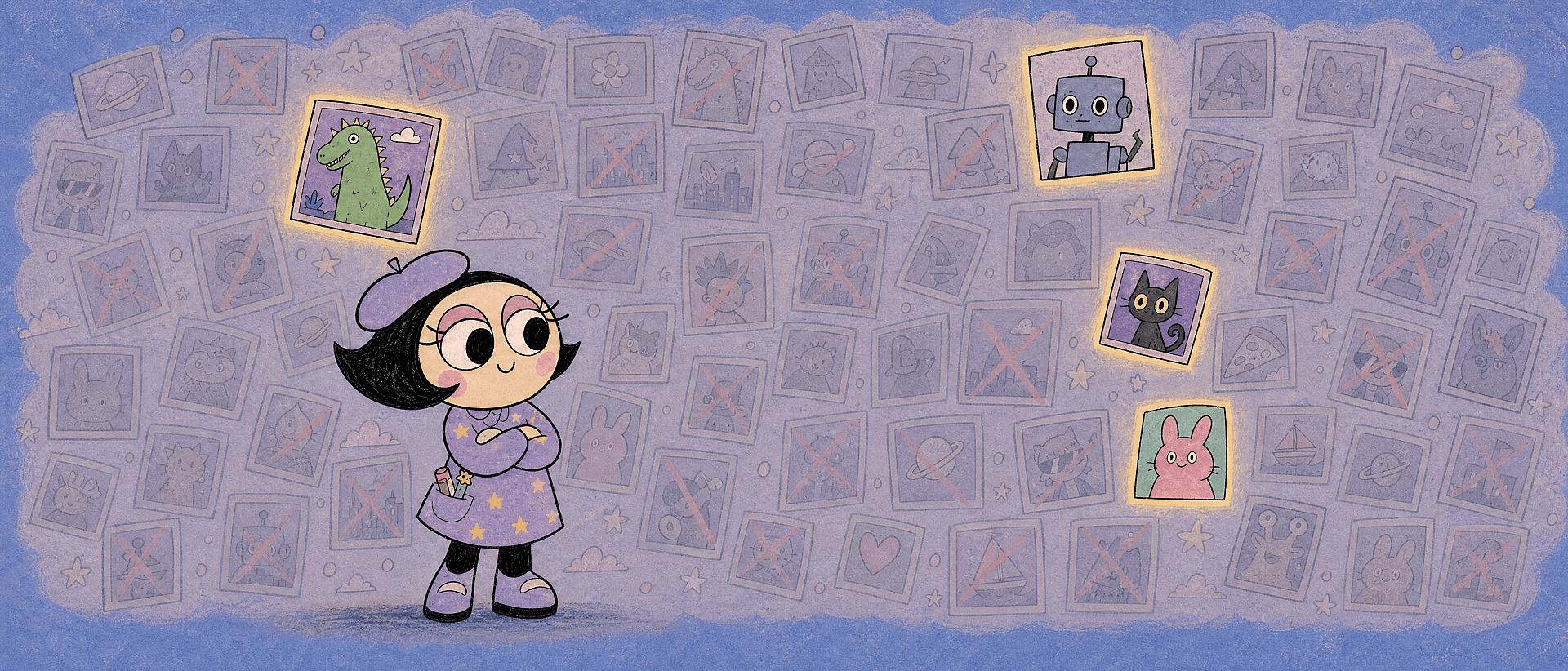
Think about the creatives whose work you can identify instantly across mediums and years. What makes them recognizable is not just what they chose to include but what they conspicuously excluded: the designer who never uses more than two typefaces, the photographer who won't touch a golden hour shot, the illustrator who refuses sentimentality even when the subject invites it, the AI creator who generates fifty images and throws away anything that feels safe. These aren't arbitrary constraints; they're the result of a thousand small refusals, each one carving the work a little closer to something that couldn't have come from anyone else.
The "no" is also more durable than the "yes," because the reality is that enthusiasms shift. The references that move you at 22 are not the ones that move you at 35. Influences come and go and leave their marks in ways that are hard to predict and harder to control. But the things you've decided you genuinely cannot stand tend to be more stable, more structural, more connected to something fundamental about your point of view. The refusals accumulate into a kind of negative space that holds its shape even as everything inside it changes.
This is especially true in an era when the volume of available reference material is essentially infinite and the tools to generate more of it are equally unlimited. The challenge is no longer finding inspiration, it's maintaining the ability to refuse, edit, and curate. When everything is possible and everything is fast and the model will happily produce whatever you describe, the creative muscle that needs the most deliberate exercise is not imagination, but discernment. It's the voice that says "not that, not quite, not yet, keep going."
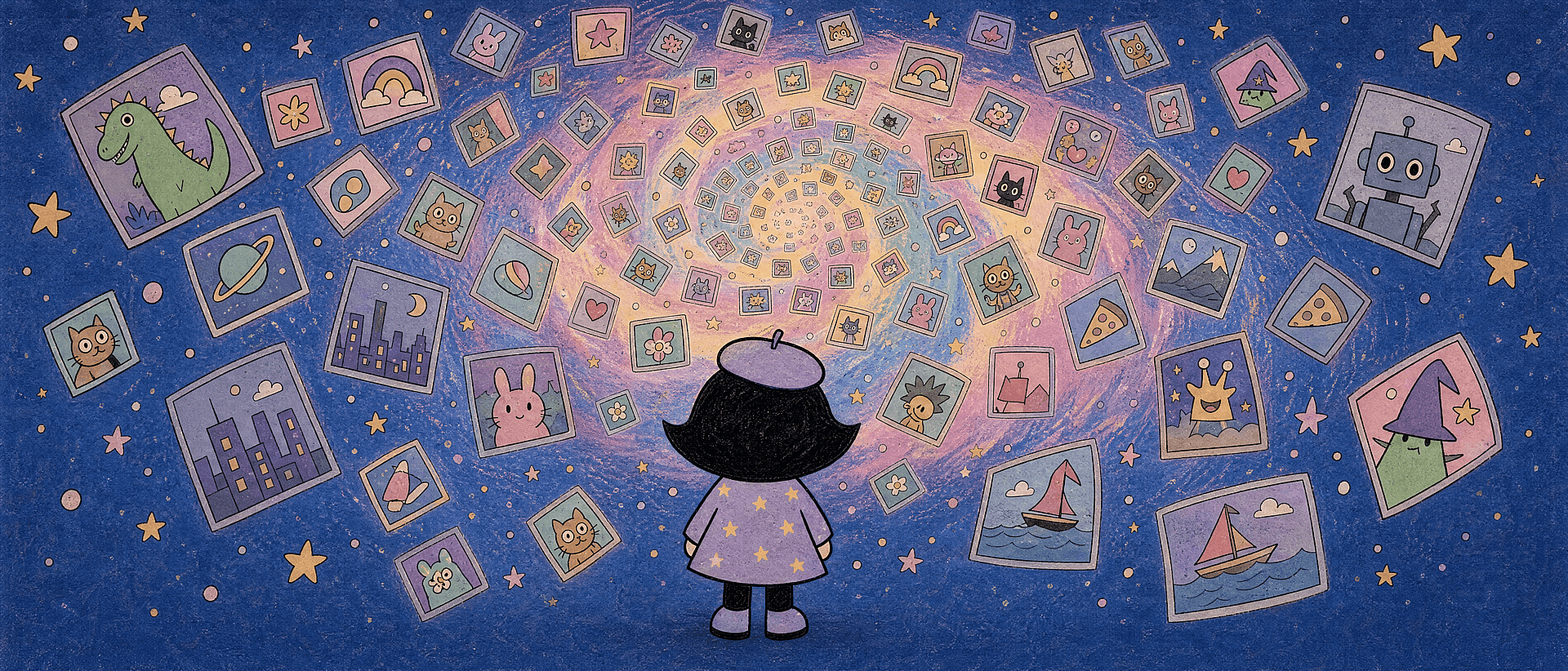
Diese kleine innere Stimme zu entwickeln bedeutet, genau auf die eigenen Reaktionen zu achten – besonders auf die negativen – und sie ernst genug zu nehmen, um sie im kreativen Prozess in Worte zu fassen. Nicht nur „das gefällt mir nicht“, sondern „das gefällt mir nicht, weil die Komposition zu zentriert ist, die Farbpalette sich zu sehr anstrengt und die Stimmung wie geborgt wirkt von etwas, das ich schon hundertmal gesehen habe“. Die Genauigkeit der Ablehnung sind die Daten. Mit der Zeit fügen sich diese Daten zu einer Reihe von Positionen zusammen, und diese Positionen sind dein Standpunkt.
The practical version of this is simple: start keeping a rejection file alongside your reference library. Not screenshots of bad work, but screenshots of work that is technically accomplished, clearly professional, and somehow still not you: the kind of work you could imagine someone else making but that you would never make, and that you can articulate precisely why. Review it as often as you review your inspirations, because you'll learn more about your aesthetic from studying the conviction in your refusals than from studying your endlessly shifting enthusiasms.
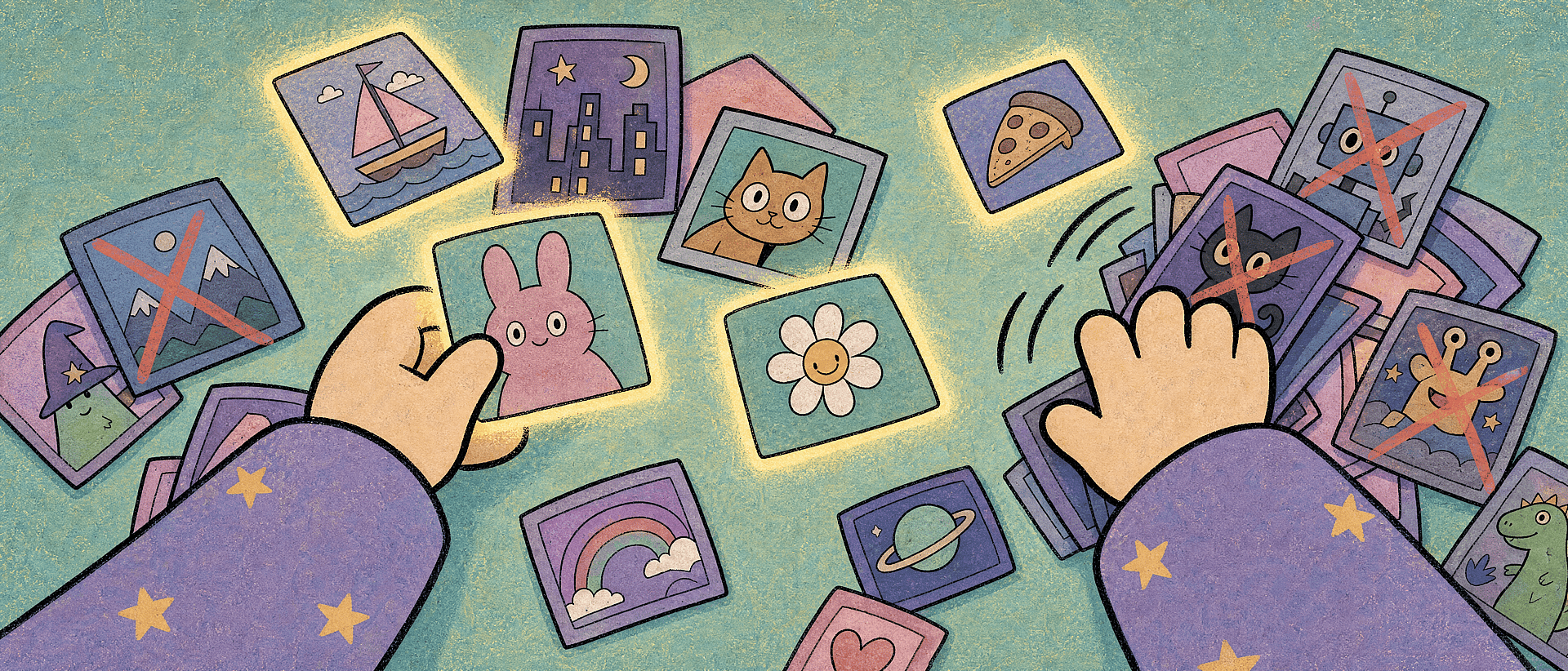
Ein kreativer Standpunkt ist keine Sammlung von Dingen, die du liebst, sondern eine Reihe von Positionen, die du vertrittst (und ja, Positionen brauchen klaren Widerspruch). Das „Ja“ bedeutet nur etwas im Verhältnis zum „Nein“. Die Arbeit, die am unverkennbarsten deine ist, ist die, die niemand mit einer anderen Menge an Absagen hätte machen können – und der Weg dorthin führt nicht über mehr Inspiration, sondern darüber, sehr klar, sehr konkret und sehr ehrlich darüber zu werden, was du nicht tun wirst.
Der Multi-Modell-Workspace von OpenArt ist genau für dieses Feingefühl gemacht: die Möglichkeit, in Massen zu generieren, zwischen Tools zu wechseln und so lange auszuwählen, bis nur noch das übrig bleibt, was wirklich deins ist. Die Tools sind nur so gut wie das Auge, das sie steuert – und jedes Mal, wenn du „nein“ sagst, wird das Auge schärfer und die kreative Stimme lauter.