

 ChatGPT
 Perplexity
 Claude
 Gemini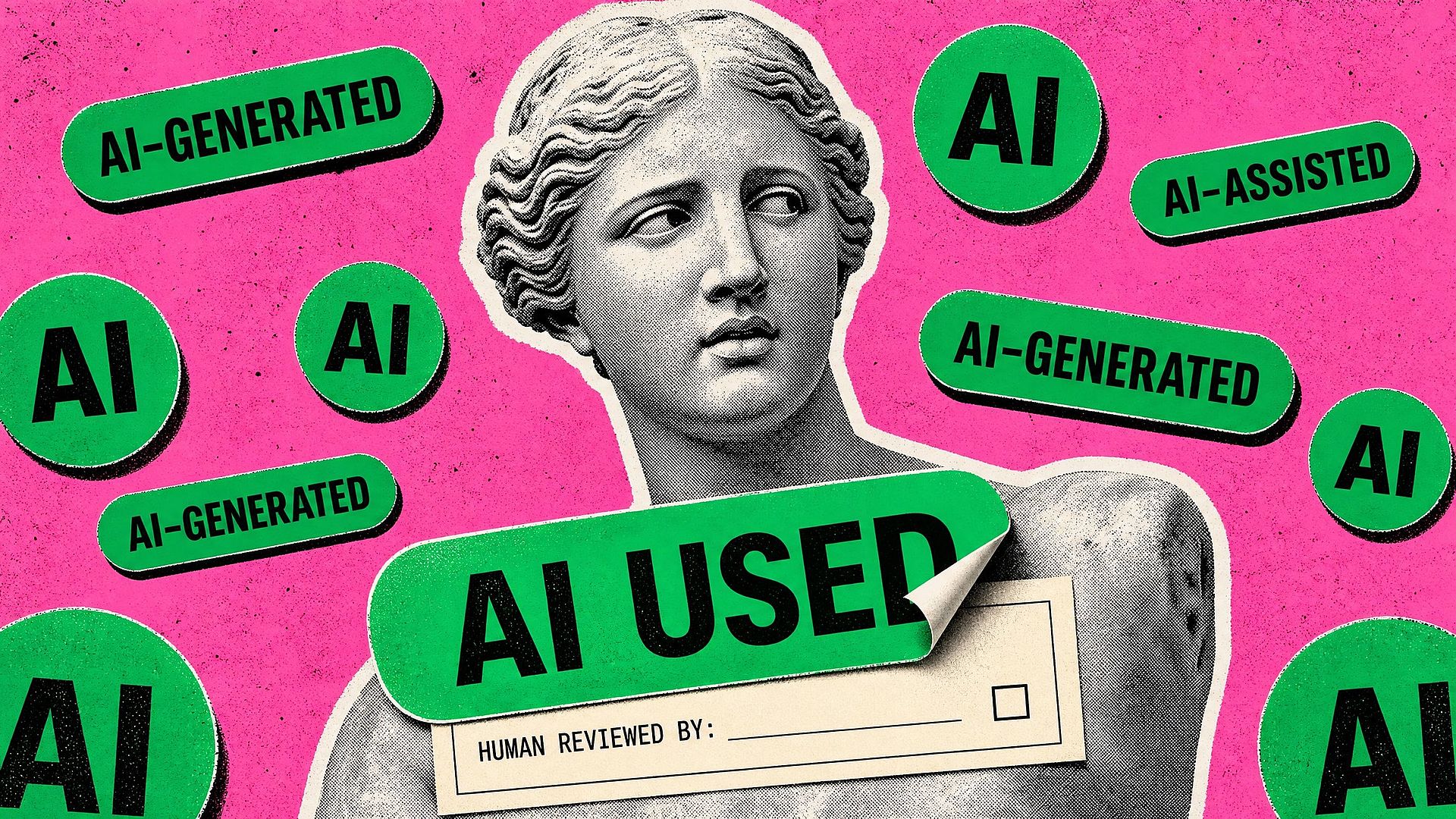
이 논쟁의 수요 측면은 이견의 여지가 없습니다. 천 명 이상의 소비자를 대상으로 한 Fractl의 2026년 설문조사 found that 84 percent want written AI content labeled, 91 percent want it on video, 90 percent on images, 87 percent on audio, with strongly-agree responses alone clearing half in every category. The supply side isn't close either, just in the other direction: only 20 percent of organizations say they always disclose AI use to their audience, and 33 percent say they never do. Framed that way, this looks like a straightforward compliance gap. Get more companies labeling their content, close the gap, problem solved.
다만 학술지 Digital Journalism에 실린 2026년 연구 두 편은 신뢰 문제가 실제로 그 간극에 있는 것은 아니라고 시사합니다. 하나는 칠레 미디어 소비자를 대상으로 한 컨조인트 실험에서는 사람들에게 여러 매체의 AI 정책을 나란히 비교하게 했고, 그 결과 사람들이 어떤 매체를 신뢰하고 읽을지 결정하는 데 단연 가장 큰 영향을 준 요소는 공개 여부 자체가 아니라 사람의 감수였습니다. 매체가 AI를 단순 작업에 썼든 포맷 개인화에 썼든 어느 쪽도 별 차이를 만들지 못했습니다. 정작 차이를 만든 건 AI가 만든 결과물을 사람이 검토했는지 여부였습니다. 라벨은 한 가지 질문에만 답합니다. AI가 관여했는가. 알고 보니 그건 독자가 실제로 궁금해하는 질문이 아닌 경우가 대부분이었습니다.
두 번째 연구, 실험이 아닌 인터뷰를 바탕으로 구성됨, 더 날카로운 것을 발견했습니다: 라벨은 오히려 역효과를 낼 수 있습니다. One participant described their reaction to seeing an AI label as "I probably need to fact-check this and try and find another article," which is the opposite of what a disclosure label is supposed to accomplish. Others saw AI use itself as a kind of professional shortcut, with one interviewee putting it bluntly about a fully AI-written article: "You can do that as an 11-year-old. You don't need the training for that if you're going to use AI to generate your entire article." A vague, generic label doesn't resolve that instinct. It just confirms the suspicion without giving anyone a reason to set it aside.
What the same research found does help: specificity about degree, not just presence. Interview subjects drew a real line between an article labeled as fully AI-generated and one labeled as AI-assisted, treating those as different claims requiring different levels of scrutiny, and they wanted that distinction visible at the top of a piece rather than buried in a footer where it could look like it was trying not to be noticed. None of that is about whether to disclose. It's about whether the disclosure actually tells someone what happened and whether a person was accountable for it.
바로 그 지점이 컴플라이언스 관점이 완전히 놓치는 부분입니다. 법은 라벨의 존재를 의무화할 수 있습니다. 하지만 그 라벨이 신뢰를 다시 쌓는 실제 역할을 하도록 강제할 수는 없습니다. 신뢰란 라벨이 페이지에 있는지가 아니라, 유능한 사람이 여전히 관여하고 있다고 청중이 믿는지에 달려 있기 때문입니다. 결코 밝히지 않는 33%가 밝히기 시작하도록 하는 것 자체가 중요합니다. 하지만 그 아래 놓인 더 어렵고 유용한 질문은, 공개된 내용이 실제로 누군가에게 무언가를 알려주는지, 아니면 애초에 사람들이 정말 우려했던 부분과는 무관하게 그저 형식적으로 체크박스만 채우는지입니다.