

 ChatGPT
 Perplexity
 Claude
 Gemini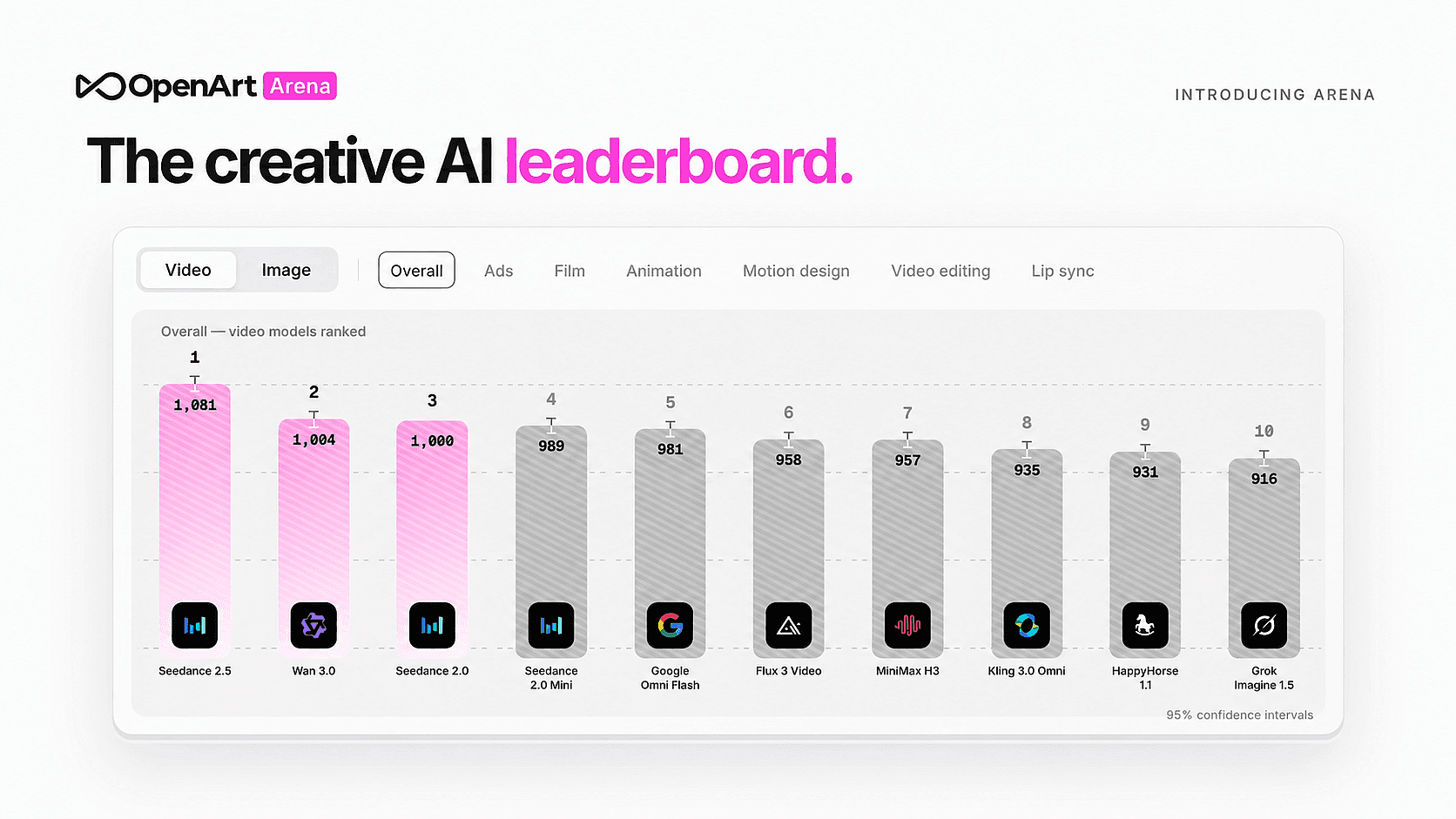
Resumo
- A OpenArt Arena já está disponível. O Ranking de modelos de imagem e vídeo com IA permite comparar modelos para publicidade, cinema, animação, imagens de produto, design gráfico, edição e sincronização labial.
- Os resultados do lançamento se baseiam em avaliações cegas de 28 jurados especialistas e 1.003 Tastemakers.
- Cada quadro foca em uma tarefa diferente, então você pode buscar os recursos de que seu projeto precisa em vez de depender de um único ranking geral.
Uma foto de produto parece ótima até você perceber que o rótulo mudou. Uma cena de filme gerada tem iluminação linda, mas a câmera se move na direção errada. São esses detalhes que determinam se um resultado de IA vai para o corte final.
A OpenArt Arena já está disponível para ajudar criadores a comparar modelos com esses detalhes em mente. Você pode explorar Rankings de modelos de imagem e vídeo de IA, verifique o desempenho em critérios individuais e veja gerações de exemplo antes de decidir o que testar.
A pergunta por trás da Arena é simples: qual modelo é ideal para o trabalho que você precisa fazer?
Um leaderboard que começa pelo trabalho
Imagine que você está criando uma campanha para um novo produto de skincare. Você precisa de imagens estáticas para a página do produto, um vídeo curto de anúncio e um apresentador falando para as redes sociais. Esses recursos fazem parte da mesma campanha, mas exigem coisas diferentes de um modelo.
Para as imagens do produto, a garrafa, o rótulo e a cor precisam permanecer fiéis. Para o anúncio, o produto precisa parecer convincente em movimento. Para o apresentador, os movimentos da boca precisam corresponder ao áudio. Um resultado forte em uma dessas tarefas diz pouco sobre as outras.
A OpenArt Arena organiza seus rankings em torno dessas diferenças. Há quadros gerais de imagem e vídeo para quando você quer uma comparação ampla, além de quadros por setor e por capacidade para quando você já sabe do que precisa.
Essa é a ideia por trás da abordagem da OpenArt para rankings de modelos criativos de IA: deixe a comparação específica o bastante para ajudar em uma decisão real de produção.
O que você pode comparar hoje
O leaderboard tem duas visões principais: Vídeo e Imagem. Escolha uma e depois selecione o quadro que corresponde ao seu trabalho.
Rankings de modelos de vídeo
- Geral: capacidades gerais de vídeo em diversos casos de uso.
- Anúncios: vídeo comercial e de marca.
- Cinema: cenas cinematográficas e narrativa.
- Animação: personagens e sequências animadas.
- Motion Design: trabalhos de movimento voltados a design.
- Edição de vídeo: alterações em vídeos existentes.
- Lip Sync: sincronizando fala ou canto com o movimento visível dos lábios.
Leaderboards de modelos de imagem
- Geral: capacidades gerais de imagem em diversos casos de uso.
- Produto / E-commerce: imagens focadas em produtos.
- Cinema: imagens estáticas voltadas ao cinema.
- Design Gráfico: comunicação visual e design.
- Edição de imagem: alterações em imagens existentes.
O cinema aparece em ambas as visualizações porque criar um quadro estático e gerar uma sequência em movimento são tarefas diferentes. Da mesma forma, a edição de imagem tem seu próprio quadro: produzir uma nova imagem não diz necessariamente o quão bem um modelo consegue fazer uma alteração precisa em uma imagem existente.
O que importa em um anúncio pode não importar em um filme
Um logo distorcido pode tornar inutilizável um anúncio que seria impecável. Em uma cena de filme, uma mudança inesperada no rosto de um personagem ou na iluminação pode quebrar a continuidade. No design gráfico, um título com erro de digitação ou um texto mal organizado pode arruinar toda a composição.
da Arena Critérios de avaliação de modelos de IA refletem essas diferenças. As avaliações de publicidade incluem consistência de produto e marca. As avaliações de filme incluem controle de câmera e iluminação. As avaliações de design gráfico observam detalhes como layout e tipografia.
Isso dá a você um motivo para olhar além da primeira linha do leaderboard geral. Se o seu briefing depende de texto preciso, confira o critério relevante. Se você precisa de um modelo que siga uma edição sem mudar todo o resto, comece pelo quadro de edição.
Você pode acabar escolhendo modelos diferentes para partes diferentes de um mesmo projeto. Isso é um resultado útil: o objetivo é encontrar as ferramentas ideais para o trabalho.
Quem julga os resultados, e como?
Os resultados de lançamento publicados incluem contribuições de 28 jurados especialistas e 1.003 Tastemakers, conforme relatado na atualização de 15 de setembro de 2026. O Painel de avaliação de modelos de IA reúne pessoas que atuam em cinema, publicidade, meio acadêmico e economia criativa, junto com profissionais de estúdios, escolas e comunidades criativas.
Os avaliadores comparam dois resultados sem ver qual modelo os criou. Cada comparação pergunta sobre um critério específico, em vez de simplesmente perguntar qual resultado eles preferem. Os modelos recebem o mesmo briefing, e o resultado enviado para avaliação é selecionado por uma regra fixa, não escolhido a dedo.
Os votos são usados para calcular pontuações relativas por meio de um modelo Bradley–Terry. Os votos do Conselho de Especialistas têm três vezes o peso dos votos dos Formadores de Opinião. O resultado publicado Metodologia de ranqueamento de modelos de IA explica a pontuação, os pesos e as verificações com mais detalhes.
Os resultados incluem intervalos de confiança de 95%. Quando esses intervalos se sobrepõem, uma pequena diferença de pontuação não deve ser tratada como uma vantagem clara. As pontuações também pertencem aos seus próprios quadros: o mesmo número em Filme e Anúncios não significa o mesmo nível de desempenho.
Quais modelos estão incluídos no lançamento?
A lista de lançamento publicada inclui sete modelos de imagem e onze modelos de vídeo. Painéis individuais podem ter listas de modelos menores, dependendo da elegibilidade e da cobertura de avaliação.
Modelos de imagem: Seedream 5.0 Pro, GPT Image 2, Nano Banana Pro, Grok Imagine 2.0, Nano Banana 2, Qwen Image 3.0 e Flux.2 Pro.
Modelos de vídeo: Seedance 2.5, Wan 3.0, Seedance 2.0, Seedance 2.0 Mini, Google Omni Flash, Flux 3 Video, MiniMax H3, Kling 3.0 Omni, HappyHorse 1.1, Grok Imagine 1.5 e PixVerse V6.
Esses nomes se referem aos resultados de lançamento, não a uma lista permanente. Confira o quadro ao vivo para a cobertura publicada mais recente e preste atenção na versão do modelo ao comparar resultados.
De um ranking a um modelo que você pode usar
Depois de encontrar o quadro relevante, observe os critérios que podem fazer ou quebrar sua entrega. Em seguida, inspecione os prompts e gerações de amostra. Uma pontuação é mais fácil de interpretar quando você pode ver o tipo de resultado por trás dela.
Antes de decidir, teste alguns modelos pré-selecionados com o mesmo briefing e os mesmos recursos de referência. Para uma campanha de produto, use sua embalagem real. Para uma cena com personagem, use a imagem de referência com a qual você pretende trabalhar. É aqui que você descobre se os pontos fortes mostrados no benchmark realmente se aplicam ao seu projeto.
Confira também os requisitos de produção. Resolução, referências suportadas, duração do vídeo, tempo de geração e preço podem influenciar sua escolha. Essas especificações são independentes das pontuações de qualidade da Arena.
A Arena pode ajudar você a decidir por onde começar os testes. O seu próprio briefing determina qual modelo ganha um lugar no fluxo de trabalho.
Como a Arena se encaixa entre outros rankings de IA
Arena.ai, Artificial Analysis e projetos de leaderboard hospedados no Hugging Face oferecem outras formas de comparar modelos, incluindo rankings de preferência, avaliações técnicas e comparações de preço ou velocidade.
A OpenArt Arena foca na produção criativa, com avaliação conduzida por especialistas e quadros para setores e tarefas específicos. Ao comparar resultados entre sites, verifique o que cada avaliação mede, quais versões de modelo ela inclui e quem está julgando. Avaliações diferentes podem gerar rankings diferentes sem responder à mesma pergunta.
A OpenArt opera a Arena e avalia os modelos disponíveis em sua plataforma. Seu Divulgações de benchmark de modelos de IA explicam o escopo, as relações comerciais, a remuneração dos juízes e as práticas de dados. A OpenArt declara que nenhum provedor de modelo pagou por inclusão, posicionamento, ranking ou tratamento favorável.
Perguntas frequentes
Onde posso ver o modelo número um atual?
Abra o ranking, escolha Imagem ou Vídeo e selecione um quadro. O modelo mais bem classificado pode variar conforme a tarefa, então confira os critérios relevantes e os intervalos de confiança junto com a posição principal.
A Arena cobre todos os modelos de imagem e vídeo de IA?
Não. A Arena avalia um conjunto definido de modelos disponíveis na OpenArt. O quadro selecionado mostra quais modelos estão incluídos nessa comparação.
Posso ajudar a avaliar modelos?
Sim, você pode se candidatar para se tornar um Tastemaker. Acesse o avaliadores criativos de IA e página de Tastemakers e siga o link do aplicativo.
Como faço para relatar um problema com um resultado?
E-mail arena@openart.ai com o quadro, a versão do modelo e o resultado a que você está se referindo.
Onde gero imagens e vídeos depois de escolher um modelo?
Use a OpenArt para testar os modelos que você selecionou com seus próprios prompts e referências e continue criando por lá.