

 ChatGPT
 Perplexity
 Claude
 Gemini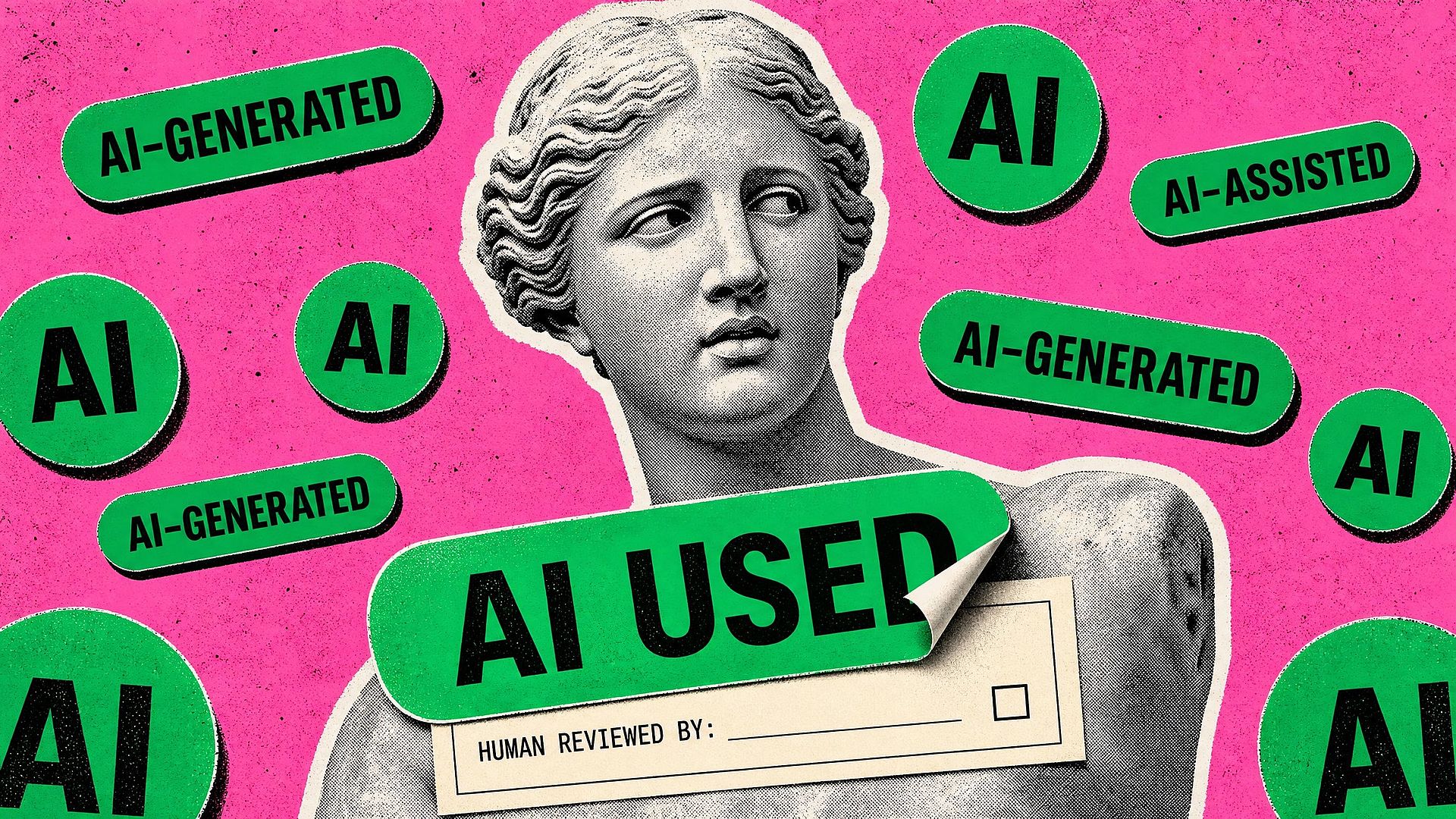
Auf der Nachfrageseite ist dieses Argument alles andere als knapp. Fractls Umfrage 2026 unter mehr als tausend Verbrauchern found that 84 percent want written AI content labeled, 91 percent want it on video, 90 percent on images, 87 percent on audio, with strongly-agree responses alone clearing half in every category. The supply side isn't close either, just in the other direction: only 20 percent of organizations say they always disclose AI use to their audience, and 33 percent say they never do. Framed that way, this looks like a straightforward compliance gap. Get more companies labeling their content, close the gap, problem solved.
Doch zwei Studien aus dem Jahr 2026, veröffentlicht im Journal Digital Journalism, legen nahe, dass genau dort das Vertrauensproblem gar nicht liegt. Erstens ein Conjoint-Experiment mit chilenischen Medienkonsumentenließ Menschen die KI-Richtlinien verschiedener Medien direkt vergleichen und fand heraus, dass menschliche Aufsicht – nicht die Offenlegung allein – der mit Abstand einflussreichste Faktor dafür war, welchem Medium die Leute vertrauten und was sie zu lesen wählten. Ob ein Medium KI für banale Aufgaben oder zur Personalisierung von Formaten einsetzte, machte kaum einen Unterschied. Ausschlaggebend war, ob ein Mensch überprüft hatte, was die KI produziert hat. Ein Label beantwortet eine Frage: War KI beteiligt. Es stellt sich heraus, dass das selten die Frage ist, die ein Publikum wirklich stellt.
Die zweite Studie, basierend auf Interviews statt Experimenten, hat etwas Präziseres gefunden: Labels können aktiv nach hinten losgehen. One participant described their reaction to seeing an AI label as "I probably need to fact-check this and try and find another article," which is the opposite of what a disclosure label is supposed to accomplish. Others saw AI use itself as a kind of professional shortcut, with one interviewee putting it bluntly about a fully AI-written article: "You can do that as an 11-year-old. You don't need the training for that if you're going to use AI to generate your entire article." A vague, generic label doesn't resolve that instinct. It just confirms the suspicion without giving anyone a reason to set it aside.
What the same research found does help: specificity about degree, not just presence. Interview subjects drew a real line between an article labeled as fully AI-generated and one labeled as AI-assisted, treating those as different claims requiring different levels of scrutiny, and they wanted that distinction visible at the top of a piece rather than buried in a footer where it could look like it was trying not to be noticed. None of that is about whether to disclose. It's about whether the disclosure actually tells someone what happened and whether a person was accountable for it.
Genau diesen Unterschied übersieht die Compliance-Perspektive völlig. Ein Gesetz kann vorschreiben, dass ein Label vorhanden ist. Es kann nicht vorschreiben, dass das Label auch die eigentliche Aufgabe erfüllt, Vertrauen wiederaufzubauen – denn Vertrauen hängt davon ab, ob das Publikum glaubt, dass eine kompetente Person noch beteiligt war, nicht davon, ob das Label auf der Seite steht. Die 33 Prozent, die es nie offenlegen, dazu zu bringen, damit anzufangen, ist für sich genommen wichtig. Aber die schwierigere und nützlichere Frage darunter ist, ob das, was offengelegt wird, überhaupt irgendjemandem etwas sagt – oder nur ein Häkchen setzt, das mit dem, was die Leute ursprünglich beunruhigt hat, nichts zu tun hat.